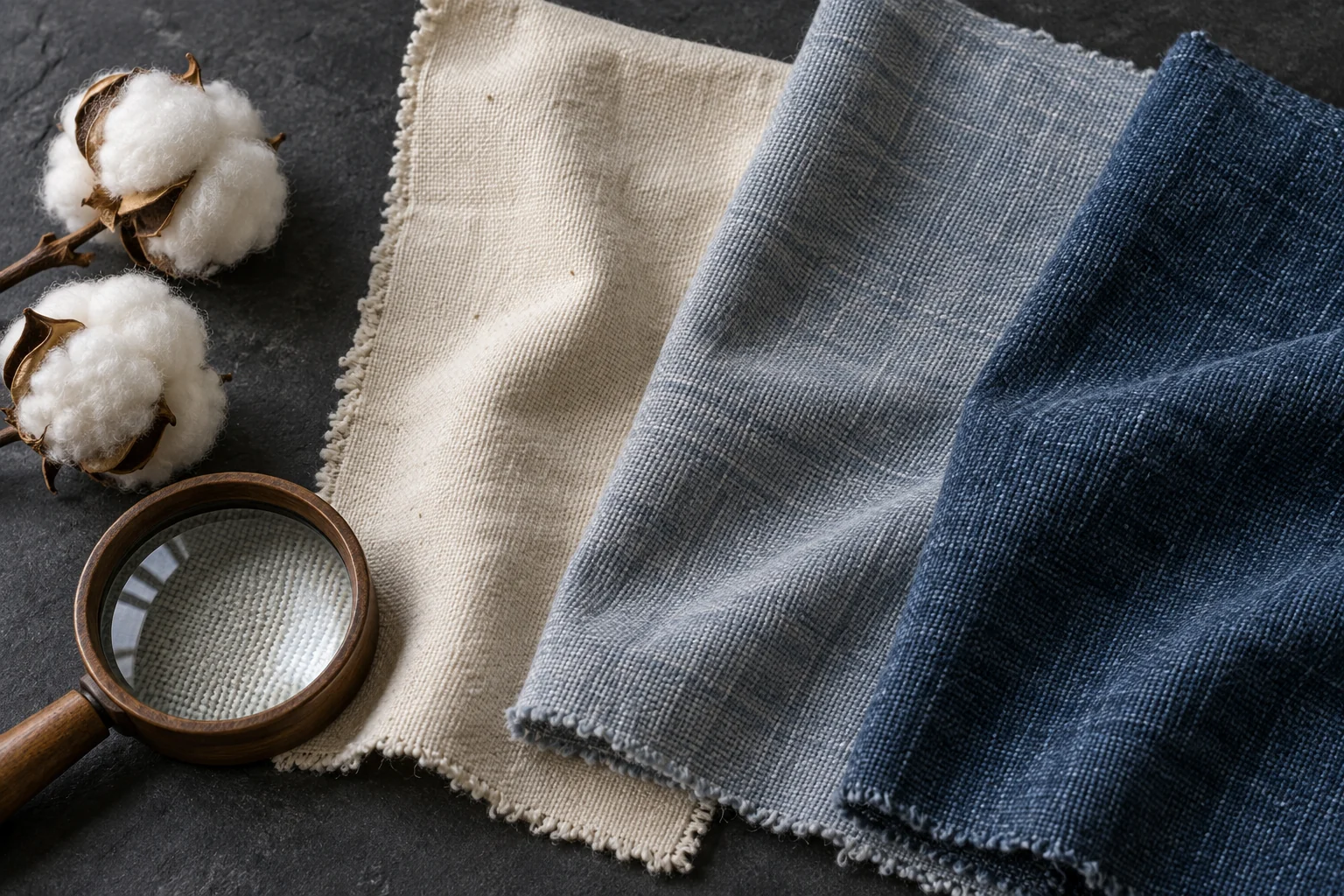
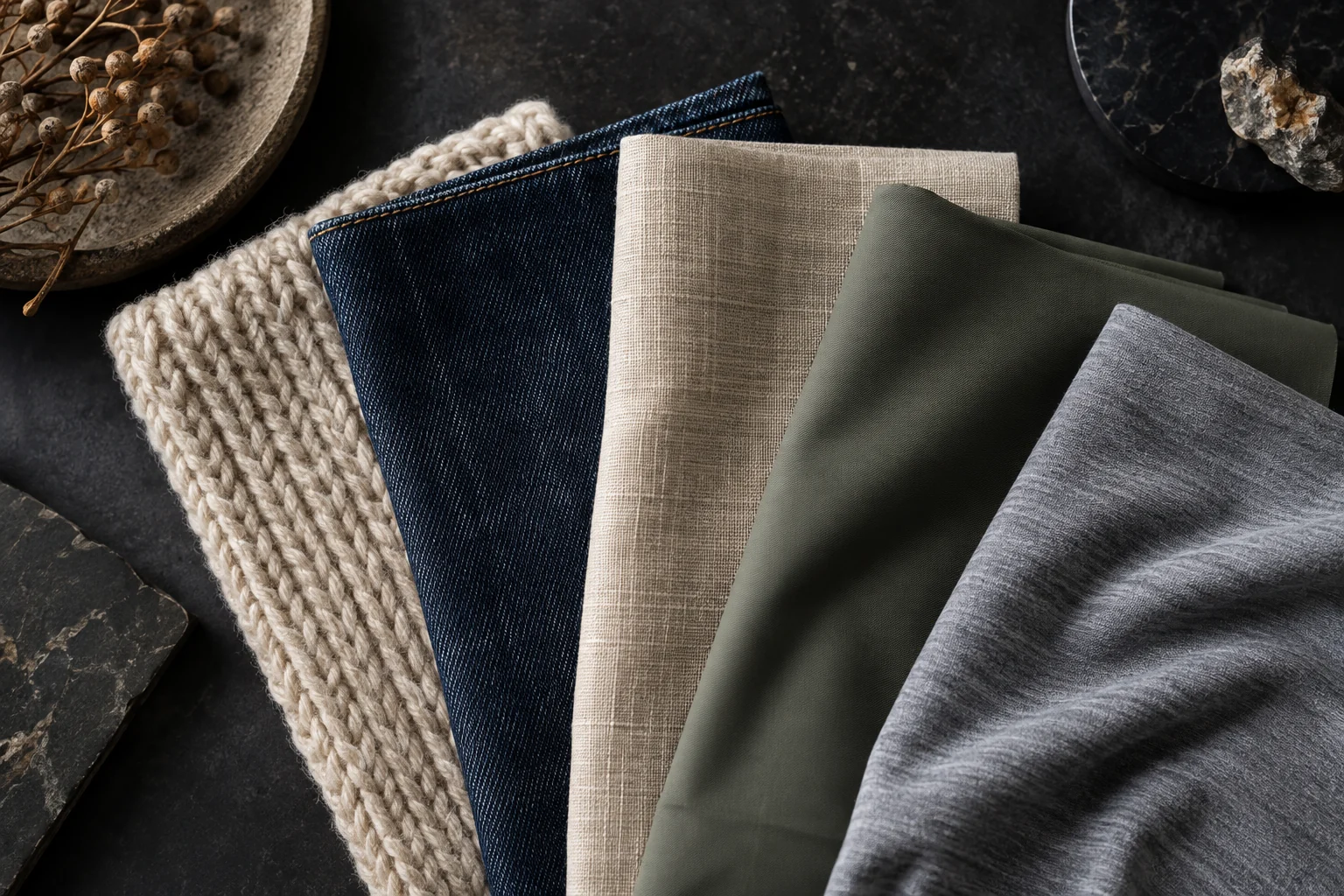
A fibre name is useful information, but it is a poor substitute for thinking about a garment. The same broad material can become a light shirt, a dense coat or a stretch fabric, with different construction, finishes and care requirements. The job you need it to do changes the comparison.
Rather than divide your wardrobe into good and bad fibres, examine five things together: purpose, composition, construction, care and the evidence behind any environmental claim. That produces a decision you can explain and use again.
Define the job before choosing the material
Consider a layer for a wet journey to work. You need to think about weather protection, comfort over other clothes, drying and whatever safety or visibility needs your journey involves. A soft fabric that works well for an indoor shirt is not automatically suitable for this job.
Now consider a summer top for sitting in a warm room. Feel, movement and your personal comfort may take priority. Try the garment rather than expecting a fibre label to predict exactly how it will behave against your skin.
Write down the two or three requirements you cannot compromise on. This helps stop a single attractive claim from eclipsing the practical reason for buying the item.
Read all of the composition
Main fabric, lining, coating, filling and trim can involve different materials. A headline about one component may not describe the rest. A material percentage is most useful when you know which component and measurement it refers to.
Blends should be assessed rather than automatically dismissed. They may change stretch, handle or other performance, while also complicating some end-of-life routes. The useful question is what the blend does for the item and whether that benefit matters to your use.
For cotton claims, our organic and recycled cotton guide separates the source of the fibre from the performance of the finished fabric. Apply that distinction elsewhere too: knowing where an input came from does not tell you everything that happened afterwards.
Inspect the construction you can actually see
Look at seams, attachment points and the places likely to rub. Move the garment in the way you would wear it. See whether pockets pull at the surrounding fabric, whether fastenings operate smoothly and whether hems appear secure.
These checks cannot predict a lifetime of wear or replace laboratory testing. They can identify an immediate problem, such as an already-opening seam or a lining that restricts movement. Record what you observed rather than converting it into an unsupported “built to last” promise.
Think about repair access. Can a button be replaced? Is there room for a straightforward hem alteration? If a zip fails, would a local repairer be able to reach it? For an expensive item, a repair quotation before purchase may be more useful than a broad guarantee of quality.
Include the care routine in the comparison
The GINETEX-supported Clevercare symbol guide is a reference for interpreting garment-care instructions. Use the label on the complete item rather than selecting care solely from the main fibre. A decoration, lining or finish may affect what is appropriate.
Be realistic about your household. Do you have space to dry an item flat? Are you prepared to arrange professional cleaning? A garment is easier to keep useful when its routine fits your available time, equipment and space.
Do not promise a universal footprint saving from one washing choice. Appliances, programmes, loads, drying and the item itself differ. You can still make sensible practical changes, such as avoiding unnecessary treatment and following the instructions that protect the garment.
Ask what an environmental comparison measures
A claim about reduced water use can describe one manufacturing stage rather than the whole product. A recycled-content statement concerns an input; it is not automatically proof of lower impacts across every category. Clear scope makes a statement more useful.
Textile Exchange's cotton life-cycle assessment work shows the role of defined systems and data in material comparisons. For a shopping decision, you do not need to recreate an assessment. You do need to avoid treating a narrow statistic as an overall verdict.
If the explanation is missing, ask which process, comparison and period the number refers to. “Better” without a stated basis gives you very little to compare.
Treat end-of-life promises as practical questions
If an item is described as recyclable, ask where and how you could actually use that route. Is there a local collection service, a retailer take-back programme or a specialist process? What condition must the item be in, and are there restrictions on components?
Keep reuse and repair in view before disposal. WRAP's clothing resource covers the wider importance of how garments are used. A hypothetical future recycling process should not distract from whether the item is useful and maintainable now.
Make a decision, not a permanent ranking
For each shortlisted garment, record the need it meets, its composition, one construction strength or concern, its care demands and the evidence you trust. Then make the decision for this particular use.
You may choose different materials for different jobs, and that is not inconsistency. A thoughtful wardrobe does not need one fibre to win every comparison. It needs clothes that work, information you can understand and a realistic plan for keeping them useful.

Questions about this article or a correction to suggest? Get in touch. Read more about our editorial approach.