
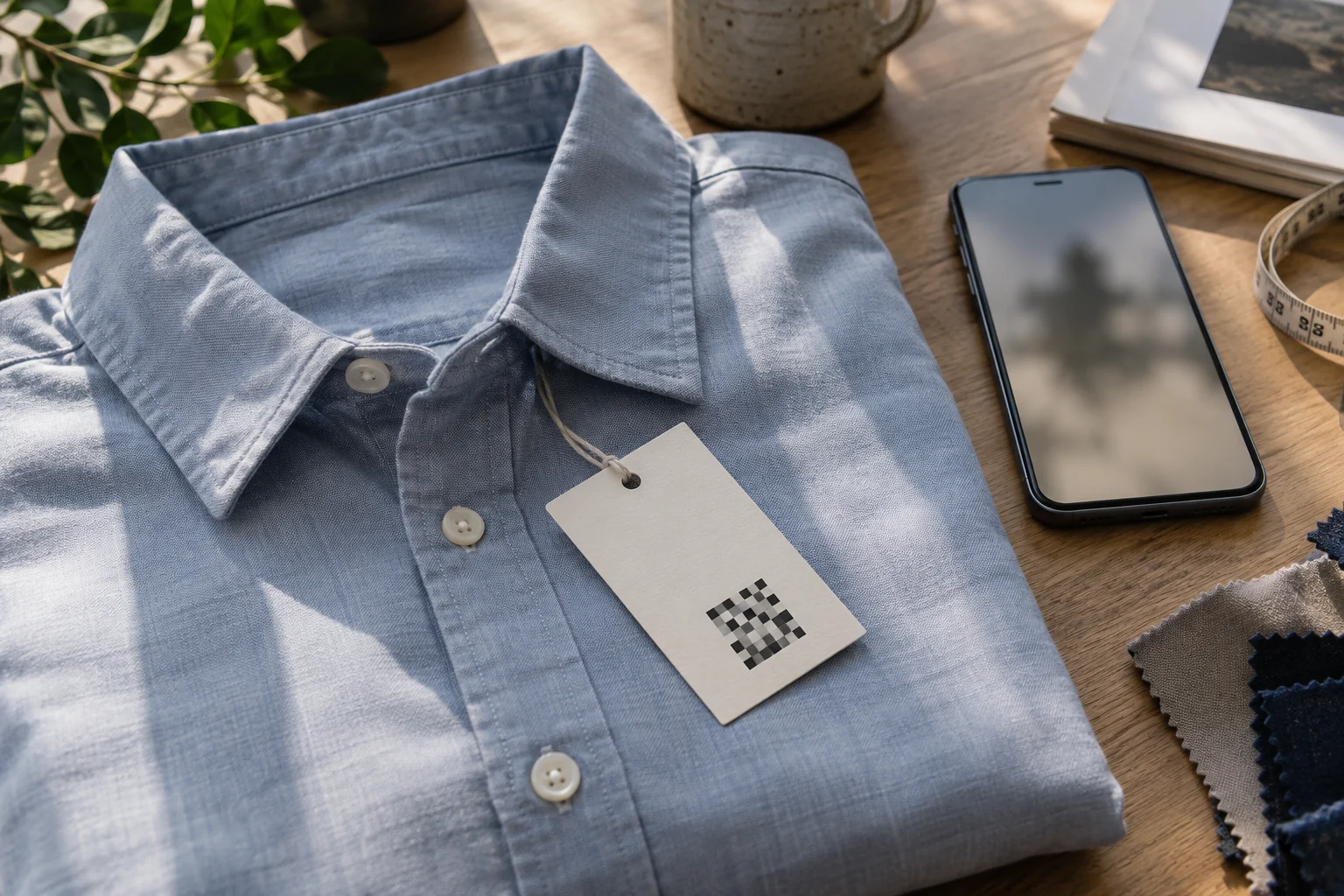
A digital product passport is intended to make useful product information easier to find and carry through a product's life. For clothing, that could connect an item with details about its materials, manufacture, care or other information required for its product group. It should help answer practical questions, not simply add another square code to a swing tag.
The details matter because “passport”, “traceable” and “compliant” are sometimes used as if they meant the same thing. They do not. A digital record can organise evidence, but its existence alone does not establish that a garment is responsibly made or that every statement in the record is correct.
Where the EU rules stand
Position checked on 23 September 2026. The EU's Ecodesign for Sustainable Products Regulation establishes a framework for product requirements. It is not one identical set of detailed rules immediately applying to every kind of clothing.
The Commission's textile-apparel passport page identifies textiles as a priority and lists Q4 2027 as the planned adoption of a textile delegated act. A planned adoption date is not the same as a confirmed date when every garment must carry a passport. The final product-specific requirements and their application arrangements need to be checked when adopted.
For a UK business, the relevant question includes where the goods are placed on the market and what role the business performs. Do not turn an EU timetable into a blanket claim about every domestic UK sale. A buyer or brand making a concrete compliance decision should work from the applicable final rules, rather than a supplier's marketing countdown.
A QR code is a doorway, not a verdict
Scanning a code may open a useful record, a marketing page or a page that no longer exists. The code itself does not tell you which. What matters is the information behind it and how that information is maintained.
As a shopper, start with the product identifier. Does the record clearly match the item, style or batch in front of you? Then look for the organisation responsible for the information, the dates and the boundaries of each statement. A material declaration for the outer shell does not automatically describe the lining or coating.
If a claim cites a certification, follow through to the relevant scheme information. A passport can point to a certificate; it does not replace the certification process. Equally, a record may accurately state that some information is unavailable. A visible limitation is more useful than an unexplained promise of complete transparency.
Separate useful information from impressive presentation
Imagine two pages for a jacket. One shows an animated globe and says “a responsible journey”. The other identifies the jacket, gives its material composition, explains the repair route and dates its supporting documents. The second is easier to use, even if it looks less elaborate.
For readers, useful questions include whether care instructions can be saved, whether spare parts or repairs can be requested and whether the record distinguishes a brand's ambition from an achieved product characteristic. A repairer may need construction or component information that has little relevance to an advertising campaign.
Not every piece of supply-chain information should be publicly displayed. Commercial details, personal data and information intended for authorised parties may need different access. A sensible record explains what you can see without presenting restricted access as proof that all missing evidence exists.
A practical starting point for small brands
Begin with your existing product information before choosing software. Give each product a stable identifier and agree who owns its record. List the fields you already know, the documents that support them and the gaps requiring supplier follow-up.
A simple internal table can include product code, component, supplier, evidence file, date, claim supported and person responsible for review. For a cotton shirt, separate the main fabric from buttons, thread and any trim. Keep evidence for the particular order or product scope rather than attaching one generic document to every item.
Record changes. If the lining or supplier changes next season, the old evidence may still describe the earlier product but not the new one. Avoid quietly replacing old information in a way that makes past versions impossible to understand.
Keep claims readable where shoppers encounter them
A passport should support clear communication, not bury an important qualification behind a scan. The CMA's fashion guidance is a useful UK reference for the presentation of environmental claims.
For example, a narrow statement about one recycled component should not be presented on a label as an unrestricted claim about the whole garment. The record can offer further detail, while the visible claim still needs to make sense on its own.
What to do now
Shoppers can use available records critically and save the information that helps with ownership and care. Small brands can improve identifiers, document organisation and supplier questions without pretending that an unfinished legal timetable is settled.
The useful ambition is a record that remains understandable when the garment changes hands. A passport earns its place when it helps someone maintain, repair, assess or responsibly manage a real product, rather than simply making the checkout page look more advanced.

Questions about this article or a correction to suggest? Get in touch. Read more about our editorial approach.