An ethical-fashion purchase starts with an ordinary question: what do you need this garment to do? A beautifully documented coat is still a poor choice if it does not fit, cannot cope with your journey to work or needs care you cannot realistically provide.
There is no single label that settles every question about clothing. Materials, working conditions, useful life, price and the information a business shares all deserve attention. The aim is to make a considered choice with the evidence available, rather than find a supposedly perfect product.
Begin with the gap in your wardrobe
Write the need in one sentence: “a warm layer for walking to the station”, for example. This makes comparisons more useful than starting with a promoted collection. Check whether something you already own could fill the gap after a repair, alteration or change of styling.
If the need is temporary, borrowing may be practical. If you are buying, consider second-hand and new options on the same terms: fit, condition, usefulness and total cost. A second-hand bargain that needs extensive work can cost more than it first appears; a new garment is not automatically durable because its description mentions sustainability.
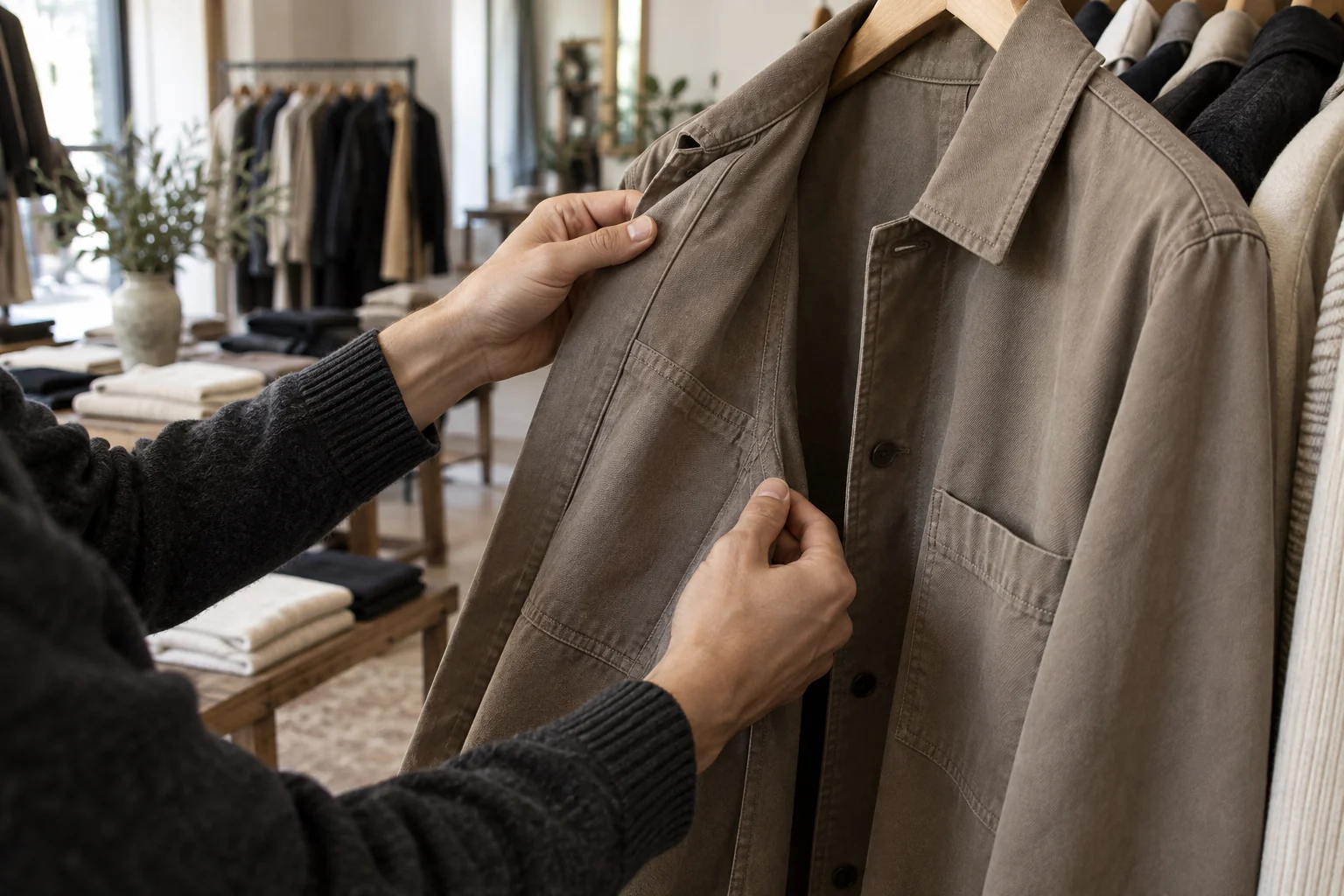
Try the item with the shoes and layers you will actually wear. Sit down, reach forward and use the pockets. For online purchases, compare the garment measurements with a comfortable item you own instead of relying only on a size letter.
Read the material statement precisely
Look for the fibre composition and any separate information about lining, coating or trim. “Contains recycled material” leaves a different impression from “outer fabric contains 40% recycled polyester”. The latter gives you something specific to examine, although it still needs supporting evidence.
The CMA's fashion guidance explains why clear percentages, meaningful comparisons and accurate descriptions matter. Use that principle as a reading habit: ask what the claim covers, what it leaves out and whether its explanation is close enough to find easily.
Do not decide from a fibre name alone. Think about the finished fabric, how it feels against your skin, whether it moves comfortably and the conditions in which you will use it. Our materials guide offers a way to compare those practical trade-offs without a universal league table.
Ask for evidence that belongs to the product
A brand-wide ambition is different from a statement about the item in your basket. A supplier certificate may cover certain operations or products; it does not automatically cover everything a retailer sells. When a specific certification matters to you, look for the scheme name, identifiable certification details and a way to check their relevance.
For example, the GOTS labelling guidance describes the information attached to a GOTS product claim. The useful question is whether the particular garment carries the appropriate claim, rather than whether the company has mentioned the standard somewhere on its website.
Keep a brief note of what is known and unknown. You might record “composition stated; factory named; repair service available; organic claim not explained”. This is more informative than a row of green ticks that hides uncertainty. You do not have to become a supply-chain auditor to notice when an answer does not address your question.
Look beyond the checkout
Read the care instructions before paying. A garment that needs specialist cleaning may be perfectly suitable, but the time and cost should be part of the decision. Check whether buttons can be replaced, hems adjusted or worn areas repaired without dismantling the whole item.
For expensive purchases, ask what the retailer means by its repair service. Is it available for ordinary wear, what work is excluded, how is the price agreed and who pays postage? Save the answer with the receipt. A useful service is one you can understand and access, not merely a reassuring line in a product description.
WRAP's work on clothing use and reuse treats durability, repair and the way clothes are used as part of the wider picture. There is no need to attach an invented carbon saving to your own repair decision. Keeping a useful garment in service can be a worthwhile goal on its own.
Set a budget that includes the practical costs
Use the amount you can afford now. A speculative “cost per wear” calculation should not turn an unaffordable purchase into a sensible one. Include alterations or cleaning costs you already know about, and distinguish them from guesses about years of future wear.
If comparing two options, write down the main difference. Perhaps one is available in a better fit, another has clearer sourcing information, or a third is repairable locally. You can then decide which matters most for this purchase. Ethical shopping does not require replacing a functioning wardrobe or always choosing the most expensive option.
A five-minute decision note
Before buying, answer five questions in your own words:
- What job will this item do, and how often do I expect to use it?
- Does the fit and construction work for that job?
- Which material or sourcing claims are actually supported?
- Can I manage the care and likely repairs?
- Is the full cost comfortable within my budget?
If one answer is missing, pause on that point rather than dismissing the whole product or accepting every claim. A short, specific question to a retailer often tells you more than another hour of browsing broad sustainability promises.

Questions about this article or a correction to suggest? Get in touch. Read more about our editorial approach.