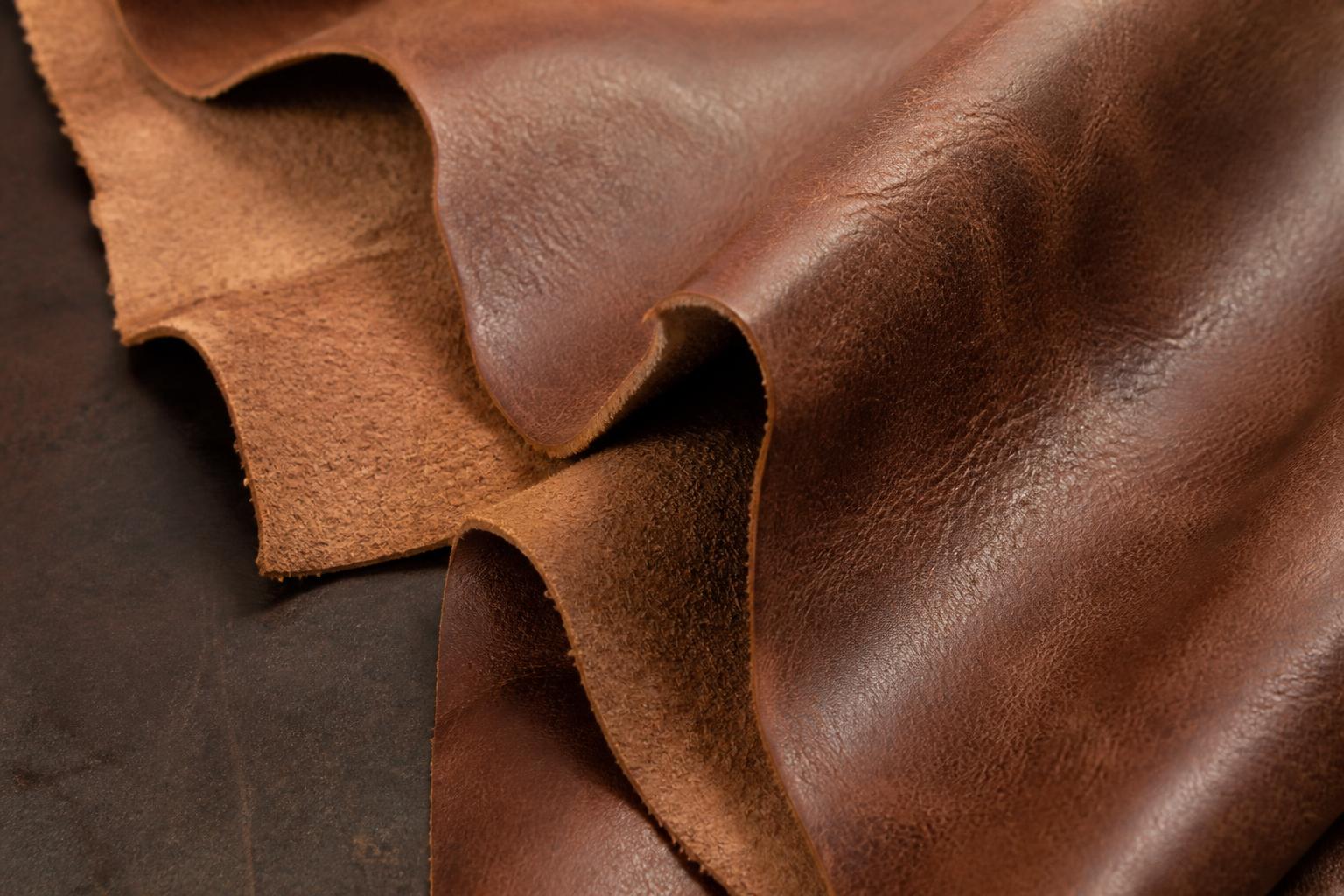
The short answer is yes, leather often begins as a by-product of meat and dairy production, but that answer is too simple to be fully reliable. In most commercial supply chains, cattle, sheep and goats are not raised primarily for their hides. The hide arises because the animal has been slaughtered for food, and if that hide is preserved and processed, it can become leather rather than waste.
Where the claim becomes slippery is in what people mean by “by-product”. In law, in accounting, in factory sourcing and in marketing copy, the word can do different jobs. A hide can originate within a meat system and still carry enough value to influence how animals are traded, how processors recover costs and how brands talk about impact. So if you are asking whether leather is “just” a by-product, the honest answer is usually no. It is usually a by-product at the point the animal enters the slaughter system, but not necessarily a trivial one, and not one that makes all environmental questions disappear.
What does by-product mean in leather supply chains?
In plain language, a by-product is something secondary that comes out of making the main product. If a slaughterhouse’s main commercial purpose is producing meat, hides, fats and offal may all be described as by-products. That is the common version of the argument used in fashion, where leather is presented as making use of material that would otherwise be discarded.
That is not wrong, but it is incomplete.
In legal and regulatory contexts, “by-product” can have a more precise meaning. In the UK, animal materials not intended for human consumption are handled under animal by-products rules. That does not mean they are worthless. It means they fall into a regulated category for collection, transport, treatment and use. Hides and skins are among the materials that can be processed into commercial goods, subject to the relevant controls. So a hide may be an animal by-product in regulatory terms and still be an economically important raw material.
In accounting or industrial economics, the distinction often shifts towards by-product versus co-product. A by-product is usually lower in value relative to the main output. A co-product contributes enough revenue that it matters to the overall economics of the system. There is no single universal threshold that settles this in every leather chain. It depends on species, geography, hide quality, breed, age, market conditions and what the finished leather is used for.
In marketing, the word is often doing persuasive work. “By-product” can imply low responsibility, as if leather has no meaningful link to livestock impacts because the animal would have existed anyway. That is where the term matters in fashion. If a brand uses the label to suggest leather carries almost no environmental burden, readers should slow down. The origin of the hide is one part of the story. Allocation of impacts, land use, methane, feed production, tanning chemistry, wastewater treatment and traceability are separate questions.
For shoppers and small brands, this is the key point. “By-product” is a description of origin, not a complete environmental verdict.
Where leather actually comes from
Most leather on the market starts with hides or skins from animals already in meat and dairy systems. Cattle supply bovine hides, while sheep and goats supply smaller skins used for footwear, gloves, garments and accessories. In practical terms, the leather sector depends heavily on livestock agriculture, not on an entirely separate herd raised only for fashion.
With cattle, the link to dairy can be important as well as the link to beef. Dairy cows eventually enter the meat system, and calves from dairy herds may also feed into beef production. That means bovine hides can arise from mixed meat and dairy economics rather than a single neat category. Sheep and goats are similar in principle, although the balance between meat, milk, fibre and skins varies by region and breed.
Once an animal is slaughtered, the hide has to be removed quickly and handled carefully. Damage at this stage matters. Cuts, branding, parasite damage and poor preservation all reduce the quality and value of the finished leather. The raw hide is then usually salted, chilled or otherwise preserved to stop decomposition before it reaches a tannery or an intermediary trader.
From there, the chain can become quite fragmented. Raw hides may be sorted and graded, sold through traders, shipped internationally and processed in stages across more than one country. One site may turn raw hide into wet blue, the semi-processed chrome tanned material commonly traded onward. Another may carry out retanning, dyeing, finishing and final surface treatment. A brand saying its product was “made in Italy” may be referring only to the final manufacturing stage, not necessarily to where the animal was raised, slaughtered or first tanned.
That is one reason leather sourcing can be hard to read from a product page alone. The material itself is not a simple farm-to-bag story. It is a chain involving livestock production, slaughter, hide collection, preservation, tanning, finishing and manufacturing, often across several jurisdictions with different environmental controls and disclosure norms.
For readers comparing materials, this complexity is similar to what we see in other animal-derived fibres and fabrics. The origin story may sound straightforward, but the environmental and ethical picture depends on the full chain, not just the first step. We make a similar point in our guide to how to spot greenwashing risk in fashion claims.
If hides have value, is leather still only a by-product?
This is where the neat slogan starts to fray.
If hides generate revenue, then leather is not merely an accidental leftover in economic terms. It may still arise from animals primarily raised for food, but the hide can help improve carcass value and support profitability across slaughter, trading and processing. That does not mean a cow was raised solely for a handbag. It does mean the hide is part of the commercial output of the animal.
The better question is not whether leather is a by-product in some absolute sense. The better question is how much the hide matters in the economics of the system being described.
In some periods and places, raw hide prices are weak, especially when demand for leather goods falls or when synthetic alternatives displace leather in certain product categories. In those moments, the “by-product” description may feel more accurate commercially. In other settings, high quality hides command enough value that processors pay close attention to hide preservation, grading and destination markets. Premium upholstery, footwear and luxury accessories do not treat hide quality as an afterthought.
This is why some analysts prefer the term co-product in at least part of the chain. Meat may be the dominant output, but hides are still monetised. Whether a hide is best described as a by-product or co-product can depend on the level you are looking at. At farm level, the animal may be reared principally for food production. At slaughterhouse level, the hide may be one of several saleable outputs. At tannery level, the hide is not secondary at all. It is the core feedstock.
The phrase “just a by-product” also glosses over demand. If there were no market for leather, many hides would become lower value material for other uses or require disposal. The existence of a fashion, footwear, automotive and furniture market gives hides a higher-value destination. That does not prove leather demand drives livestock numbers directly in every case, but it does show leather is part of a functioning commercial system, not a passive salvage exercise with no market effect.
For small brands, this matters when writing copy. Saying leather uses a material that originates in the meat and dairy system is usually fair. Saying leather therefore has negligible impact is much harder to defend. If you need a practical framework for wording and substantiation, our guide to how small fashion brands can evidence product claims is a useful place to start.
What the by-product argument leaves out
The biggest omission is emissions allocation. Livestock systems create greenhouse gas emissions through enteric methane, manure, feed production, energy use and land use change. Once an animal yields more than one commercial output, someone has to decide how much of that impact belongs to meat, milk, hides and other outputs. There is no single inevitable answer. Different life cycle assessments can allocate burdens by mass, economic value or another method, and the result can look quite different depending on the method chosen.
So when a brand says leather is a by-product and therefore should carry almost none of the livestock footprint, that is not a neutral fact. It is an allocation choice, whether stated or not.
Land use is another gap. Even if hides are secondary to meat, cattle still require land, feed and water. In some sourcing regions, cattle expansion is linked to deforestation risk. That risk is especially important where bovine hides may be connected to areas with weak traceability or weak enforcement. A tannery can be highly competent in chemical management and still struggle to verify whether the original hide source was linked to problematic land conversion if traceability stops early in the chain.
Then there is tanning itself. Turning raw hide into durable leather is a chemical and water-intensive industrial process. Chromium tanning is common and effective, but it requires proper control of chemicals, wastewater and sludge. Vegetable tanning avoids chromium salts, but it is not automatically low impact. It still involves inputs, water, energy and effluent management, and performance characteristics differ by end use. “Chrome-free” is a process detail, not a complete environmental conclusion.
Waste treatment is often ignored in consumer-facing claims. Tanneries produce wastewater with high organic load, salts and process chemicals. Solid waste can include trimmings, shavings and sludge. The quality of treatment infrastructure, enforcement and worker protection matters at least as much as the broad headline of whether leather is animal-derived. This is one reason tannery-level certification or audit evidence can be more informative than a vague statement about natural materials.
Another omission is quality and longevity. Leather can be durable and repairable, but not all leather goods are made to last, and not all things sold as leather are equal. Split leather, heavily corrected grain and bonded leather all perform differently. If a product is poor quality, the by-product argument does not rescue it. Material origin is only one part of responsible design. For readers trying to decode lower-grade leather marketing, our piece on what bonded leather means before you buy may help.
How to assess leather claims as a UK reader or small brand
Start with the claim itself. If a product page says leather is a by-product, ask what work that phrase is doing. Is it simply explaining origin, or is it being used to imply the material is low impact overall? The first can be reasonable. The second needs proper evidence.
For UK readers, product and environmental claims are shaped by general consumer protection rules rather than one special leather law that settles all questions. The Competition and Markets Authority’s Green Claims Code is relevant here. A claim should be truthful, clear, not omit important information, and should consider the full life cycle where that affects the overall impression. The UK position broadly overlaps with EU consumer protection thinking, but the UK has its own enforcement bodies and guidance. If you sell into the EU as well, you also need to watch EU-specific developments on substantiation and product information rather than assuming UK wording automatically travels.
When checking a leather claim, we suggest five practical questions.
First, what animal and what geography? “Genuine leather” tells you very little. Bovine leather from a traceable European supply chain is not the same disclosure as unspecified leather sourced through multiple intermediaries. Ask whether the brand can identify species, country of origin for the raw hide where possible, and where tanning took place.
Second, how far does traceability go? Many brands can name the final manufacturer and perhaps the tannery. Fewer can trace back to slaughterhouse, farm group or region. Full farm traceability is difficult, especially in complex global hide markets, but a serious brand should be able to say where its visibility stops. “Traceable” without a boundary is not very useful.
Third, what does any certification actually cover? A tannery certification may address chemical management, restricted substances, wastewater handling or audit procedures. It does not necessarily certify animal welfare, deforestation-free origin or low carbon impact. Read the scope carefully. One certificate rarely proves every claim that appears beside it in marketing copy.
Fourth, how precise is the environmental wording? “Sustainable leather” is usually too broad to mean much on its own. Better wording is specific. For example, a brand might say its leather is sourced from tanneries audited for wastewater treatment, or from hides originating in the food industry, or from a supply chain with documented country-level traceability. Each of those can potentially be checked. A sweeping claim cannot.
Fifth, does the claim acknowledge trade-offs? Good disclosure sounds measured, not magical. Leather can make use of a material from the food system. It can also carry livestock-related impacts and tanning impacts. Brands do not need to write a confession on every product page, but they should not present one true feature as if it settles the whole environmental case.
For small brands writing their own copy, the safest route is careful, narrow language. Say what you know, what documents you hold and what stage of the chain they cover. Avoid implying that by-product status means impact-free, cruelty-free or deforestation-free unless you have evidence for those separate points. If you are comparing leather with other materials, be equally cautious there too. We see the same oversimplification in debates about silk, cashmere and synthetics.
So, is leather a by-product? Usually, yes, in origin. But leather is not only a by-product in the sense people often mean when they use the phrase to close down further questions. It is a monetised material within a larger livestock and manufacturing system. For anyone buying well or writing responsibly about materials, that distinction matters.

Questions about this article or a correction to suggest? Get in touch. Read more about our editorial approach.