If you are asking what bonded leather is before you buy, the short answer is this: it is a manufactured material made by combining leather fibres or leather dust with a binder, then finishing the surface so it looks more like a continuous sheet of leather. It contains some leather, but it is not the same thing as a hide cut and tanned in one piece.
That distinction matters because bonded leather can look convincing at first glance, especially in belts, bags, watch straps, notebook covers and small accessories. But it does not behave like full grain or top grain leather over time, and the wording on labels does not always tell you as much as you might expect. For UK shoppers and small brands alike, the useful question is not only whether a product contains leather, but what kind, how it is constructed, and what evidence sits behind the claim.
What is bonded leather?
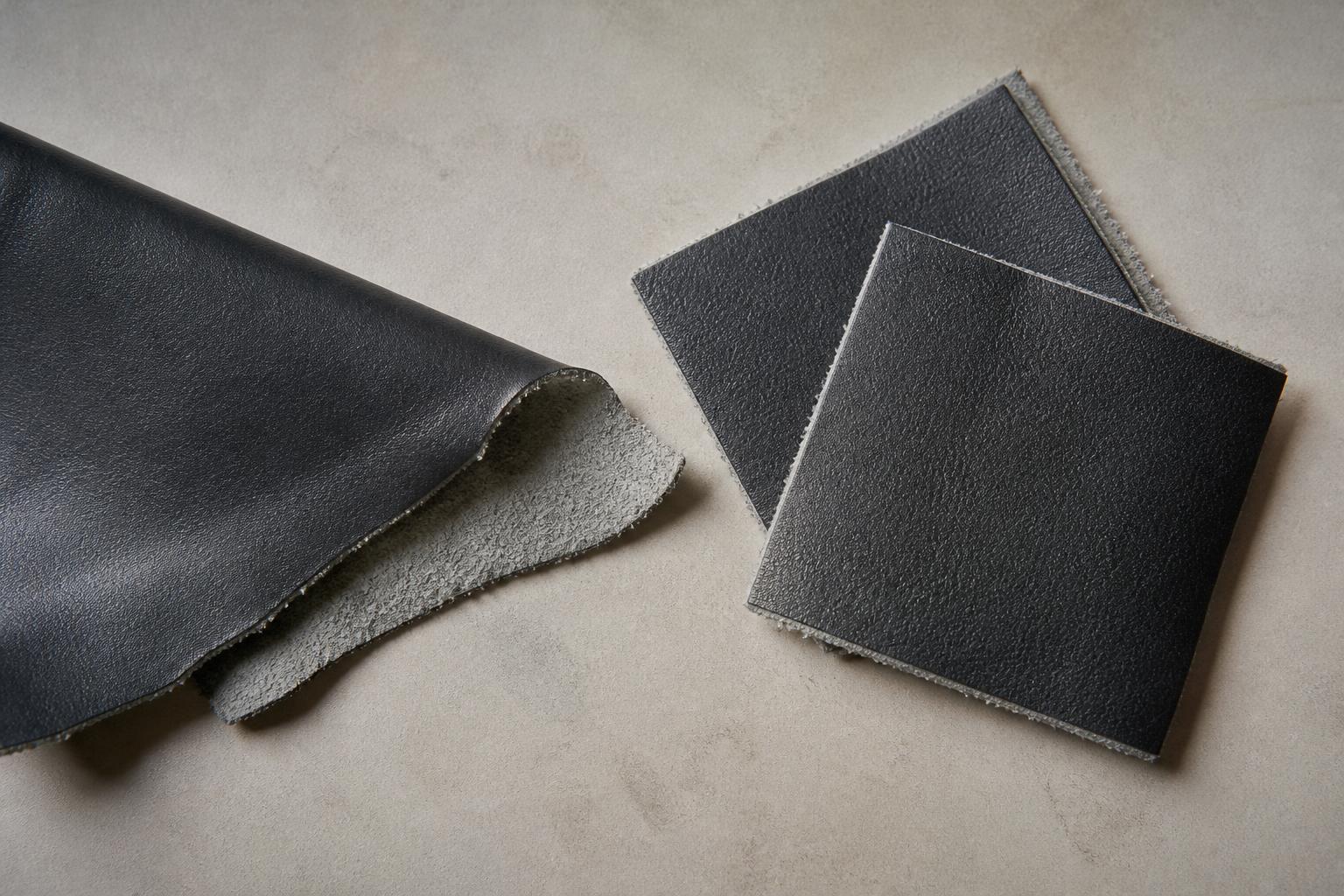
Bonded leather is a composite material. It is usually made from shredded leather offcuts, leather fibre, or leather dust generated during leather processing, mixed with adhesives or polymer binders, and formed into sheets. A surface coating is then added to create a more leather-like appearance and feel.
So when people ask what bonded leather is, the important point is that it is not a whole piece of animal hide with the natural grain still intact. It sits in a different category from the better known grades of leather.
Full grain leather is cut from the top layer of the hide and keeps the natural grain surface. It usually shows the most character, and it is widely regarded as the highest grade in terms of structure and ageing potential.
Top grain leather also comes from the upper part of the hide, but the surface is sanded or corrected to remove imperfections. It is still a real leather sheet, just more processed than full grain.
Split leather comes from lower layers of the hide after the top has been separated. It is still real leather, but its structure and finish differ from upper layers. Suede is often made from splits, and some coated split leathers are finished to resemble smooth leather.
Synthetic alternatives, such as polyurethane based materials or PVC based materials, contain no leather at all unless specifically blended with it. These are entirely manufactured surfaces, though they may be textured to mimic leather grain.
Bonded leather sits apart from all of these. It contains leather content, but not in the form most people imagine when they hear the word leather. A useful comparison is engineered board made from wood fibre rather than solid timber. The source material may be related, but the structure, performance and value are not equivalent.
This is where confusion often starts. A product can contain genuine leather fibres and still not offer the durability, repairability or ageing pattern people associate with higher quality leather goods. That is why broad wording such as “made with leather” tells you very little on its own.
How is bonded leather made?
The basic process starts with leather waste from manufacturing. That can include trimmings, shavings and fibres left over when hides are cut and processed. These remnants are ground or shredded into small particles.
Those particles are then mixed with a binder. In practice this is often a synthetic polymer, commonly polyurethane or a latex type adhesive system, though formulations vary by manufacturer. The mix is spread into a sheet or bonded onto a backing material, which may be fabric, paper or another substrate depending on the intended use.
Once the base sheet is formed, the surface is usually coated to improve appearance and consistency. This outer layer matters a great deal, because it often provides the smoothness, colour, sheen and resistance that consumers notice first. The surface may then be embossed with an artificial grain pattern to resemble natural leather.
That means bonded leather is not just leather fibre pressed together. It is typically a layered construction, with leather content inside a broader manufactured material system. The visible top surface may be heavily engineered.
This is one reason descriptions can become slippery. If a seller focuses on the presence of leather fibres, that is not necessarily false. But if the overall impression suggests a hide-based material comparable to top grain leather, the description may be more flattering than informative.
For small fashion businesses, this construction detail matters when assessing supply chain claims. If a supplier says a material “uses reclaimed leather” or “contains recycled leather fibres”, that may describe one part of the material accurately. It does not automatically tell us the percentage of leather content, the chemistry of the binders, the composition of the coating, or how the material performs in use.
Why do brands use it?
The first reason is cost. Bonded leather is generally used because it can deliver a leather-like look at a lower material cost than higher grade hide leather. For categories where price pressure is intense, that commercial logic is straightforward.
The second reason is visual consistency. Natural leather varies from hide to hide. It can show scars, grain differences, pores and tonal shifts. Bonded leather can be made with a more uniform colour and texture, which suits brands aiming for a neat, standardised finish across large runs.
The third reason is material efficiency, at least in the narrow manufacturing sense. Because it uses leather by-products or waste fibre that might otherwise have less value, brands sometimes present it as a resource-saving option. There is a kernel of truth in that. Using offcuts can reduce waste from the hide processing chain.
But that is not the same as proving an overall lower environmental impact. Once binders, coatings, backing materials, processing, durability and end of life are considered, the picture becomes more complicated. A claim that bonded leather is “eco-friendly” simply because it uses leather scraps is too thin on its own.
Brands also use bonded leather because many customers do not know the distinction. In accessories especially, the phrase “leather” still carries a strong visual and cultural signal. If a product looks polished on the shelf and hits a lower price point, bonded leather can be commercially attractive.
That does not make it automatically deceptive. The problem arises when the wording leans on the prestige of leather while leaving out the construction. For readers trying to judge broader material claims, our guide to how to spot greenwashing risk in fashion claims sets out the kind of missing evidence that should make you pause.
How durable is bonded leather compared with other materials?
Bonded leather is usually less durable than full grain and top grain leather. That is the safest general rule, though performance still depends on thickness, backing, coating quality, construction and how the item is used.
The main issue is that bonded leather does not have the continuous fibrous structure of a whole hide. Over time, repeated bending, abrasion and exposure to body oils, moisture, heat or friction can cause the surface layer to wear, crack or peel. Once that top layer starts to fail, the material can look tired quite quickly.
This is why bonded leather often disappoints buyers who expected the kind of ageing associated with better leather. Full grain leather may scuff, soften and develop patina. Bonded leather is more likely to show finish failure rather than an attractive lived-in surface.
That said, we should be careful not to replace one oversimplification with another. Not every bonded leather item falls apart immediately, and not every synthetic alternative performs worse. A well-made polyurethane material may outlast a poorly made bonded leather one in certain uses. Small accessories with limited flexing may also fare better than seat surfaces, bag corners or belts, where stress is constant.
Use matters. A bonded leather notebook cover may remain presentable for some time. A bonded leather wallet that is bent, sat on and rubbed daily may show wear far sooner. Watch straps, belts and frequently handled bag trims are particularly exposed because they combine flex, sweat, friction and edge stress.
Readers should also separate structural durability from reparability. Higher quality leather can often be conditioned, refinished or repaired by a specialist. Bonded leather generally offers fewer good repair options once the surface coating begins to delaminate or peel.
So what can you assume from the label alone? Not much beyond the fact that some leather content is present, if the term is used accurately. You cannot assume long life, and you should not assume the material will age like hide leather. Equally, you cannot judge lifespan responsibly without looking at product design, stress points, stitching, edge finishing and the honesty of the brand’s description.
What do labels and material claims actually tell you?
In the UK, labels on fashion accessories and non-footwear goods often tell consumers less than they expect. There is no universal requirement that every leather product spell out the exact grade or construction in plain retail language. So a shopper may see “leather”, “genuine leather” or a branded material name without learning whether the item is full grain, split, bonded or heavily coated.
For footwear in the UK and EU, there are more specific composition labelling rules about the upper, lining and sock, and outer sole. Those rules help identify whether leather, coated leather, textile or other materials are used in the main parts of the shoe. But even there, the label does not necessarily give a full education in leather quality.
Where UK rules differ from the EU generally, the broad practical point for consumers is that post-Brexit regulatory administration has separated, but many product categories still look similar in day to day retail because businesses often work across both markets. That does not mean terminology is always consistent, and online listings remain patchy.
Terms such as “genuine leather” are especially unhelpful. In trade use, that phrase can simply mean the material contains real leather. It is not a protected mark of premium quality. A buyer reading “genuine leather” should not infer full grain or top grain status.
With bonded leather, disclosure can also be limited by how brands choose to present composition. They may state “bonded leather”, “reconstituted leather”, “leather fibre”, or use a proprietary product name. Some will give percentages. Many will not. If the coating or backing is synthetic, the visible leather reference may still dominate the marketing.
Certification can help, but only if it is specific. A tannery certification, a restricted substances standard, or a chain of custody claim tells us something about one part of the process. It does not automatically validate broad statements about durability, recycled content or environmental superiority. This is similar to the caution we apply across other fibres and materials, whether we are looking at what TENCEL is made from and why it matters or trying to compare animal and non-animal options.
The most useful labels are the ones that do not make you guess. If a brand clearly states that a bag uses bonded leather with a polyurethane surface on a textile backing, that is far more informative than simply calling it leather.
How should readers assess bonded leather claims?
Start with the most basic question. What exactly is the material? If the description says leather, ask whether it is full grain, top grain, split, suede, bonded or coated. If the seller cannot or will not say, treat that as missing information, not a minor detail.
Next, look for composition beyond the headline term. Does the brand disclose the presence of polyurethane, PVC, textile backing or mixed fibres? Bonded leather is often sold on the strength of its leather content while the rest of the construction stays vague. That vagueness matters.
Then assess any recycled-content language carefully. “Made from leather waste” may be true, but it does not tell you the proportion of leather fibre in the finished material. Nor does it tell you whether the binder is fossil fuel based, whether the coating is plastic, or whether the finished product can be meaningfully recycled later. A claim about input waste is not the same as a claim about the full material outcome.
Be equally cautious with environmental shorthand. Words such as “sustainable”, “eco”, “responsible” or “planet friendly” need supporting detail. We want to know what is being claimed, compared with what, and evidenced how. If the entire case rests on the fact that leather offcuts were used, that is not enough.
For small fashion businesses, supplier due diligence should include practical document requests. Ask for a technical data sheet, composition breakdown, any recycled-content declaration, restricted substances compliance information, and details of the surface coating and backing. If a supplier makes environmental claims, ask what standard or methodology supports them. If there is certification, ask what exactly is certified, the scope, and the certificate holder.
Also consider the use case honestly. If the item is a high-friction, high-flex product, such as a belt, wallet or bag handle, ask for abrasion and flex performance information if available. A supplier may not always provide it, but the request itself often reveals how robust the claim really is.
For consumers, the simpler version of that framework is this: inspect the wording, look for specifics, and distrust prestige by implication. A low price paired with very vague leather language usually tells its own story.
Finally, judge the whole product, not just the material name. Construction quality, stitching, edge paint, hardware, lining and aftercare guidance all affect value. Bonded leather is not automatically the wrong choice for every buyer. It may suit a lower-cost accessory where appearance matters more than long service life. But it is the wrong choice if you are paying for the romance of leather without being told that the material is engineered from fibres and binders.
That is why the most useful question is not only what bonded leather is, but what the brand is trying to make you assume. If the answer is more flattering than factual, step back and ask for the missing detail. For a wider framework on reading fashion marketing with a cooler eye, our piece on how to judge menswear claims before you buy is just as relevant outside menswear as the title suggests.

Questions about this article or a correction to suggest? Get in touch. Read more about our editorial approach.