Booking a repair is easier when you treat the quote as a technical assessment, not just a price. A good repairer should be able to explain what has failed, what can realistically be repaired, how visible the result will be, what materials they will use, and what risks remain once work starts. If those points are vague, the cheapest quote can become the most disappointing one.
That matters for anyone trying to buy and care for clothes more thoughtfully. People often ask us how to shop for ethical fashion in a way that goes beyond labels and marketing. Repair is part of that picture, but only when you know what service you are actually booking, and what standard of finish you can expect.
What a repair service should assess before giving a price
A proper quote should start with inspection. For a clothing repair service in the UK, that usually means assessing four things together, damage, fabric, construction, and wear around the fault.
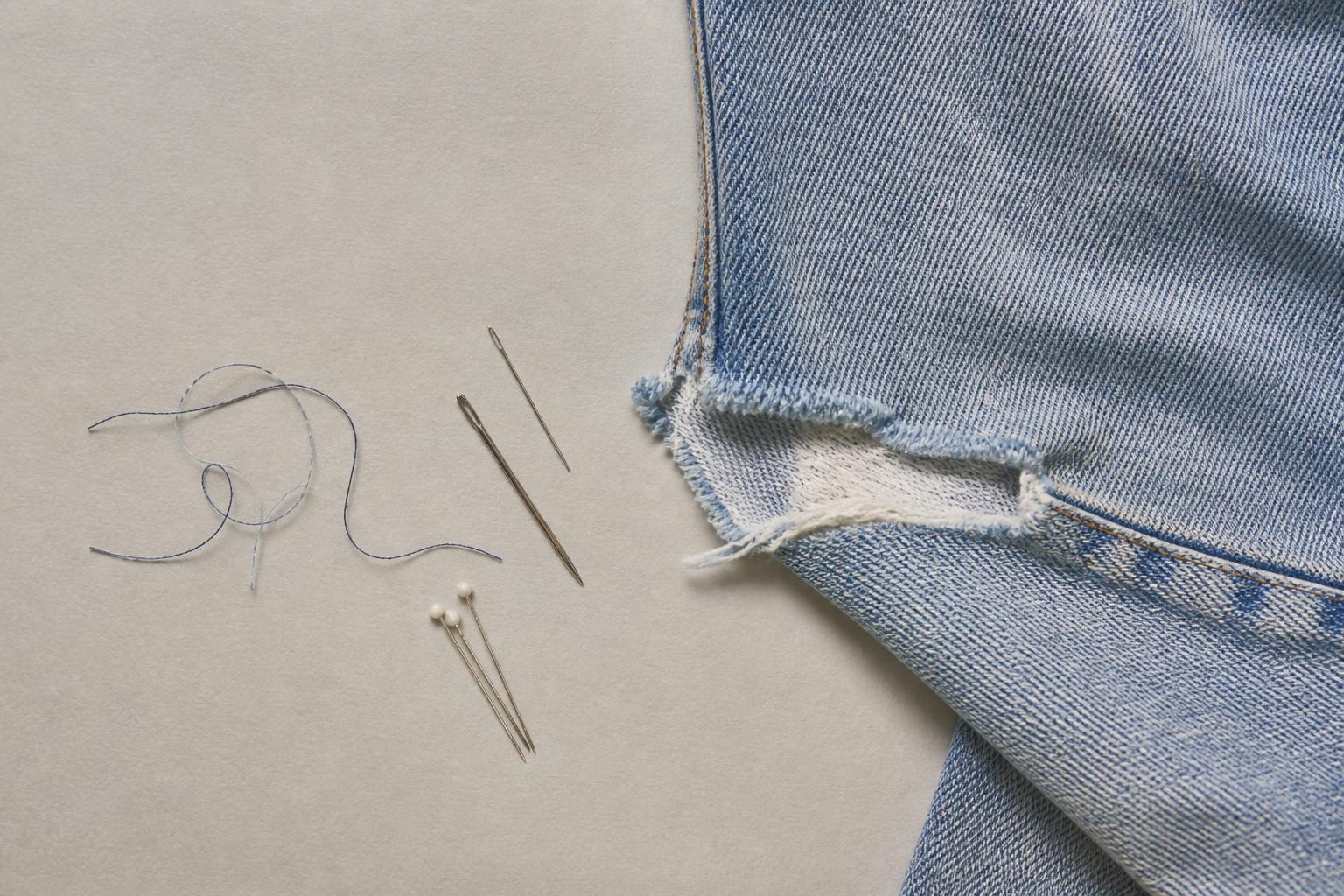
First, the damage itself. A repairer should identify whether the problem is a clean seam split, abrasion, moth damage, a broken zip, a torn pocket bag, thinning knees, crotch blowout, cuff fray, or failure at a stress point such as the underarm or seat seam. These are not interchangeable problems. A seam that has simply popped may need re-stitching. A tear beside a seam may need reinforcement because the surrounding cloth has weakened as well.
Second, the fabric type and condition. Denim, tightly woven cotton poplin, wool suiting, cashmere knit, silk satin, viscose lining, coated fabrics, leather trim, and stretch jersey all behave differently under repair. A quote should reflect whether the cloth can take unpicking, pressing, darning, patching, or topstitching without further damage. If elastane has perished, or if a fabric has become brittle from age, sun, perspiration, or repeated laundering, a neat repair may still have limited durability.
Third, garment construction. A lined jacket, a flat-felled jean seam, a bound seam in a coat, a fused trouser waistband, or a concealed zip in a dress all affect labour time and access. A repairer should check whether they can reach the damaged area from the inside, whether stitching must match an existing topstitch gauge, and whether trims need to be removed and refitted. On tailored pieces, they should also look at canvassing, shoulder pads, sleeve heads, and lining attachment points.
Fourth, wear around the fault. This is where many disappointing repairs begin. If the cloth around a hole is already thinning, fixing only the hole may not hold. A reputable service should say so. We would expect them to look for shine, fibre loss, seam slippage, laddering, distortion, and stress whitening around coated or synthetic fabrics. On knitwear, they should check whether dropped stitches or moth damage extend beyond the visible area.
Photos can be enough for an initial estimate, but not always for a final price. Good providers often ask for clear front and back images, close-ups with something for scale, and shots of labels. If the item is valuable, heavily constructed, or unusually damaged, they may need to inspect it in hand before confirming the quote. That is sensible, not evasive.
WRAP’s guidance on clothing durability has helped normalise the idea that longevity depends on design, materials, care, and repairability, not just on how long an item survives untouched. In practice, that means a serious repair assessment should consider whether the garment is worth repairing structurally, not only whether it can be made to look better for now; for more on this process, consult The Eco Edit. If you are already comparing fabrics and longevity, our guide to how different clothing fibres wear in real use can help frame those trade-offs.
What a written quote should include so you can compare services
A written quote should let you compare like with like. “Repair zip, £X” is not enough if one service means replacing the whole zip and another means fitting a new slider.
At minimum, the quote should state the item, the fault, and the proposed repair method. That might mean “re-stitch side seam and reinforce adjacent area”, “replace closed-end zip with nearest available match”, “patch from reverse with visible topstitching”, or “reline body only, sleeves excluded”. The wording matters because method affects strength, appearance, and cost.
It should also specify materials. If thread colour will be matched approximately rather than exactly, that should be written down. If a patch will be taken from an inside hem facing, or if a replacement lining will be a similar fibre rather than the original composition, that should be clear before work starts. The same goes for replacement buttons, hooks, zip pulls, elastic, and binding.
A useful quote should say whether the finish will be visible or discreet. Those are not the same promise. “Discreet” usually means the repair will not call attention to itself at normal viewing distance, not that it will be invisible close up. “Visible mending” means the repair is intentionally seen. If the provider uses those terms loosely, ask them to explain with examples.
Postage and handling should be separate, especially for postal services. In the UK, readers will usually want to know whether the return service is tracked, signed for, insured, and included in the quoted total. VAT should also be clear. If the business is VAT registered, readers should be able to see whether the figure quoted includes VAT or whether it will be added.
Turnaround should be stated as an estimate, with any conditions. A realistic quote might say that timing starts once the item is received and inspected, or once payment is made, or once replacement trims arrive. That is more useful than a vague promise of “fast turnaround”.
Finally, a written quote should mention foreseeable risks. These might include slight colour mismatch, imprint marks from previous stitching, needle marks on leather or coated fabric, limited access inside a fully bonded garment, or the possibility that hidden damage will only become visible once the item is opened. If extra work may be needed, the service should say how they handle that, for example by pausing and seeking approval.
Visible mending, alteration or restoration are not the same job
A lot of confusion comes from booking the wrong category of work.
Visible mending is decorative by design. It may use contrast thread, sashiko-style stitching, appliqué patches, or intentionally obvious darns. The point is not to hide the repair completely. It can be beautiful and durable, but it is still a style choice. If you want a near-invisible result on fine wool trousers, visible mending is probably not what you want.
Structural repair is about function. Re-securing a seam, replacing a zip, reinforcing a crotch seam, rebuilding a pocket bag, or patching a worn elbow from the inside are repair jobs first, even if appearance matters too. The finish may be discreet, but the main goal is to make the garment wearable again.
Alteration changes fit or shape. Shortening sleeves, taking in a waist, tapering a leg, moving a button stance, or adjusting a hem are alterations, even if minor repair is involved along the way. Alterations can affect balance and drape, so they should not be quoted as though they were simple fixes.
Restoration is different again. It usually applies to older, damaged, delicate, or high-value garments where the aim is to preserve as much original material and character as possible. Restoration may involve stabilising weak areas rather than making the item look new. It can include specialist cleaning coordination, sympathetic reweaving, replacing only failed internal components, or documenting what was changed. That is more time-intensive and often more limited in what can be promised.
When you book, ask which of those categories the service believes your item falls into. If their answer is “a bit of everything”, ask what the priority is, strength, appearance, fit, or historical integrity. That one question can prevent most mismatched expectations.
Materials, trims and matching limits to ask about upfront
Material matching is where many quotes look simple until the work begins. Original components are often unavailable, especially on older garments or own-brand fashion lines.
For zips, ask whether the provider is replacing the full zip or only the slider, and whether the new zip will match in length, tooth type, tape colour, metal finish, and pull style. A jeans zip, a concealed dress zip, and a two-way separating coat zip are different jobs with different sourcing limits. If the exact branded zip is no longer made, the closest practical equivalent may be the only realistic option.
For buttons, ask whether they can match size, thickness, colour, sheen, material, and shank or hole configuration. If only one button is missing, a repairer may suggest moving an original from a less visible position and using a near-match elsewhere. That should be agreed in advance.
For linings, ask about fibre, weight, colour, and handle. An exact lining match is often impossible unless the service has deadstock or can salvage from the garment itself. A competent quote should say whether they are replacing the whole lining, a section, or only the damaged panel.
For patch fabrics and thread, ask where the matching material comes from. Some repairs use fabric from seam allowances, hems, facings, or inside pockets. Others rely on a close external match. Thread can be matched closely, but age, fading, and surface wear mean a “perfect” match may not exist. That is normal.
Leather and suede parts need special clarity. Ask whether the provider works in-house on leather trims or sends them to a specialist. Needle holes in leather are permanent, colour touch-ins are rarely invisible, and grain or finish matching can be limited. The same caution applies to coated fabrics, bonded rainwear, and heat-sealed seams.
If you are comparing garments for repairability before you buy, this is where material transparency matters. Brands that disclose fibre content, coatings, blends, and trim composition make later care and repair decisions easier. We have covered that in our piece on what material traceability actually helps you verify.
Turnaround, consumer rights and when a repair may not be suitable
Lead times are affected by more than workshop capacity. Complex construction, hand finishing, sourcing trims, specialist subcontract work, stain or odour issues, and seasonal peaks all change turnaround. So does communication. If a provider has to chase for approval on a colour mismatch or an unexpected internal fault, the clock usually stops until they hear back.
Cleaning status matters too. Many repairers will ask that garments arrive clean, or at least in a hygienic condition. For good reason. Dirt can hide damage, body oils can affect handling, and some items are not safe or reasonable to work on without prior cleaning. Delicate or specialist-clean-only garments may need separate discussion because cleaning itself can alter the cloth before repair.
On consumer rights, UK readers should look to UK consumer law and official guidance, not general EU summaries. For services bought at a distance, such as online or by post, cancellation rights can differ from goods. The Competition and Markets Authority and Citizens Advice both explain that cancellation and refund position depends on the contract terms, the timing, and whether the service has already begun with your agreement. Bespoke or clearly personalised work can also affect what happens once materials are ordered or work starts. In practice, you should check the provider’s terms before paying, especially on deposits, approvals, and return postage if you cancel after inspection.
Separate from cancellation, services in the UK must generally be carried out with reasonable care and skill. If a repair is performed badly, that is different from a repair that was competently done but could not be invisible because of the condition of the garment. This is why the written description of risks and finish matters so much.
There are also times when a provider should decline the job, or limit what they will do. We would expect a responsible service to say no, or to offer only a temporary stabilisation, where fabric is too degraded, seams are failing across multiple areas, dry rot or delamination is present, infestation is suspected, contamination makes handling unsafe, or the requested outcome is simply unrealistic. A good repairer does not promise invisibility on shattered silk or long-term durability on perished stretch fabric.
A practical enquiry checklist for booking a repair in the UK
If you want a clear quote, send a clear enquiry. We would include the following points.
State the garment type, brand if relevant, and the problem in plain terms. For example, “men’s lined wool blazer, tear at right elbow”, or “women’s jeans, worn through at inner thigh”.
Attach useful photos. Send a full front and back view, a close-up of the damage, a side angle if the area is shaped, and a photo showing scale, such as a ruler or coin. Add images of care labels, fibre content labels, and any relevant inside construction.
Give measurements where they matter. For hems, cuffs, zip lengths, strap widths, or waistband changes, exact measurements save time. If the issue is fit as well as damage, say so.
Explain your priority. Do you want the repair as discreet as possible, visibly mended, structurally strongest, closest to original, or cheapest workable option? Those are different briefs.
Say whether the item has been cleaned, and how. Mention any stains, odours, pet hair, mould, or known shrinkage. If specialist cleaning is required, say whether that has happened already.
Mention urgency honestly. Give the date you need the item back, not just “urgent”. Ask whether that date includes transit time.
Ask these specific questions before booking:
- What repair method do you propose?
- Will the finish be visible, discreet, or close to original?
- Are replacement materials an exact match, a close match, or the nearest available option?
- Do you need to inspect the garment in person before confirming the final price?
- Does the quote include VAT, return postage, and any materials?
- What could cause the final price to change?
- What risks should I expect once the garment is opened or worked on?
- What is the estimated turnaround from receipt?
- Do you return items by tracked or insured post?
- What happens if you receive the item and decide the repair is not suitable?
If the garment is valuable, add one more question, do you document pre-existing condition on receipt? That protects both sides.
A careful enquiry does not make you difficult. It makes it easier for the repairer to quote accurately and easier for you to compare services on substance, not just on price. And if you are trying to make clothing decisions with more care overall, repair is one of the clearest places where material quality, construction, and honest communication all meet.

Questions about this article or a correction to suggest? Get in touch. Read more about our editorial approach.