If you want the short answer, gold vermeil can look good for years, but it is still a plated finish and the gold layer will eventually wear. The honest answer to how long gold vermeil lasts is, it depends far more on thickness, design, skin contact and care than on a neat number in a product listing.
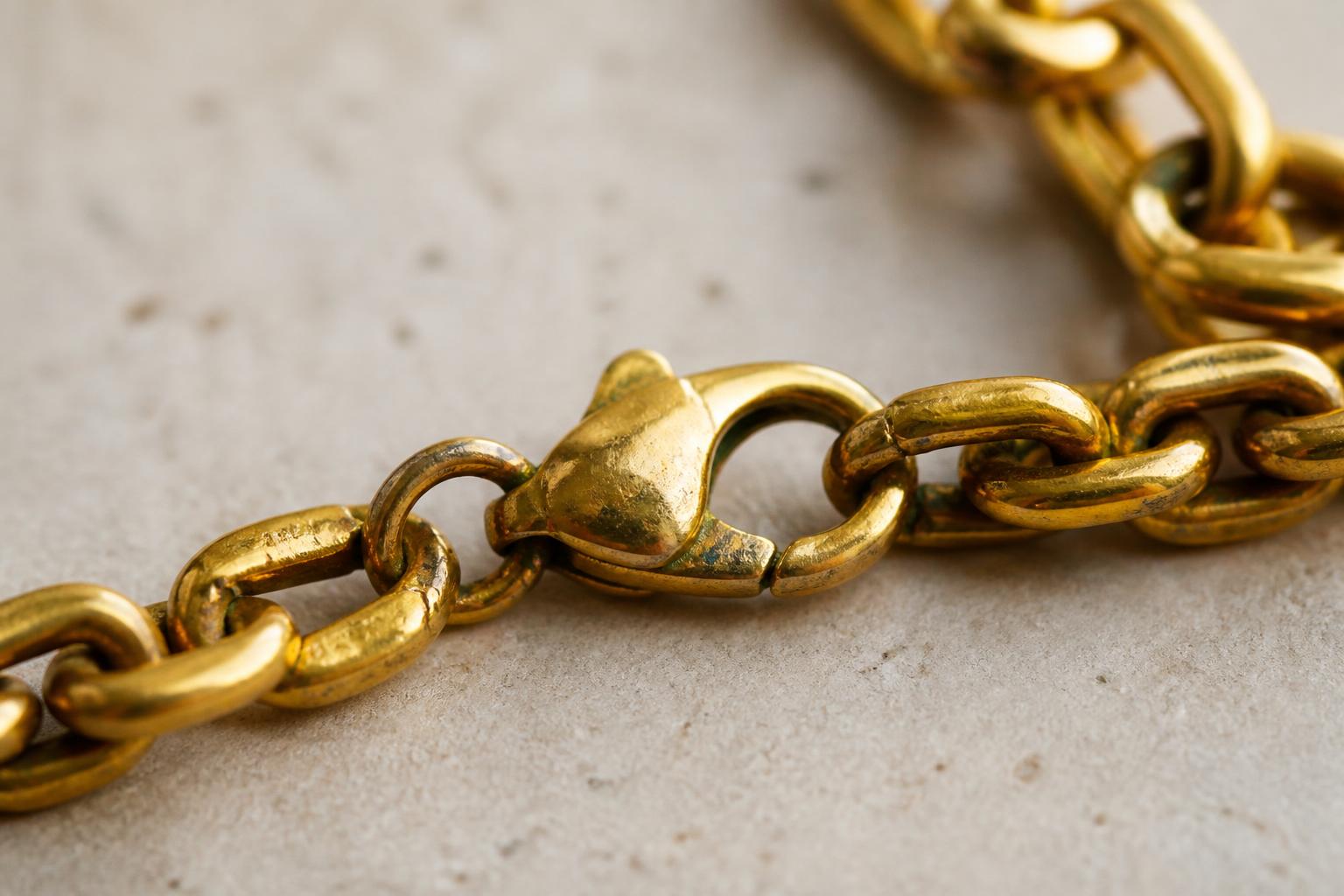
What usually fails first is not the whole piece at once. It is the surface in the places that rub most, catch sweat and skincare, or knock against hard objects. On a ring that may be the underside of the band. On a necklace, the clasp and jump rings. On earrings, the posts and backs. Because the base metal is sterling silver rather than brass or steel, the change in appearance can be subtler at first, but it is still wear.
What gold vermeil is and why lifespan varies
Gold vermeil has a specific material structure. In the UK jewellery trade, it generally means a layer of gold plated over sterling silver. The sterling silver base matters. It is what separates vermeil from ordinary gold plated jewellery, which may be plated over brass, copper, stainless steel or other base metals.
That difference affects both value and wear. Sterling silver is a precious metal, so even after the top gold layer thins, the underlying piece is not costume jewellery in the same sense as a plated brass item. It may still be worth replating or repairing. It also means that when wear begins to show, you often see cooler silver tones rather than the reddish or yellow-brown exposure that can appear with copper-rich base metals.
There is also a technical point that often gets blurred in marketing. In some markets, especially the US, gold vermeil is expected to meet minimum standards for both sterling silver purity and gold thickness. In the UK, retailers still use the term widely, but product descriptions are not always equally precise about the plating thickness, the gold purity in the top layer, or the method used. So two pieces sold as gold vermeil can behave quite differently in use.
That is why a single lifespan figure is unreliable. A pendant worn occasionally over clothing is not under the same stress as a ring worn daily while washing hands, gripping bags and typing. A 2.5 micron plating on a smooth earring hoop is not the same proposition as a very thin flash plating on a heavily textured chain bracelet. Even body chemistry matters. Some people’s skin, sweat, fragrance habits and skincare routines are simply harsher on plated surfaces than others.
When readers ask how long does gold vermeil last, what they usually want to know is whether it is a short-lived finish or something they can wear regularly without it looking tired. The answer sits in the middle. It is usually more durable and more repairable than cheap gold plated jewellery, but it is not permanent in the way solid gold is. Any seller suggesting otherwise is skipping over the basic fact that vermeil is a coating on a silver core.
What wears out first in gold vermeil
The first visible sign is usually not dramatic peeling. More often, it is dulling, thinning or a slight shift in colour on high-contact areas. The gold can look less rich, less even or less warm before the silver underneath is fully obvious.
The usual wear points are predictable:
- ring shanks, especially the palm side
- bracelet edges and links that knock against desks
- necklace clasps, jump rings and chain ends
- earring posts and backs
- pendant bails where metal rubs against chain
These are the places where friction is repeated and concentrated. The finish is being abraded in tiny amounts over time. The process can be sped up by hand sanitiser, soap, perfume, fake tan, moisturiser, sunscreen and chlorinated or salty water. None of that is unique to vermeil, but plated surfaces are less forgiving because the visible colour sits in a relatively thin top layer.
Sterling silver underneath changes what people notice first. If gold plating over brass wears through, the contrast can be abrupt. You may get a strong shift from yellow gold to a darker, warmer base metal. With vermeil, the exposed sterling silver is often cleaner and paler in appearance. Some wearers do not notice immediately because the exposed area can look like a cool highlight until it spreads.
Silver also brings its own behaviour. Once the gold layer has thinned or broken in places, the exposed sterling silver can tarnish. That can create patchiness rather than a simple fade. So the first thing that looks wrong may be uneven tone rather than obvious raw metal showing through.
Texture matters too. Raised details, bead edges and sharp corners wear first because they take the friction. Concave areas and sheltered recesses often keep their colour much longer. That is why an ornate vermeil piece can age unevenly, with highlights on the high points and stronger gold in the protected areas. Some people like that softened look. Others read it as tired plating.
Gold vermeil compared with gold plated, gold filled and solid gold
Gold vermeil sits in an awkward but useful middle ground. It is not the cheapest format, and it is not the most durable. Its appeal is that you get a precious metal base with the look of gold, at a lower cost than solid gold.
Compared with ordinary gold plated jewellery, vermeil usually has two advantages. First, the sterling silver base is more valuable and often more acceptable for people avoiding brass or nickel-rich alloys. Second, when wear happens, the exposed metal is silver rather than a cheaper base metal. That can make the piece more wearable for longer, and more worth replating.
Gold plated jewellery is a broad category, though, and that is where comparisons can become slippery. A well-made gold plated item with a decent plating thickness can outperform a very thin vermeil piece in day to day wear. The label alone does not settle the question. Construction and thickness still matter.
Gold filled is structurally different again. Rather than a very thin electroplated surface, it uses a mechanically bonded outer layer of gold over a base metal core, commonly jeweller’s brass. In general use, gold filled tends to be more durable than standard plating because the gold layer is much thicker. It can withstand wear better before the base metal shows. The trade-off is material composition. It is not sterling silver underneath, and repair options depend on the piece and the maker.
Solid gold is in another category entirely. There is no plated surface to wear off, so the colour remains through the metal. It can still scratch, dent and lose polish, especially at lower carats, but it does not fail in the same way. Repairs are also simpler in principle because there is no coating to preserve. The obvious trade-off is cost.
For buyers, the practical comparison looks like this:
- gold plated, lowest entry price, widest variation in quality, least predictable wear
- gold vermeil, precious silver base, plated gold surface, often a better balance of appearance and price
- gold filled, thicker bonded gold layer, usually stronger wear performance than plating, but not a silver core
- solid gold, highest cost, strongest long term durability, easiest to keep as a lifetime piece
If you are weighing claims across these categories, it helps to read material descriptions with the same caution we would use when looking at wider fashion marketing. Our guide on how to judge sourcing claims in fashion and jewellery is useful here, especially when a brand leans on reassuring language but gives little technical detail.
Which factors make gold vermeil last longer or wear faster?
Plating thickness is the biggest technical factor most shoppers can realistically check. If a brand gives a micron figure, that is usually more useful than vague language such as “premium plating” or “long lasting finish”. More microns generally means more gold available to wear through, though it is not the only variable. Adhesion, surface preparation and finishing quality matter as well.
Micron claims need context. A listing that says “gold vermeil” but gives no plating thickness leaves you guessing. A listing that says “2.5 microns of 18ct gold over sterling silver” tells you more. It still does not guarantee a lifespan, but it gives a clearer basis for comparison. Be wary of brands that use vermeil language prominently but hide the technical specification.
Item type matters just as much as thickness. Rings and bracelets usually wear faster than pendants and earrings because they are in constant contact with skin, surfaces and movement. A vermeil pendant worn occasionally may keep its finish for a long time. A vermeil ring worn daily, especially during handwashing and cleaning, may show thinning much sooner.
Skin contact and chemistry also play a part. Sweat, natural oils and product residue sit against the metal for hours. Some people can wear plated jewellery for long periods with minimal change. Others find even careful wear leads to quicker fading. That is not a fault in every case. It is part of how reactive surfaces behave on the body.
Friction is the enemy of plated finishes. Think about where the piece moves and what touches it. Necklace chains rubbing against pendants, stacked bracelets knocking together, rings touching keys or shopping trolleys, earrings pressed by over-ear headphones, all of this accelerates wear.
Storage is often overlooked. Vermeil thrown loose into a box with other jewellery will pick up fine scratches and abrasion. A soft pouch, separate compartment or lined box reduces unnecessary contact. Dry storage matters too, especially once any silver is exposed. Humidity can encourage tarnish on the underlying sterling silver.
Manufacturer care instructions are worth reading, but they vary in usefulness. The good ones are specific. Remove before showering, swimming, exercising, sleeping and applying fragrance or lotion. Store dry. Clean only with a soft dry cloth. Avoid silver dips, abrasive cloths and polishing compounds that can strip the gold layer. The vague ones simply say “handle with care”, which tells you almost nothing.
One more point for UK readers, because terms travel across markets. You may see US-focused advice that treats vermeil as a tightly defined category with a fixed minimum plating thickness. In the UK, product labelling and advertising still need to be accurate, but retail usage of the term can be less informative than shoppers expect. That makes it even more important to look for the actual material breakdown rather than relying on the word vermeil alone.
How to assess durability claims before you buy
Start with the product description. You want three things stated plainly: the base metal, the gold purity, and the plating thickness. “Sterling silver with 18ct gold vermeil” is not enough on its own if there is no indication of thickness. “925 sterling silver with 2.5 micron 18ct gold plating” is more useful.
Check whether “925” or “sterling silver” is supported by hallmark information where applicable. In the UK, precious metal items above certain weights must generally be hallmarked by an Assay Office before sale. For silver, that threshold is 7.78 grams. For gold, it is 1 gram. This can confuse buyers of vermeil, because the article is fundamentally a silver item with a gold coating. If the silver part is over the silver hallmarking threshold, it should normally require hallmarking as silver. Very light pieces may legally fall below that threshold and therefore have no hallmark.
A hallmark is not a durability guarantee, but it does support the claim that the underlying metal is sterling silver rather than a cheaper base metal. What it will not tell you is plating thickness. For that, you still need the seller’s specification.
Look closely at wording around certification and assurance. Phrases like “ethically sourced”, “responsibly made” or “premium quality” may be relevant to other buying priorities, but they do not prove anything about wear performance. Nor does “nickel free” tell you how long the gold finish will last. If the page spends more space on mood and less on construction, treat durability claims cautiously.
Photographs can help, but only a little. Sharp product photography may show whether clasps, links and edges are substantial or flimsy. It cannot tell you how well the gold is bonded or how thick the plating really is. Reviews can be useful if they mention wear after real use, but watch the timing. A review posted a week after purchase tells you almost nothing about longevity.
Evidence is often missing in predictable places. Brands may omit micron figures. They may say “vermeil” without naming the gold carat. They may mention recycled silver but not explain plating thickness or replating services. They may use sustainability language where technical language is what buyers actually need. If you want a wider framework for spotting that kind of gap, our piece on how to spot fashion greenwashing before you buy shows the same pattern in other materials categories.
It is also worth asking whether the brand offers replating or repair. That does not make the original finish more durable, but it tells you something about how the company expects the piece to age. A maker who openly discusses replating intervals, care limits and aftercare is usually being more realistic than one promising that vermeil will “never fade”.
Finally, read claims with the same scepticism you would bring to any fashion content that sounds authoritative but stays vague when details matter. We set out a practical method in our guide to judging a fashion blog’s sustainability claims, and the same habit applies here. Ask what is being claimed, what evidence supports it, and what the seller has chosen not to say.
Gold vermeil can be a sensible choice if you like the look of gold, want a sterling silver base, and are realistic about wear. It is not disposable by definition, and it is not forever by default. The pieces that age best are usually the ones with clear material specifications, sensible design, and owners who treat plated jewellery like a finish that needs protecting, because that is exactly what it is.

Questions about this article or a correction to suggest? Get in touch. Read more about our editorial approach.