
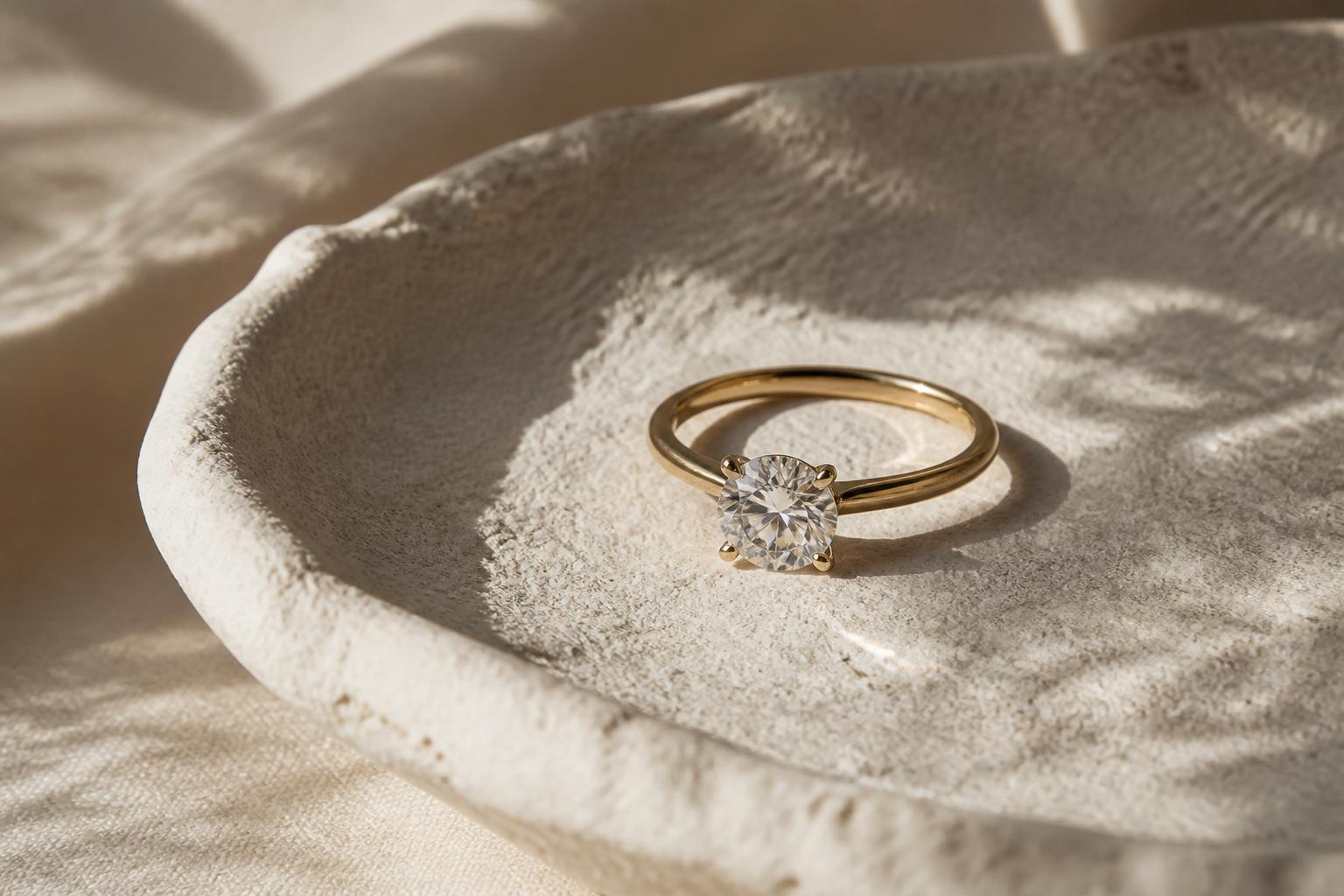
If you are asking whether lab grown diamonds are the more ethical choice, the short answer is often yes, but not automatically and not in every respect. Growing a diamond in a factory can reduce some of the hardest ethical problems associated with mining, especially land disturbance, community displacement and certain conflict risks. That matters.
But “more ethical” is a comparative claim, not a magic label. A lab grown stone can still involve carbon intensive electricity, weak factory transparency, poor disclosure practices and marketing that says more than the evidence supports. The better question is not simply whether lab grown is ethical, but which harms are lower, which still remain, and what proof a seller can actually show.
What does “more ethical” mean for a diamond?
When we compare diamonds ethically, we need a framework broader than “mined versus lab grown”. In practice, readers are usually weighing five things.
First, labour conditions. Who extracted or produced the stone, under what safety standards, with what wages, hours and worker protections? A mined diamond can come from a large industrial operation with formal controls, or from contexts where workers face much weaker protection. A lab grown diamond may be produced in a controlled facility, but that does not tell us much unless we know who owns the factory, where it is, and what labour standards apply.
Second, human rights and community impact. With mined diamonds, the key questions include land rights, displacement, security practices, impacts on Indigenous communities, and whether local people genuinely benefit from extraction. A diamond can be legally mined and still raise serious ethical concerns if communities were not properly consulted or compensated.
Third, environmental damage. This includes land clearance, habitat loss, water use, waste rock, tailings, pollution and long term site rehabilitation for mined stones. For lab grown diamonds, the environmental picture shifts toward electricity demand, the energy mix used in production, cooling systems, associated industrial gases and the footprint of the wider manufacturing process.
Fourth, traceability. Can the seller identify the origin of the stone and document the route from production to sale? Ethical claims are much stronger when they are backed by chain of custody records, named standards and clear disclosure. Vague phrases such as “conflict free”, “sustainable” or “eco friendly” are not enough on their own.
Fifth, marketing claims. This is where many jewellery buyers get tripped up. “Ethical” is not a regulated product category in the UK. A brand may use the word to mean lower carbon, no mining, better worker conditions, or simply a more modern image. We need to ask what exactly is being claimed, and what evidence supports that specific claim. The same discipline we use when spotting greenwashing before buying fashion applies here too.
So, are lab grown diamonds more ethical? Often they are more ethical on some criteria, especially where they avoid mining related harms. But the answer only holds if the business can also account for energy, labour and honest disclosure.
Which harms can lab grown diamonds reduce?
The clearest ethical advantage of lab grown diamonds is that they do not require diamond mining. That single difference can remove or reduce several categories of harm.
Land disturbance is the most obvious. Mining changes landscapes directly through excavation, access roads, waste storage and supporting infrastructure. Even where rehabilitation plans exist, the disruption can be severe and long lasting. A lab grown diamond does not require an open pit or underground mine to produce the stone itself, so that whole category of impact is reduced.
Displacement and land rights conflicts may also be lower. Mining projects can affect nearby communities through resettlement, restricted access to land, pressure on water resources and changes to local livelihoods. These issues vary hugely between countries and operations, but they are central to the ethics of extractive industries. A factory based production model does not eliminate labour and community concerns, but it usually avoids the specific harms tied to opening and operating a mine.
Some conflict related concerns can be reduced as well. Many consumers know the term “blood diamonds”, although the reality is more complex than a simple good or bad label. Lab grown diamonds are not mined in conflict zones, so they bypass one part of that risk. That said, conflict concerns in jewellery are not solved just by changing the stone. Metals, cutting, polishing and broader supply chains still need scrutiny.
Lab grown diamonds can also improve traceability in certain cases. Because production happens in a facility rather than through extraction from the ground, some manufacturers can maintain more direct records of origin and processing. If a brand knows the producer, the growth method, the cutting facility and the grading report number, it may be in a stronger position to document the stone’s journey than a seller relying on mixed global trading channels.
This is why many buyers feel that lab grown is the cleaner ethical choice. In several respects, that instinct is reasonable. If your main concern is avoiding new mining, then a lab grown diamond is usually the more aligned option.
Still, reduced harm is not the same as no harm. The ethical case is strongest when a brand says, clearly, that lab grown diamonds may reduce certain mining related risks, rather than pretending they are impact free.
What ethical issues still apply to lab grown diamonds?
Lab grown diamonds still raise real ethical questions, just in a different part of the supply chain.
Electricity use is the most discussed. Diamonds are typically produced using High Pressure High Temperature or Chemical Vapour Deposition methods. Both are industrial processes that require substantial energy. The ethical difference between one lab grown diamond and another can therefore depend heavily on where the production facility is located and how its electricity is generated. A stone grown using a fossil fuel heavy grid may carry a very different footprint from one produced with a cleaner energy mix. Sellers often gesture toward lower impact without disclosing enough to judge this properly.
Manufacturing conditions matter too. A factory setting can sound inherently safer and more controlled than a mine, but that does not remove the need to ask about wages, working hours, health and safety, subcontracting and labour rights. If a brand cannot tell us where its stones are grown and cut, we do not have enough information to treat “lab grown” as an ethical guarantee.
Disclosure is another weak point. In reputable jewellery practice, lab grown diamonds should be clearly described as lab grown, laboratory grown, laboratory created or similar wording that avoids confusion with natural stones. Problems arise when sellers use grading language, product titles or visual presentation that blur the distinction. That is not just a technical issue. Honest disclosure is part of ethical selling.
Grading language can also mislead. A grading report from a recognised gemmological laboratory may confirm characteristics such as carat weight, colour, clarity and cut. It does not, by itself, prove broad ethical performance. Consumers sometimes see a formal report and assume it covers sustainability, labour and sourcing. Usually it does not.
Supply chain transparency remains patchy. Some lab grown brands name their growers, cutting facilities and certification schemes. Others stop at broad statements such as “responsibly made” or “sustainably grown”. Without location specific information, chain of custody records, or independent verification, those claims are difficult to assess.
This is where careful comparison matters. A well documented mined diamond from a business with strong traceability and audited standards may, in some respects, be easier to verify than a lab grown diamond sold with glossy claims and very little evidence. “Lab grown” is a meaningful data point, but it is not the whole ethical answer.
How do standards and certification actually work?
Jewellery standards are useful, but they are often misunderstood. Each one covers a different slice of the picture.
The Kimberley Process is designed to prevent the trade in rough diamonds associated with rebel movements financing conflict against legitimate governments. It applies to rough mined diamonds, not lab grown diamonds. It is also narrower than many shoppers assume. It does not certify a diamond as broadly ethical, sustainable, fair or free from all human rights concerns. It addresses a specific conflict definition. That distinction matters.
The Responsible Jewellery Council, usually referred to as RJC, is a membership organisation with standards covering areas such as business ethics, human rights, social and environmental performance, and supply chain due diligence. Certification can be meaningful, but readers should understand what it does and does not tell them. RJC certification generally relates to the member company and relevant systems or practices, not a simple guarantee that every single product is ethically perfect. It is one piece of evidence, not the whole case.
SCS-007 is more specific to sustainability claims around diamonds. It has been used in the lab grown diamond sector to assess criteria such as origin traceability, sustainability performance and climate related claims under a defined framework. That can be helpful, especially where it supports a chain of custody claim. But again, readers should check what the certification covers, which entity is certified, and whether the claim relates to the stone itself, the facility, or the wider brand.
Grading reports from laboratories such as GIA or IGI serve a different purpose entirely. They assess gemmological characteristics and identify whether a diamond is natural or laboratory grown. They are important for product accuracy and consumer confidence, but they are not ethical certifications. A grading report tells us about the stone’s physical qualities and identity, not whether workers were well treated or whether electricity came from lower carbon sources.
For UK readers, there is another practical point. Advertising and product claims are subject to general consumer protection and advertising rules, including the need for claims to be clear and not misleading. A brand making absolute claims such as “ethical”, “sustainable” or “conflict free” should be able to substantiate them properly. That is similar to the wider standards we use when comparing material claims across fashion, as we explain in our guide to comparing fashion materials without greenwash.
In other words, standards help, but only if we read them precisely. The safest approach is to ask, what is certified, by whom, to what standard, and what does that standard leave out?
How can UK readers assess a diamond claim sensibly?
A sensible assessment starts by breaking the claim into parts. If a seller says a lab grown diamond is “more ethical”, ask, more ethical than what, and on which criteria? The strongest claims are comparative and specific. For example, avoiding new diamond mining is a clearer claim than saying a stone is simply “ethical”.
Next, ask for evidence on origin and production. Where was the diamond grown? Which method was used? In which country was it cut and polished? Does the seller have chain of custody documentation, a grading report, or third party certification? If the answer is vague, the claim is weak.
Then ask about energy. We do not need a perfect carbon number to make a sensible judgement, but we do need some indication of whether the brand understands its own production footprint. Useful answers mention the production location, electricity sourcing or audited climate claims. Unhelpful answers rely on generic phrases such as “better for the planet” without any supporting detail.
Check disclosure language carefully. The product should be clearly identified as lab grown. If the wording seems designed to let a hurried buyer assume the stone is mined, that is a red flag. The same goes for broad ethical terms that are not explained anywhere on the page.
Look at the whole piece of jewellery, not just the stone. The diamond may be lab grown, but what about the gold, silver or platinum? Is recycled content claimed, and if so, is it explained properly? Is the packaging sensible, or loaded with unnecessary “luxury” materials dressed up as sustainability? Our guide to judging jewellery packaging claims before you buy is useful here because weak evidence often appears in the surrounding presentation as much as in the product itself.
For small UK fashion businesses, the same framework applies when selecting suppliers. Ask for the exact names of any standards held. Request the scope of certification, not just the logo. Clarify whether claims relate to the diamond manufacturer, the wholesaler, or your direct supplier. Keep product descriptions disciplined. If you can support “lab grown diamond with documented origin and third party grading”, say that. If you cannot support “fully ethical” or “sustainable”, do not use those phrases.
It also helps to be cautious with absolutes. “Conflict free”, “carbon neutral”, “guilt free” and “ethical by definition” are all stronger than most evidence can bear. A more honest and useful claim usually sounds narrower, such as “lab grown diamonds selected to avoid new diamond mining, with clear disclosure and available grading documentation”.
So, are lab grown diamonds more ethical? In many cases, yes, especially if your priority is reducing the harms linked to mining. But the ethical case depends on proof, not on the category alone. The best lab grown diamond claims are specific, documented and modest enough to be true. That is usually the clearest sign that a jewellery brand understands the difference between lower impact and pure marketing.

Questions about this article or a correction to suggest? Get in touch. Read more about our editorial approach.