If you want to know how to avoid greenwashing before buying fashion, start by ignoring the atmosphere around the product and isolating the exact environmental claim. Then ask a simple question, what proof is being offered for that specific statement? In clothing and jewellery, weak claims often rely on colour palettes, nature imagery, collection names and broad promises, while strong claims usually come with percentages, supplier or material details, dates, and named standards.
That matters for both shoppers and small brands. A customer deciding between two jumpers and a maker writing product copy face the same test. If a claim cannot be traced to a defined material, process or certification scope, it is not yet reliable enough to lean on. We have covered why greenwashing matters in fashion and jewellery in more detail elsewhere, but the practical skill is learning to separate evidence from presentation.
Start with the exact claim, not the branding
The first step is to strip away the setting and look for the sentence that is actually being made about the product.
Brands often present environmental messaging through collection names such as Conscious, Earth Edit, Better Basics or Responsible Luxury. Those phrases may suggest a direction, but they are not evidence. The same is true of product photography shot in forests, muted green labels, kraft tags, leaf icons, and words like mindful, planet-friendly or eco without any further explanation.
Instead, identify the precise statement. Is the brand claiming that the item contains recycled fibre? That the gold is recycled? That the dyeing process uses less water? That the packaging is plastic-free? These are all different claims and each needs different proof.
This sounds obvious, but it prevents a common mistake. People often assess the overall mood of a brand and assume the product has been substantiated. Greenwashing works because it encourages us to absorb a general feeling rather than examine a defined promise.
A useful habit is to rewrite the claim in plain terms. For example:
- “Part of our conscious collection” becomes no claim yet
- “Made with recycled polyester” becomes a material claim
- “Lower impact cotton” becomes a comparative claim that needs a benchmark
- “Ethically sourced silver” becomes a sourcing claim that needs scope and traceability
- “Sustainable packaging” becomes a packaging claim that needs specifics
Once you have the claim in plain English, you can test it properly. If you cannot find a clear sentence to rewrite, that is your first warning sign. A lot of misleading marketing stays deliberately foggy because vagueness is harder to challenge.
For jewellery, this matters just as much as for clothing. A ring described with words like conscious, modern heirloom or responsibly crafted may still tell you nothing about metal origin, recycled content, gemstone traceability, plating thickness, repairability or manufacturing location. The language may be attractive, but the environmental or ethical substance may still be missing.
Check what evidence is actually being offered
After you have identified the claim, look for the evidence attached to it. Good evidence in fashion is usually specific, limited and traceable. Weak evidence is broad, self-congratulatory and hard to verify.
Start with materials. If a garment says it uses recycled fibres, does it state which fibre and what percentage? “Contains recycled materials” can mean very little if the product is mostly virgin fibre with a small recycled trim. A better version would be “outer fabric contains 65% recycled polyester”. The percentage matters because it tells you what part of the product the claim actually covers.
Then look for sourcing detail. Does the brand name the material standard, the spinning or weaving stage, the country of manufacture, or the supplier group? Not every brand will publish its full supply chain, but if it makes a strong environmental claim, it should offer enough detail for the reader to understand what has been checked.
Dates matter too. “We are reducing emissions” is not the same as “we reduced emissions from our own operations in 2023 compared with 2021”. Timeframes turn aspiration into something testable. Without a date or reporting period, even a true statement can be too vague to rely on.
Named standards are another useful sign. If a brand refers to organic cotton, recycled content, responsible wool, FSC-certified packaging or a chain of custody scheme, does it identify the standard clearly? Generic phrases such as certified cotton or responsibly sourced materials are less useful than the actual scheme name and a clear explanation of what it covers.
You can also check whether the evidence sits where the claim is made. If the product page makes the promise, the product page should carry the relevant detail or link directly to it. Hiding the explanation in a distant corporate report is not ideal, especially if the product-level claim is bold.
For small brands, this is where discipline matters. If we publish a claim, we should be able to show the invoice description, fibre composition, supplier declaration, certification reference, assay information for precious metals where relevant, or packaging specification that supports it. If we cannot, the copy needs tightening before the product goes live. Our guide to how small fashion brands can evidence product claims goes into that process in more detail.
What certifications can and cannot tell you
Certification logos can be useful, but only if you read them narrowly. A logo is not a shortcut to “the whole product is sustainable”, and brands sometimes rely on that assumption.
The key question is scope. What exactly is certified?
In clothing, a certification may apply to a fibre, a farm standard, a chemical management standard, a chain of custody model, or a finished product. Those are not interchangeable. A cotton fibre may be certified at source, but that does not automatically tell you how the garment was dyed, sewn, packaged or transported. A recycled content standard may confirm the presence of recycled input, but not broader labour conditions or garment durability.
In jewellery, the same principle applies. A certification or membership may relate to one part of the supply chain, one material stream, or one set of business practices. It does not automatically cover every gemstone, every metal component or every workshop involved.
Read the label carefully. Does the wording say “made with”, “contains”, “certified by”, “packaged in”, or “produced in a facility certified to”? Those phrases point to very different scopes. “Made with certified organic cotton” usually tells you something about fibre content. “Produced in a certified factory” tells you something else entirely.
It is also worth checking whether the logo appears on the specific product or only on a general brand page. A brand may hold certification for some lines but not others. If the product page does not say the item is covered, do not assume it is.
UK readers should also keep an eye on legal context. Since Brexit, some product compliance rules and market surveillance arrangements differ between Great Britain and the EU, even where the environmental marketing principles are similar. Consumer protection against misleading actions and omissions remains relevant in the UK, but businesses selling into both markets may refer to EU guidance, UK guidance, or both. That can make the presentation look more robust than it is. A mention of compliance or due diligence in one market is not the same as proof of a product-level environmental claim in another.
Certifications are best treated as one piece of evidence, not the whole case.
Compare claims only within a clear scope
Some of the most persuasive green claims are comparative. Lower impact. Reduced emissions. Better materials. Less waste. These can be meaningful, but only if the comparison is defined.
Lower than what? Compared with a previous version of the same product? Compared with the brand’s conventional material choice? Compared with an industry average? Without a baseline, “better” is just a mood word wearing a lab coat.
The same applies to recycled content. A bag made with recycled polyester may reduce reliance on virgin fossil-based input, but that does not mean it is automatically low impact overall. Construction, coatings, mixed materials, repairability and lifespan still matter. We have unpacked this in our piece on how to judge designers using recycled materials.
Be especially careful with absolute language. Words such as sustainable, eco-friendly, guilt-free, green and planet-safe often skip over trade-offs. Most fashion products involve energy use, water use, land use, extraction, processing, transport and end-of-life limitations. A more credible brand usually describes an improvement in a defined area, rather than implying the whole item is harmless.
For example, “contains 80% recycled silver” is a narrower and more useful claim than “sustainable jewellery”. “This T-shirt uses organic cotton” is narrower and more useful than “an eco essential”. Specificity does not make a product perfect, but it gives you something real to assess.
Scope also matters across the life of the product. A claim about fibre origin does not tell you about microfibre shedding. A claim about recycled metal does not tell you whether the plating will wear quickly and shorten product life. A claim about compostable packaging does not tell you whether your local authority accepts that material. In the UK, waste collection arrangements vary by council, so disposal claims need to be read with some caution.
If you want to compare materials without drifting into unsupported absolutes, start with function. What is the product for? How long is it likely to be worn? Can it be repaired? Is the material blend likely to complicate recycling? Our guide on how to compare fashion materials without greenwash sets out a more grounded way to do that.
Red flags in fashion and jewellery marketing
Certain patterns come up again and again when a claim is trying to sound stronger than the evidence behind it.
One red flag is selective precision. The brand gives exact detail for a positive feature, such as “packaged in recycled paper”, while remaining vague about the product itself. Better packaging is worth noting, but it should not distract from unanswered questions about fibre content, tanning, plating, mining, coatings or manufacturing.
Another is the tiny qualifying detail hidden behind a loud headline. “Made with recycled materials” may turn out to mean the lining only. “Responsible gold” may refer to a small component or a supplier policy rather than the full metal content. If the main message is broad and the evidence is narrow, slow down.
Watch for claims that rely on future tense. “We are on a journey”, “working towards”, “aiming to”, or “committed to becoming” can all be sincere, but they are not proof about the item in front of you. Roadmaps belong in strategy pages. Product claims need current evidence.
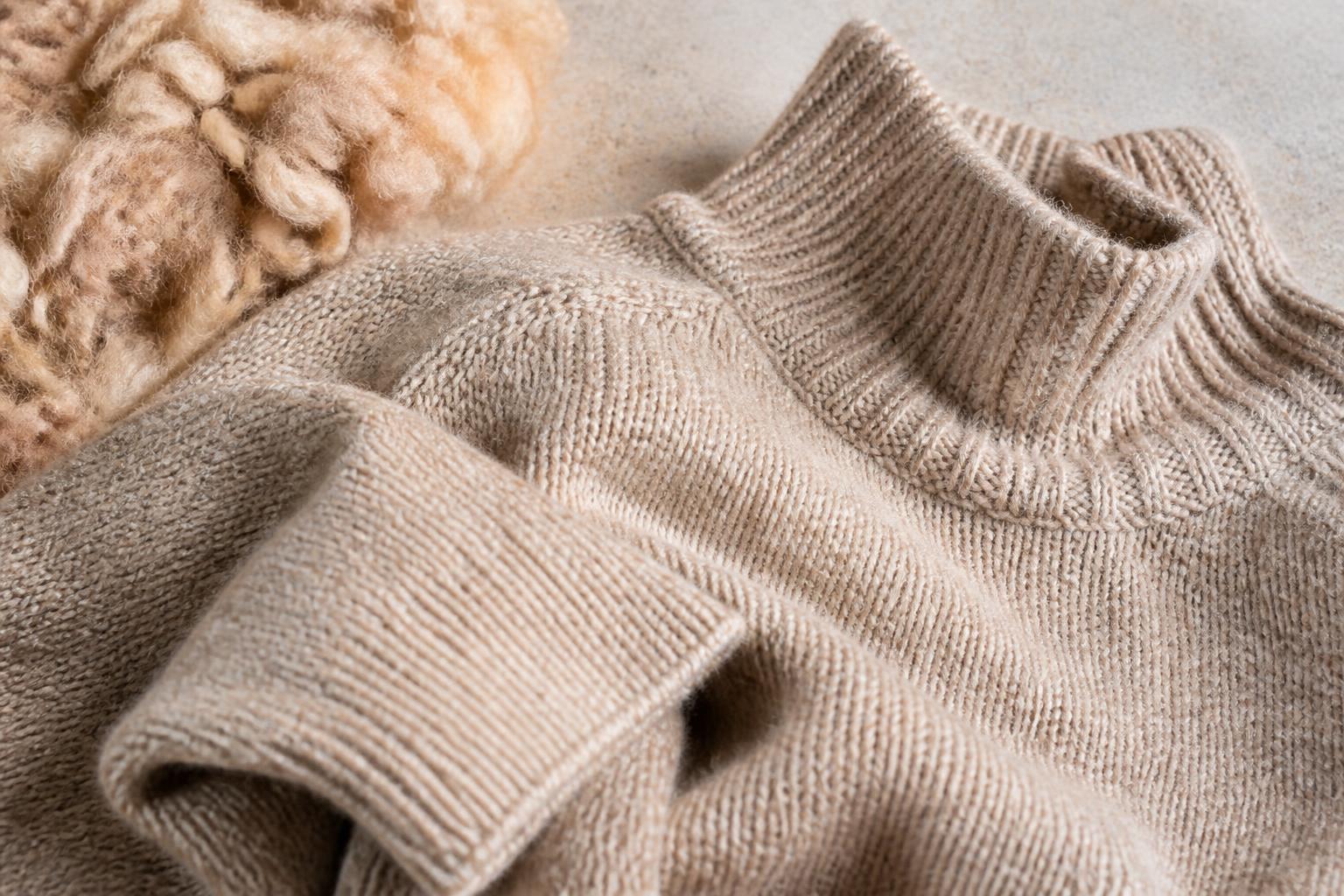
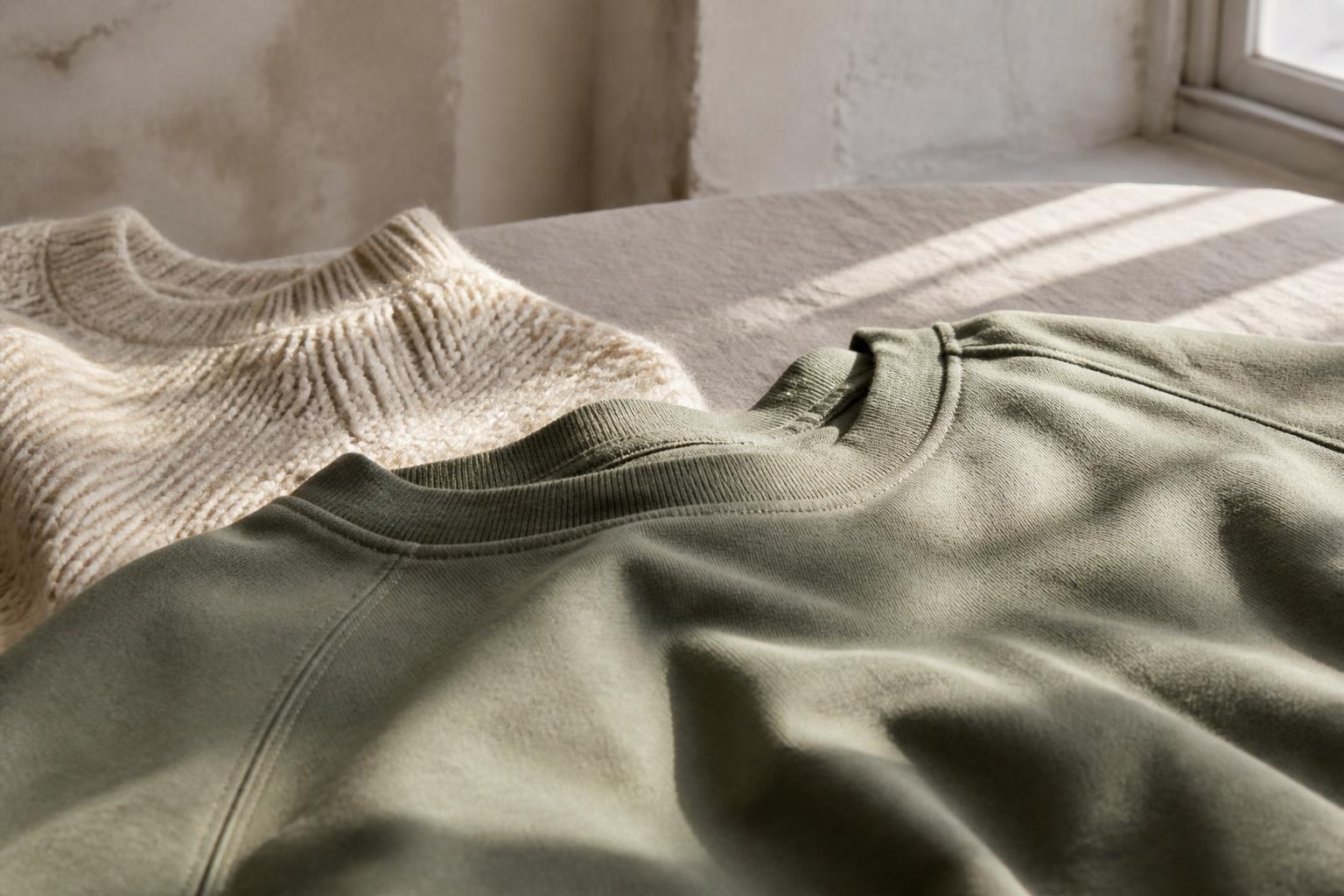
Visual cues can also mislead. In fashion and jewellery, greenwashing often arrives through styling as much as wording. Natural textures, hand-drawn leaves, beach scenes, linen-coloured backgrounds and earthy typography can create a sustainability halo around products with little supporting information. Visual design is not the problem in itself, but if the imagery is doing most of the work, ask why.
Be cautious with undefined composite terms too. Conscious luxury. Clean materials. Eco metals. Better denim. Kind knitwear. These can sound informative while saying almost nothing.
For jewellery specifically, look out for omissions around plating, gemstone treatment, origin and repair. A brand may highlight recycled sterling silver but say nothing about gold vermeil wear, stone sourcing, resin components or whether pieces can be replated. For clothing, common omissions include fibre percentages, blend complications, waterproof coatings, elastane content, and whether “natural” materials have been heavily processed.
Finally, if a claim disappears when you ask a follow-up question, it was probably not robust enough in the first place.
A practical checklist before you buy or publish a claim
When we want to test a fashion or jewellery claim quickly, we use a short sequence of questions.
First, what is the exact claim? Write it in one sentence without the branding language.
Second, what part of the product does it cover? The whole item, one component, the packaging, a collection, or the brand’s operations?
Third, what evidence is shown on the product page? Look for fibre or metal percentages, named standards, sourcing notes, dates, and any explanation of comparison or scope.
Fourth, is the wording current or aspirational? “Contains” and “certified” describe something present. “Working towards” and “committed to” do not verify the product.
Fifth, if certification is mentioned, what exactly is certified? The raw material, the finished product, the factory, or the chain of custody? Do not assume a logo covers more than the text says.
Sixth, is the claim comparative? If so, compared with what, and across which boundary? Better than a previous version is not the same as better than the market as a whole.
Seventh, what is missing? In clothing, that might be the full fibre composition, finish, coating, or manufacturing location. In jewellery, it might be the origin and treatment of stones, the proportion of recycled metal, or whether the piece can be repaired or replated.
Eighth, does the evidence match the prominence of the claim? A large sustainability banner supported by a footnote about packaging is not a balanced presentation.
Ninth, could the same sentence survive if all the leaves, neutral tones and lifestyle imagery were removed? If not, the design may be carrying more weight than the evidence.
Tenth, would we feel comfortable repeating the claim in plain language to a careful customer, regulator, journalist or wholesale buyer? If the answer is no, it needs refining.
For shoppers, this checklist helps you decide when a claim is strong enough to trust, and when it is safer to treat it as marketing. For small brands, it helps avoid overclaiming by accident. A modest, well-evidenced statement will usually serve you better than a sweeping one that cannot withstand scrutiny.
Learning how to avoid greenwashing is less about memorising buzzwords and more about narrowing the question until the answer becomes testable. What is being claimed, for which part of the product, and with what proof? Once you work that way, a lot of fashion marketing becomes easier to read. Some products will still involve trade-offs, and some genuinely better choices will still be imperfect. That is normal. What matters is whether the brand is helping you see those limits clearly, or trying to blur them.

Questions about this article or a correction to suggest? Get in touch. Read more about our editorial approach.