Assessing London fashion brands without greenwash comes down to one habit, looking past the campaign language and checking what a brand can actually show. Strong claims are usually specific, product-level and traceable to documents, suppliers, standards or published policies. Weak claims stay broad, flattering and hard to pin down.
For readers comparing sustainable fashion brands in London, that means treating “eco”, “conscious” and “responsible” as prompts for questions, not as proof. We look for evidence that connects a claim to a garment, a material, a factory or a process. If the evidence is missing, partial or only applies to one capsule collection, the claim should be read just that way, as limited.
What counts as evidence when a London brand makes sustainability claims
The most useful evidence is public, current and specific. A product page saying “made responsibly” is not enough on its own. We want to see what sits behind that phrase.
Start with the product page, because that is where a shopper is being asked to buy. A credible page should tell us the fibre composition, country of manufacture, and ideally something about the mill, tannery or workshop involved. If recycled or certified fibres are mentioned, the page should say which fibre, what percentage, and which standard applies.
Then check the brand’s wider disclosures. Useful sources include:
- A supplier list, factory list or manufacturing map
- A materials policy
- A code of conduct for suppliers
- A modern slavery statement, if the business is required to publish one under the UK Modern Slavery Act
- A sustainability report, impact report or annual responsibility update
- Product care and repair information
- Packaging and delivery disclosures
- Returns, resale or take-back policy details
A UK modern slavery statement is not an environmental document, but it can still tell us something practical. It may name sourcing countries, describe supplier due diligence, or explain audit and risk processes. For larger businesses, it can reveal whether they understand their supply chain beyond first-tier factories.
Primary sources matter most. If a brand says its wool is certified, we want the standard named. If it says its leather comes from a tannery with better wastewater controls, we want the tannery or at least the certification framework. If it says a piece was made in London, we want to know whether that means cut, sewn, finished, embroidered or simply designed here.
We also look for consistency across pages. If the homepage promises transparency but product pages omit composition or origin, that is a warning sign. If one collection is described in great detail while the rest of the site stays vague, the detailed range may be doing reputational work for the whole brand.
For businesses making claims, the test is simple. Could an informed reader trace the statement back to a document, a supplier, a standard or a product specification? If not, the wording is ahead of the evidence. We set out that approach in more detail in our guide to product claim evidence that can actually be checked.
How to read material claims on fibres, blends and trims
Material claims need context. No fibre is automatically “good”, and no garment can be judged by fibre name alone. We assess the actual composition, the blend, the finish and the likely lifespan.
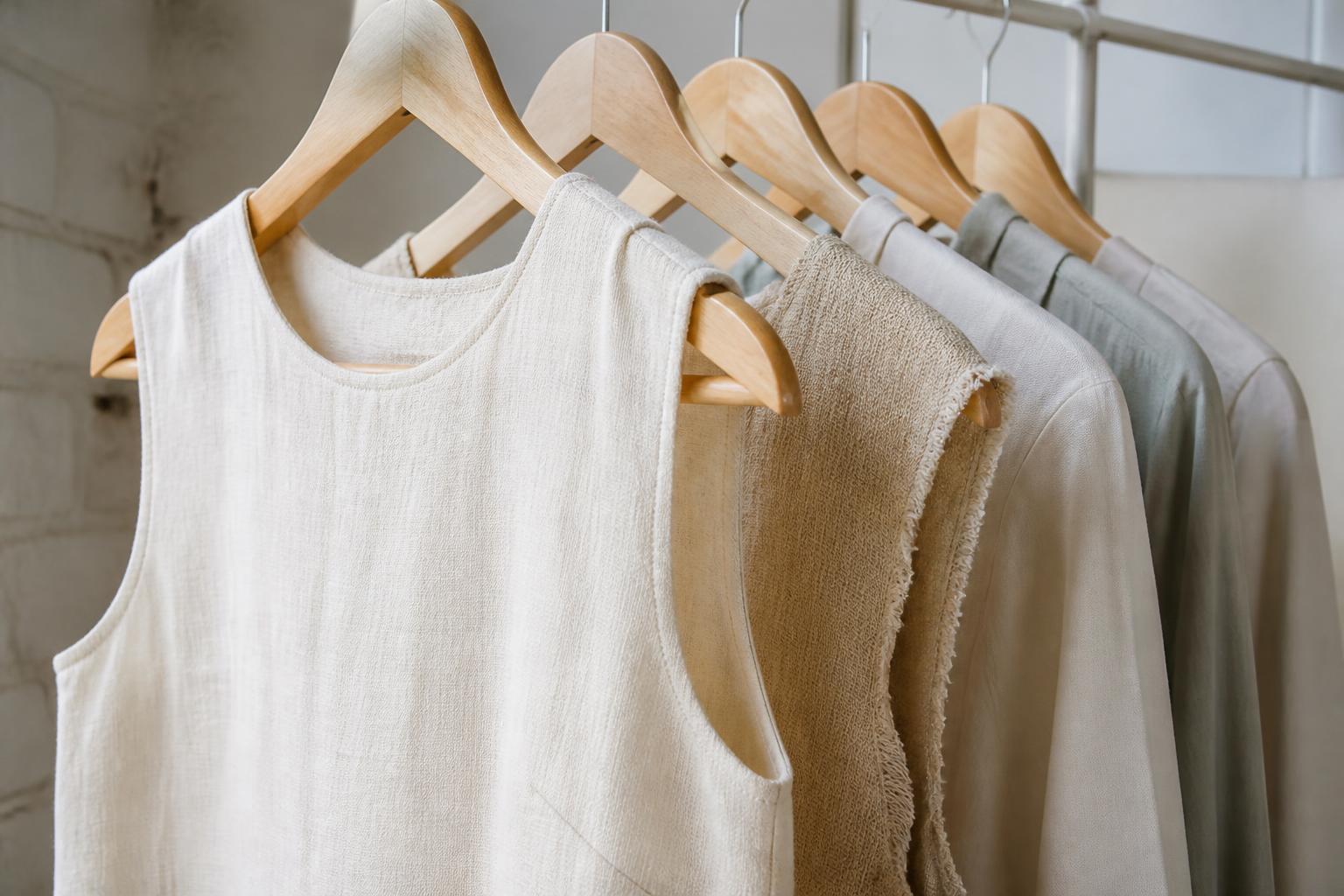
Take cotton. Organic cotton can reduce reliance on synthetic pesticides and fertilisers, but the claim only means something if the brand identifies the standard or chain of custody. “Organic cotton blend” could mean almost anything unless the percentage is stated. Conventional cotton is not always the worst option if the garment is durable, repairable and worn heavily, but the brand should not imply that cotton itself is low impact by default.
Wool needs the same care. Wool can be long-lasting, repairable and less wash-intensive than some synthetics, but impact depends on farming, land management, animal welfare, processing and dyeing. A claim such as “natural wool” tells us almost nothing. If animal welfare is part of the pitch, we look for the exact scheme or sourcing policy.
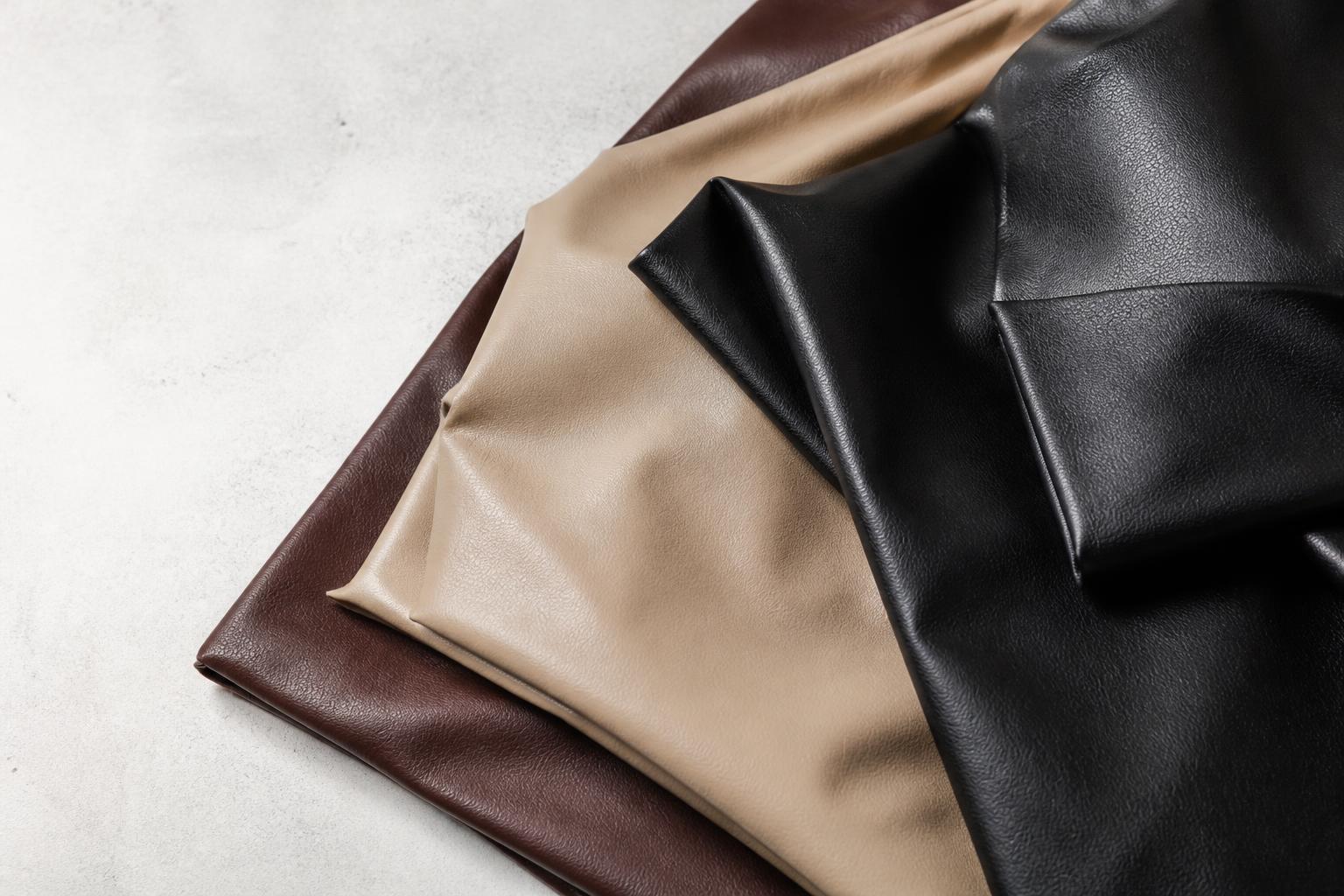
Leather claims are often especially slippery. “Responsibly sourced leather” is too broad unless the brand explains whether it means traceable hides, a specific tannery standard, reduced-chrome processing, vegetable tanning, by-product sourcing, or something else. Leather also raises durability questions. A well-made leather item that can be repaired and resoled is different from a trend-led bonded leather accessory with glued construction and no repair route.
Viscose, rayon, modal and lyocell should be separated rather than treated as one category. These are regenerated cellulosic fibres, but their sourcing and processing can differ significantly. If a brand mentions “wood pulp from responsibly managed forests”, we want to know whether that applies to the fibre in the garment and whether the relevant certification or fibre producer is named. Generic “plant-based” language is not enough.
Recycled fibres also need unpacking. Recycled polyester may reduce demand for virgin fossil-based fibre, but it does not solve microfibre shedding and can still be a poor choice in a short-life garment. Recycled cotton may have quality constraints depending on the blend and processing, so garment construction matters. A recycled content claim should say whether the content is pre-consumer or post-consumer where relevant, and what percentage of the finished product it represents.
Blends are where many product pages become evasive. A coat that is 70 per cent wool and 30 per cent polyester should not be marketed simply as a wool coat if the synthetic content is material to performance, care and end-of-life options. Mixed-material garments can be completely reasonable, but they are usually harder to recycle and often harder to repair neatly. We look for honesty about that trade-off.
Trims matter too. Buttons, zips, interlinings, elastane, coatings, sequins and membrane layers can change the sustainability picture significantly. A “linen dress” with polyester lining and plastic trims is not just linen in any meaningful product assessment. Good disclosure includes the main fabric and the important secondary components, especially where they affect care, recyclability or durability.
What certification can and cannot tell you
Certification can be useful, but only if we know its scope. A logo on one product page does not certify an entire brand. It may apply only to one fibre, one stage of processing or one supplier in the chain.
The first question is always, certified what, exactly? A fibre standard may cover raw material production and chain of custody. A chemical management standard may focus on restricted substances in processing. A factory certification may concern social criteria, environmental management or both. Those are not interchangeable.
The second question is, certified at what level? A product can contain certified material without being fully certified as a finished item. A brand may also use a certified supplier for one category and not for another. If a London label sells knitwear, denim and leather bags, evidence for one line should not be assumed to cover the rest.
The third question is, who holds the certification? Sometimes the certified entity is the farm, sometimes the spinner, mill, tannery, manufacturer or brand. That matters because chain of custody can break if later stages are not covered.
Certification also has limits. It can tell us that certain criteria were assessed within a defined scheme. It cannot, on its own, prove that a garment is low impact overall, well made, easily repairable or free from all sustainability concerns. It also does not replace plain language. If a brand relies on logos without explaining what they mean, many readers will be left with a halo effect rather than real understanding.
In the UK, green claims are increasingly judged on how a consumer is likely to understand them. That matters because a technically true statement can still mislead if presented too broadly. A certified fabric in one dress does not justify making the whole brand sound certified or sustainable. We cover that regulatory direction in our piece on UK rules tightening around fashion green claims.
How to check sourcing and manufacturing transparency
Meaningful transparency is specific enough that a reader can understand where a product was made and by whom, at least at a sensible level. “Designed in London” is not manufacturing disclosure. Nor is “crafted overseas”.
For a London-based brand, good basic disclosure includes:
- Country of manufacture for each product
- Fibre composition by percentage
- The final manufacturing stage, such as cut and sew, knitting, hand-finishing or assembly
- Named factories or workshops, or at minimum a current supplier list by country and function
- Named mills or tanneries where these are central to the product claim
- Information on subcontracting controls where relevant
The strongest disclosures distinguish between tiers. A brand may publish its cut and sew factories, then separately identify key fabric mills, knitters, tanneries or jewellery workshops. That is far more useful than a single sentence about “our trusted partners”.
For leather goods and shoes, tannery disclosure is especially valuable. For knitwear, yarn spinner or mill disclosure can be meaningful. For printed fabrics, knowing where fabric was milled and where it was printed can help readers understand the real supply chain. For jewellery, the equivalent would be metal origin, refiner, casting workshop and gemstone sourcing route, which we discuss in our guide to judging UK ethical jewellery brands more clearly.
Country-of-origin wording needs care in the UK. “Made in England” or “Made in the UK” should refer to substantial manufacture, not just packing, labelling or minor finishing. If a garment is cut in one country and sewn in another, or woven abroad and finished in London, the brand should say so plainly if that distinction is relevant to the story being told.
Useful transparency also includes process, not just place. We look for information on low-volume production, deadstock use, made-to-order systems, repair services, spare buttons, replaceable components and aftercare. These details often tell us more about whether a business is serious than a polished sustainability manifesto does.
Which claims deserve extra caution
Some wording is so broad that it should trigger immediate follow-up questions.
“Conscious” and “eco” are among the weakest unless tightly explained. Eco what, exactly? Lower water use, certified fibre, less packaging, local manufacture, fewer hazardous chemicals? If the answer is not stated, the term is decorative.
“Carbon neutral” deserves particular caution. In fashion, this often rests on offsetting rather than deep emissions cuts. A brand using the term should explain the scope, whether it covers operations only or products as well, what emissions were measured, what reduction steps were taken first, and what role offsets played. Without that, the phrase can overstate progress badly.
“Responsibly sourced” sounds reassuring but proves very little by itself. We want to know the sourcing standard, due diligence process, traceability level and product scope. If a brand says “responsibly sourced viscose”, for example, it should identify the fibre producer or sourcing framework, not leave readers to fill in the gaps.
“Natural”, “plant-based” and “biodegradable” also need restraint. Natural fibres can still involve heavy processing, dyeing, coatings or blends that change performance and disposal options. Plant-based leather alternatives vary widely in composition and often include polyurethane or other synthetics. A biodegradability claim without conditions is rarely useful, because disposal outcomes depend on fibre blend, finish and environment.
“Small batch” and “made to order” can be meaningful, but they are not automatic sustainability proof either. They may reduce overproduction, but the rest of the supply chain still matters. We look for evidence that the production model genuinely changes stock risk, markdown dependence or waste.
“Locally made” should be read carefully in London brand marketing. Local to whom? A London workshop may genuinely shorten supply chains for UK customers, or it may simply be the final assembly point for globally sourced components. Both can be legitimate business models, but they are not the same claim.
If you want a quick filter for this kind of language, our guide to spotting fashion greenwashing before you buy is a useful companion.
How UK readers can compare brands fairly
The fairest way to compare brands is to score the product in front of you, not the mood of the brand campaign. Reputation, aesthetics and price point can all distort judgement.
We use a simple comparison method.
First, compare like with like. Put two wool jumpers beside each other, or two silver chains, not a cashmere coat against a cotton T-shirt. Different categories have different durability, care and sourcing issues.
Second, score product-level disclosure. Does each item tell you fibre percentages, country of manufacture, care needs and key supplier details? A brand with modest styling but clear disclosure often deserves more credit than a polished label making sweeping claims with thin evidence.
Third, assess construction and lifespan signals. Is the garment lined? Are seams, closures and spare parts considered? Is the knit dense enough for repeated wear? Can the sole be replaced? Are care instructions realistic? A durable item that can be altered or repaired may compare favourably with a heavily marketed “eco” option built for short-term wear.
Fourth, look at material complexity. A mono-material item is not always better, but it is often easier to understand, care for and potentially recycle than a garment made from multiple blended fabrics, coatings and trims. Where a blend is used, ask whether it serves a clear function.
Fifth, check repair, resale and aftercare. Does the brand offer mending, replacement hardware, resizing, replating, resoling or access to spare components? These services matter because they extend use, and they are much harder to fake than a slogan.
Sixth, judge the quality of the claim, not just the direction of it. “Contains 60 per cent certified organic cotton” is a stronger and more honest statement than “sustainably made”. Precision should count in a brand’s favour.
For UK readers, it is also worth noting the local legal context. UK consumer protection rules and green claims scrutiny are not identical to the EU framework in every detail, even where the broad direction is similar. A claim that appears on a British brand’s website should be understandable and supportable for a UK consumer, not only technically defensible in internal paperwork.
When we compare sustainable fashion brands in London, we are not looking for perfection or a single winning fibre. We are looking for evidence, boundaries and honesty about trade-offs. The best brands make it easy to see what a claim means, where it applies, and where the limits are. That is the opposite of greenwash, and it gives both shoppers and small businesses something far more useful than a halo, a basis for judgement.

Questions about this article or a correction to suggest? Get in touch. Read more about our editorial approach.