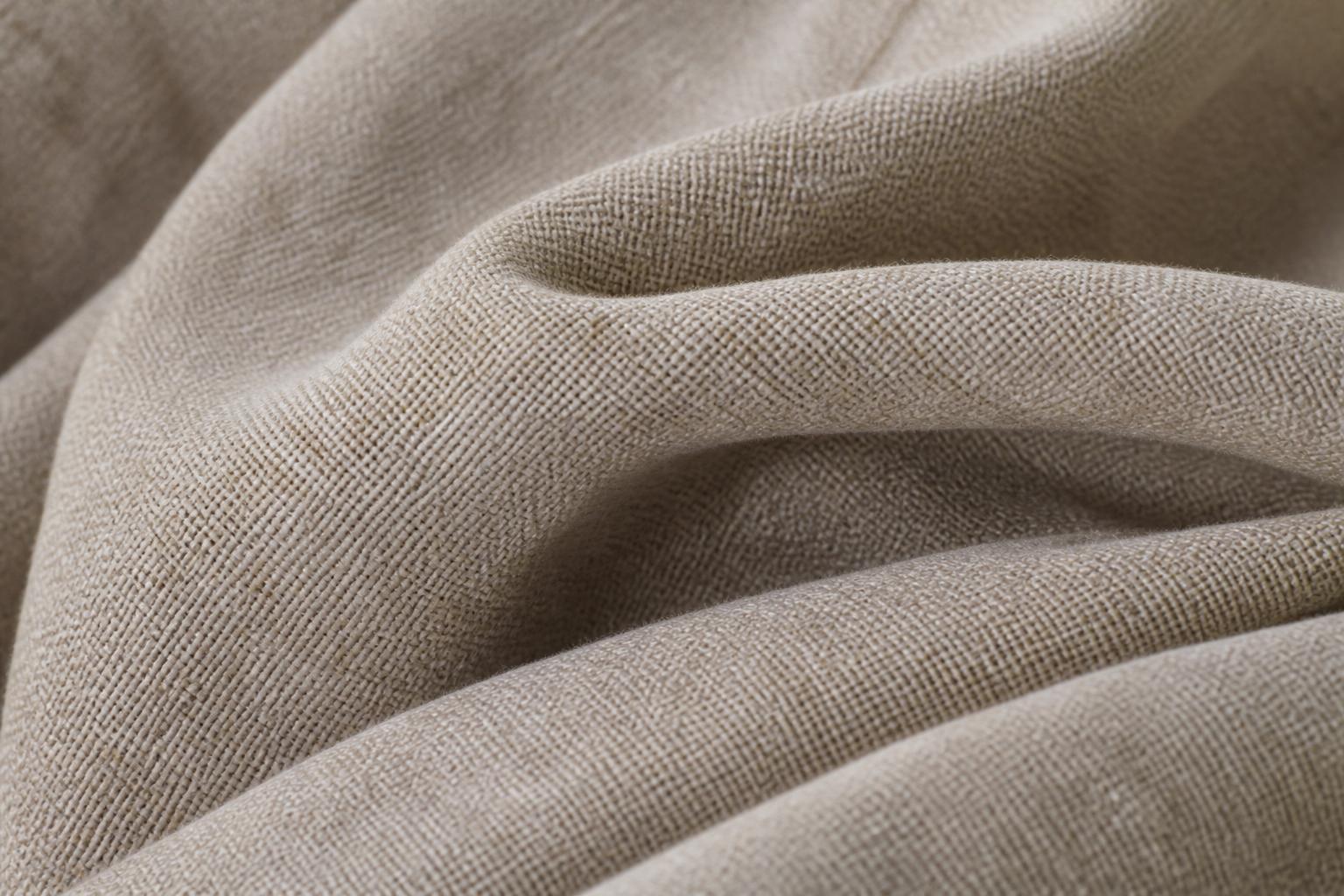
If you are asking what ramie fabric is, the short answer is that it is a plant fibre made from the stalks of ramie, a nettle-family crop also known as China grass. In clothing, it usually appears either as a woven fabric with a dry, crisp handle similar to linen, or as part of a blend with cotton, viscose or synthetics to add texture, strength or a cooler feel.
For UK shoppers and small brands, ramie matters less as a trend word than as a label term. You are unlikely to see whole rails devoted to it, but you will see it in fibre compositions on summer shirts, lightweight tailoring, denim-look pieces, knit tops and occasionwear with a slubby surface. The useful question is not just what ramie is, but what the label actually tells you about performance, processing and environmental claims.
What ramie is and why it appears on clothing labels
Ramie is a bast fibre. That means the usable fibres come from the stem of the plant, rather than from a seed pod, as with cotton, or from a leaf, as with fibres such as sisal. Linen is also a bast fibre, which is why ramie is often compared with flax linen in look and handle.
On a clothing label in the UK, ramie may appear simply as “ramie” in the fibre composition. If it is present at a high percentage, it is usually there because the brand wants the fabric to look visibly natural, slightly lustrous and lightly textured. If it appears at a lower percentage, it is often being used to change the hand feel or to strengthen the yarn blend.
UK readers are most likely to come across ramie in:
- summer shirts and blouses
- loose trousers and shorts
- denim alternatives and chambray-style fabrics
- knitwear blended with cotton
- dresses marketed as breathable or lightweight
- textured suiting and co-ords
The legal framework matters here. In the UK, fibre names used on textile labels must follow recognised names under retained textile labelling rules. After Brexit, the UK and EU systems remain very similar in practice, but businesses selling in both markets still need to check whether labelling, language and market placement requirements differ for their products. A fibre label tells you the composition by weight of the textile fibres in the product, not where the plant was grown, where the yarn was spun, or how the fabric was finished.
That is the first limit to keep in mind. “100% ramie” tells you the fibre content. It does not tell you whether the fabric was heavily chemically processed, whether the dyehouse had wastewater controls, or whether the garment was made in a country with stronger or weaker environmental enforcement.
Ramie sometimes appears in blends because pure ramie can be quite crisp and prone to creasing. A brand may use 55% ramie and 45% cotton, or mix ramie with viscose, to soften the handle and reduce some of the stiffness associated with bast fibres. If you have read our piece on what makes Pima cotton different in clothing, the contrast is useful. Pima is usually discussed in terms of staple length and softness. Ramie is more often about structure, surface texture and dry comfort.
How ramie is turned from stalk to fabric
The route from ramie plant to finished fabric is not especially simple, and this is where many broad sustainability claims start to lose precision.
The plant is grown for its stems. After harvesting, the bark or outer stem layer containing the bast fibres has to be separated from the woody core. This initial extraction can be done mechanically, but ramie is naturally bound with gums and pectins that make the raw fibre stiff and difficult to spin unless they are removed.
That removal stage, usually called degumming, is central to ramie processing.
A simplified sequence looks like this:
- Harvesting the stalks.
- Decortication or stripping to separate bark and fibre bundles from the stem.
- Drying and sorting.
- Degumming to remove natural gums, pectins and other binding materials.
- Washing, bleaching if required, and preparing the fibres.
- Spinning into yarn.
- Weaving or knitting.
- Dyeing, finishing and garment manufacture.
Of those stages, degumming and finishing are the ones that most affect both performance and environmental claims.
Raw ramie fibre is strong, but without proper degumming it is too coarse and rigid for many apparel uses. Degumming may involve chemical treatment, enzymatic treatment, or combinations of the two. Brands sometimes present ramie as though it moves from field to shirt with minimal intervention. That is not a safe assumption. The fibre can be plant-based and still require substantial processing before it is wearable in a soft, commercially useful form.
The exact method matters. Enzymatic processing is often presented as a lower impact option, but that only tells us part of the story. We still need to know about chemical inputs elsewhere in preparation, bleaching, dyeing, rinsing and finishing, and about wastewater treatment at the mill. A fibre-only claim misses most of that.
Spinning also shapes the result. Ramie can be spun alone, but it is frequently blended before spinning because this improves processability and changes the final handle. A cotton-ramie yarn may feel more familiar to shoppers than a pure ramie yarn. A viscose-ramie blend may drape more fluidly. If the finished garment feels unexpectedly soft for “ramie”, that is often because it is not relying on ramie alone.
Then comes fabric construction. Woven ramie tends to show up in shirts, tailoring and trousers because it holds shape well and gives a clean, airy look. Knitted ramie is less common but appears in summer knits and tops, usually blended. Finishing treatments can soften the fabric further, reduce shrinkage, alter lustre or improve crease recovery.
This is why “made with natural ramie” is not a complete material story. The crop is one part of the chain. Spinning, wet processing and finishing may account for much of the practical and environmental profile of the final garment. Readers who are comparing fibre claims across categories may also want our guide to what lyocell fabric is and how it is made, where the manufacturing process is even more central to the claim than the plant source.
What ramie feels like in wear and why brands blend it
In wear, ramie usually feels dry, crisp and cool rather than plush or fluid. It can have a faint sheen, especially in smoother weaves, and it often carries colour with a clear, slightly bright surface. Depending on the finish, it may feel closer to a lightweight linen than to cotton.
That does not mean it behaves exactly like linen. Ramie is often described as strong, with a clean, wiry structure that helps garments keep a defined outline. On the body, that can read as fresh and airy in hot weather, but it can also mean less drape and more visible creasing than shoppers expect from softer plant-based fabrics.
A few practical points help set expectations:
- Ramie tends to absorb moisture reasonably well, which contributes to a cooler feel in warm conditions.
- It is often breathable in the everyday sense that the fabric does not feel clammy or sealed off, especially in open weaves.
- It can crease easily, particularly in pure or high-ramie woven garments.
- It may soften with washing and wear, but that depends heavily on blend and finish.
- It is not usually chosen for stretch, bounce or silk-like fluidity.
Compared with cotton, ramie often feels drier and more textured. Compared with linen, it may look slightly smoother or more lustrous, though the line between the two can blur in blends and finishes. Compared with viscose, ramie usually has less drape and more structure, while viscose tends to feel softer and more fluid against the skin.
Those differences explain why brands blend it.
A cotton-ramie blend can keep some of ramie’s crispness while making the fabric easier to wear and easier to sell to shoppers who do not want a very rustic hand. A viscose-ramie blend can maintain a natural-looking texture while improving drape. A ramie-polyester or ramie-nylon blend may be used to improve crease recovery or durability in specific garment categories, though that obviously changes the end-of-life profile of the item.
For small fashion businesses, the key point is that ramie is often doing one job within a blend rather than defining the whole fabric. If a supplier presents a fabric as “ramie” but the spec sheet shows a lower percentage mixed with other fibres, ask what ramie is contributing. Is it there for hand feel, appearance, strength, cost, marketing, or all four?
Which claims about ramie stand up and which need caution
Some claims about ramie are broadly fair. Others are too broad to trust without more detail.
Biodegradability is a good example. Ramie is a cellulosic plant fibre, so in principle the fibre itself is biodegradable. But garments are not just fibres. Dyes, resin finishes, wrinkle-resistant treatments, coatings, sewing thread, elastane content, interlinings and blended synthetics all affect how the product behaves at end of life. Saying “ramie is biodegradable” is not the same as saying a ramie garment will biodegrade cleanly in normal disposal conditions.
Low pesticide use is another claim that may be true in some supply chains, but should not be assumed as a universal property of the fibre. Crop inputs vary by region, farming practice and yield expectations. Without farm-level evidence or a credible agricultural standard, broad statements about reduced pesticide use remain just that, broad statements.
Breathability is usually a safer claim, but still needs plain speaking. Ramie fabrics often do feel airy and comfortable in warm weather, especially in looser weaves. Yet “breathable” is used so loosely in fashion marketing that it can mean anything from moisture absorption to simple lightness. Fabric structure, garment cut and finishing all matter, not just fibre type.
Durability needs nuance too. Ramie fibre is often described as strong, and that is one reason it is used in blends. But garment durability is not decided by fibre strength alone. Yarn quality, weave density, seam construction, abrasion points and care habits all affect service life. A delicate open-weave ramie blouse may not outlast a well-made cotton shirt simply because the fibre itself is technically strong.
The broadest caution applies to eco positioning. Ramie is often marketed as a more sustainable natural alternative, but that phrase compresses too many variables into one conclusion. To assess the claim properly, we need to know:
- where the fibre was grown
- how it was retted or degummed
- whether bleaching was used
- what dyes and auxiliaries were used
- whether wastewater was treated
- where spinning, weaving and finishing took place
- whether the garment is mono-material or blended
- what evidence supports any certification claim
Without that information, “eco-friendly ramie” is mostly a branding shortcut.
This is not unique to ramie. We see the same issue with many material stories, from recycled synthetics to farm claims for cotton. Our article on what BCI cotton means when you read a clothing label covers a similar problem, where a familiar fibre name can carry more confidence than the underlying evidence justifies.
What to check before trusting a ramie label
If you are shopping, or sourcing for a small brand, start with the fibre percentage. A garment labelled 20% ramie and 80% cotton will not behave like a pure ramie piece, and it should not be marketed as though ramie tells the whole story. The percentage affects handle, care, end of life and the honesty of any sustainability message.
Next, check whether the label or product page says where processing happened. “Made in” only tells you where the last substantial transformation or garment assembly took place under the relevant rules. It does not automatically tell you where the fibre was grown, where it was degummed, or where the fabric was woven. For businesses, this is where supplier traceability documents matter. Ask for mill details, country of origin for the fibre, and a breakdown of processing stages.
Then look for evidence of chemical management, not just fibre origin. Useful documents may include:
- OEKO-TEX Standard 100 for restricted substances in the tested product
- ZDHC participation or wastewater reporting at wet-processing sites
- bluesign approval for relevant chemical inputs or mills
- REACH compliance statements for products sold into the UK and EU markets
Each of those has limits. OEKO-TEX Standard 100 is product testing, not a full environmental certification of the whole supply chain. ZDHC participation is not a guarantee of best practice across every site. A certification logo on a swing tag may apply only to one stage. We need to know the scope.
That scope point is especially important where UK and EU practice diverge slightly in presentation even when the substance is similar. A brand selling in both markets may use the same certification language across UK and EU product pages, but the legal expectations around consumer-facing environmental claims can still be interpreted through different enforcement systems. In the UK, the Competition and Markets Authority’s Green Claims Code is the obvious reference point for marketing claims. In the EU, businesses also need to watch wider consumer protection and substantiation expectations in member states. For both markets, the practical rule is the same, do not let a single fibre fact stand in for the whole environmental story.
Small brands should also ask whether the certification covers the ramie itself, the blended yarn, the finished fabric or the finished garment. Those are not interchangeable. A certified fibre can lose that chain of assurance if later stages are outside the certified scope.
Finally, watch for the limits of fibre-only claims. A ramie label can tell you something useful about likely feel and composition. It cannot, on its own, prove responsible farming, low-impact processing, safe chemistry, fair labour conditions or a lower overall footprint than another fabric.
So, what is ramie fabric in practical terms? It is a bast fibre fabric with a cool, crisp, often linen-adjacent character, and it can be a sensible choice for warm-weather clothing and textured blends. But the label is only the start. To understand whether a ramie garment is well made, honestly marketed and environmentally better supported than the alternatives, we need to read past the fibre name and into the processing, percentages and proof.

Questions about this article or a correction to suggest? Get in touch. Read more about our editorial approach.