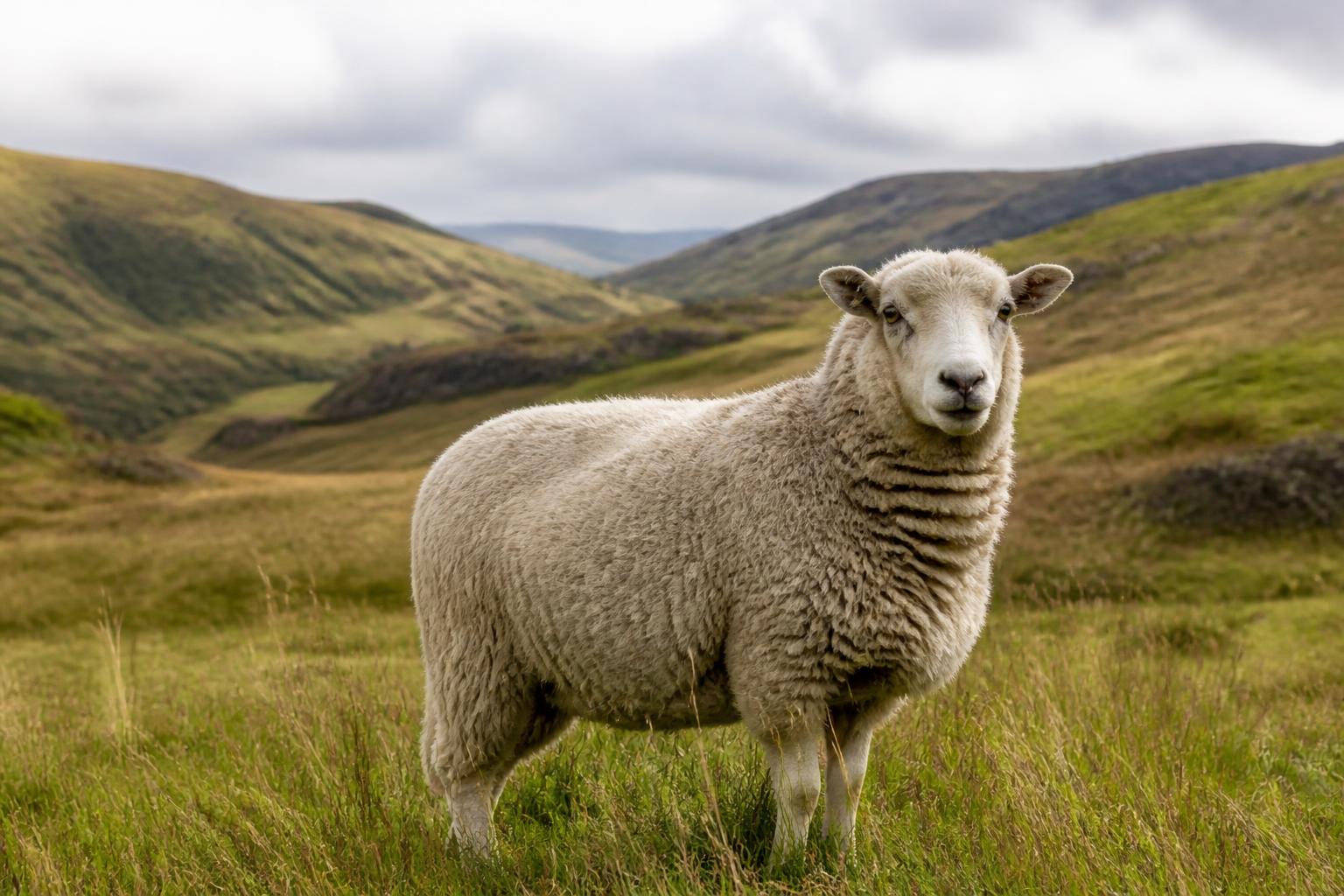
If you want the shortest honest answer, it is no, wool cannot usually be described as cruelty free in any absolute sense. Sheep are living animals within farming systems, and welfare risks can arise at several stages, including breeding, handling, shearing, transport and, for many flocks, slaughter at the end of their productive life.
That does not mean all wool is equally problematic, or that shoppers have no way to judge better and worse practice. It means the useful question is not simply whether wool is cruelty free, but what evidence exists about animal welfare, what a label actually covers, and where the remaining gaps are.
What people usually mean when they ask whether wool is cruelty free
When people ask whether wool is cruelty free, they are usually asking one of three things.
First, were the sheep physically harmed in producing the fibre? That includes painful procedures, rough handling, injuries during shearing, poor housing or pasture conditions, and stress during transport.
Second, were the sheep kept under standards that took welfare seriously throughout their lives, rather than only at the moment the fleece was removed? A soft jumper can still come from a system with serious welfare concerns.
Third, is the brand using the phrase in a broad ethical sense, where animal treatment, environmental impact and traceability all get bundled together? This is where confusion starts.
In UK clothing retail, "cruelty free" has no single, settled legal definition for wool in the way some shoppers imagine. Fibre labels in the UK are mainly governed by textile fibre composition rules, consumer protection law and general rules against misleading claims. They tell you whether something is wool, recycled wool or a wool blend. They do not create a formal legal category called cruelty free wool.
That matters because animal welfare claims, environmental claims and fibre-quality claims are not interchangeable. A brand might say a garment is made from merino, traceable wool, non-mulesed wool, organic wool or recycled wool. Each of those phrases means something different.
Merino refers to breed and fibre characteristics. Traceable refers to documentation through the supply chain. Non-mulesed refers to one specific welfare issue. Organic standards can include welfare rules, but they also cover feed, medicines and land management. Recycled wool may reduce demand for virgin fibre, but it says nothing about the welfare conditions under which the original wool was produced. We cover that distinction in our guide to recycled wool labels and fibre claims.
So when we ask whether wool is cruelty free, we need to separate at least three questions. How were animals treated? What environmental impacts came with the fibre? And what exactly has been verified by a scheme or supplier? If those get blurred together, the claim sounds stronger than the evidence.
Where harm can happen in wool production
The main welfare risks in wool production do not begin and end with shearing. They run through the whole production system.
Breeding is one starting point. Some sheep are bred for fleece traits, body shape or productivity in ways that can create welfare problems. In fine wool systems, especially some merino systems, skin wrinkling has historically been associated with greater flystrike risk. That matters because attempts to manage flystrike can involve painful interventions, and because breeding for heavy fleece can bring its own welfare trade-offs.
Routine husbandry is the next area to check. Depending on the country and farm system, sheep may be subject to tail docking, castration, ear tagging and other procedures. The rules, methods and pain relief expectations vary by jurisdiction. In the UK, farm animal welfare law and species-specific codes of practice set requirements, but legality is not the same as cruelty free. A lawful procedure can still raise welfare concerns if it is carried out routinely, without pain relief where that is allowed, or without strong justification.
Mulesing is the issue many shoppers know best. It is most associated with Australian merino production and involves removing strips of skin from around the breech area to reduce flystrike risk. It is highly relevant to fine merino sourcing, but it is not the whole animal welfare picture. A non-mulesed claim answers one question only. It does not prove high welfare across breeding, handling, shearing, transport and slaughter. If you want more on that point, our article on what RWS wool covers before you trust the label is a useful companion.
Shearing itself can be done well or badly. Sheep need shearing in many systems for welfare reasons as well as fibre production, especially breeds that do not naturally shed. But necessity does not eliminate risk. Poorly trained shearers, rushed work, inadequate restraint or pressure to maximise throughput can lead to cuts, stress and rough handling. Good welfare practice depends on skill, supervision and conditions on the day, not just on the fact that shearing happened.
After shearing, sheep remain within a farming system. They may face poor weather exposure, lameness, parasite burdens, inadequate nutrition or weak veterinary oversight. Wool sold into fashion may come from flocks kept primarily for wool, primarily for meat, or for mixed purposes. In many systems, sheep are not companion animals kept indefinitely after fleece production declines. Their end-of-life treatment matters to any honest welfare assessment.
Transport is another risk point. Long journeys, overcrowding, heat stress, dehydration and poor loading practices can all compromise welfare. The UK has its own rules on animal transport, while imported wool may come from countries with different standards and enforcement levels. If a brand sells wool in the UK but sources internationally, the relevant welfare conditions may have little to do with UK farm rules.
Live export can also be relevant in some supply chains. Not every wool-producing system involves it, and it is not a defining feature of all wool, but where sheep are moved across long distances or exported live, welfare concerns can increase sharply. A generic "ethical wool" statement rarely tells you whether this issue has been considered.
Finally, slaughter cannot be ignored, especially for sheep kept for both wool and meat. Even where wool is the main reason for keeping a flock, culling and slaughter remain part of the system. If a claim invites shoppers to picture wool as simply a harmless haircut, it is leaving out a material part of how sheep farming works.
Why one wool label does not answer the whole question
Certification can be useful, but no single wool label settles the full cruelty question.
The Responsible Wool Standard, usually shortened to RWS, is one of the most widely recognised schemes in fashion. It is designed to address welfare on farms and chain of custody through the supply chain. That gives it real value. It is generally stronger than a vague brand promise with no scheme behind it.
But RWS is not a magic phrase. It is a standard with a scope, a methodology and limits. It relies on audits. Audits are snapshots, not continuous observation. Farm certification can verify compliance against the standard at the time of assessment, but it cannot prove that harm never occurs. Chain-of-custody certification can confirm that certified fibre was kept separate or properly managed through processing and manufacturing, but it does not add new welfare facts beyond the farm stage. It tells you the certified wool remained the certified wool.
Organic standards can also be relevant, where wool is certified organic under a recognised scheme accepted in the UK market. Organic livestock rules may include stocking density, feed requirements, outdoor access and restrictions on certain treatments. That can support better welfare in some respects. But organic is not a synonym for cruelty free either. It is a broader farming standard, not a guarantee that no painful procedures, illness, transport stress or slaughter-related welfare issues occur.
Country of origin matters here. The UK no longer follows EU law automatically, although much product sold in the UK may still be produced to EU-facing standards or sold across both markets. A wool product marketed in Britain may mention an EU-recognised organic certification body, a UK certification body, or both. That still does not remove the need to ask what exactly was certified, at what stage, and under which standard text.
Assurance schemes also vary in transparency. Some brands cite a scheme name but do not say whether the finished product is certified, whether only some wool content is covered, or whether the supplier is merely "working with certified farms". That wording should make you pause. A product-level claim needs product-level backing.
Another limit is that many schemes focus on farm management and handling, not on every ethical issue a shopper may care about. A standard may say little about whether the farm also sells animals into systems the shopper would avoid, or whether slaughter and transport conditions beyond the farm gate are fully covered.
This is why we are cautious about treating labels as complete answers. They are evidence points. Useful ones, often. But still only part of the picture. The same is true in other animal-derived materials, where shoppers can overread a certification logo and assume it covers more than it does. Our guide on spotting fashion greenwashing before you buy looks at that wider pattern.
Can wool ever be described as cruelty free?
In strict terms, calling wool cruelty free is difficult to justify.
The problem is the absoluteness of the phrase. "Cruelty free" sounds like a complete absence of cruelty or serious harm across the relevant system. For wool, that is a very high bar. To support it, a brand would need strong evidence not just of better welfare practices, but of no materially relevant harmful practices across breeding, husbandry, shearing, transport and end-of-life management. That is rarely what available certification and supplier documentation can prove.
This is also why careful publishers and regulators tend to be wary of absolute ethical claims. Under UK consumer protection principles, a claim can mislead if it gives the average consumer a false overall impression, even where part of it is technically defensible. If "cruelty free" leads shoppers to believe no painful procedures were used, no welfare compromises occurred and no slaughter forms part of the system, the wording is likely too broad for the evidence behind most wool garments.
That does not mean brands must say nothing. It means they should say something narrower and supportable.
Examples of wording that can often be evidenced more clearly include "RWS-certified wool", "wool from non-mulesed flocks", "traceable merino from certified farms", or "organic certified wool", provided the product genuinely meets those descriptions. Those claims do not overpromise. They tell the shopper what has been checked.
For editorial work and for responsible product copy, we would usually prefer phrases such as "higher welfare wool", "wool sourced under named welfare standards", or "wool from non-mulesed, certified farms", followed by a clear explanation of what that does and does not cover.
So, can wool ever be described as cruelty free? In ordinary retail practice, we think that claim is too absolute. The more accurate question is whether a specific wool product is supported by credible animal welfare evidence and careful wording.
How UK readers can assess a wool claim without guesswork
For UK shoppers and small fashion businesses, the best approach is to ask for evidence in layers.
Start with the fibre and origin. What kind of wool is it, from which breed or type of flock, and from which country? Merino from Australia raises different questions from British wool sourced from mixed sheep farming systems. That does not automatically make one good and the other bad, but it changes what you need to ask. Our guide to whether merino wool is ethical for UK clothes buyers goes into that breed and sourcing context in more detail.
Then ask what exact claim is being made. Is the brand saying cruelty free, ethical, responsibly sourced, non-mulesed, RWS-certified, organic, traceable, or simply natural? Those are not equivalent. If the wording is broad but the proof is narrow, treat the broad claim as unproven.
Next, ask for scheme documents, not just logos. A credible supplier should be able to say which standard applies, whether the farm is certified, whether the yarn or fabric is certified through chain of custody, and whether the finished garment is sold as certified product. Certificate numbers, scope documents and certifier names matter more than marketing phrases.
Check whether the claim is farm-level only or product-level. A supplier may buy from certified and non-certified sources. Unless the specific product is covered through the relevant chain-of-custody system, a statement about the supplier's general sourcing policy does not necessarily apply to the jumper in front of you.
Look for disclosure on key welfare issues. For merino, ask directly about mulesing. For any wool, ask about shearing standards, pain relief policies for routine procedures where relevant, transport expectations and whether the supplier has a written animal welfare policy. Small brands do not need to publish a legal dossier, but they should be able to answer these questions without evasive language.
Be alert to wording that should trigger caution. "Cruelty free wool", "happy sheep", "ethically shorn", "sustainably farmed" and "natural therefore kind" are all phrases that can sound reassuring while saying very little. So are formulations like "we care deeply about animal welfare" without any named standard, country information or supplier evidence.
For small fashion businesses, one practical discipline helps enormously. Keep a sourcing file for every animal-derived material. Include supplier declarations, certification scope documents, transaction certificates where applicable, country of origin, and your approved product wording. That reduces the risk of accidental overclaiming in product pages, swing tags and wholesale sheets.
Finally, accept that some uncertainty may remain. Ethical sourcing is often about comparing evidence, not finding perfection. A wool product backed by clear country disclosure, a recognised welfare standard, chain-of-custody documentation and precise wording is in a different category from one wrapped in mood-board language and nothing else.
If you began with the question of whether wool is cruelty free, the fairest answer is still no, not in the absolute way that phrase suggests. But UK readers do not need to stop there. With a few specific checks, you can tell the difference between a wool claim that is merely comforting and one that is properly evidenced.

Questions about this article or a correction to suggest? Get in touch. Read more about our editorial approach.