Fairtrade and Fairmined are names you may encounter when a jeweller discusses gold sourcing. They share an important historical connection, but they should not be treated as interchangeable current labels. A clear purchase decision needs the exact scheme, the scope of the claim and a connection to the piece you are buying.
This is a current explanatory article, not a reproduction of a historical gold report. Older documents using the combined wording “Fairtrade and Fairmined” should be read in their original period rather than assumed to describe today's arrangements.
Why older sources put the names together
The Alliance for Responsible Mining's Fairmined history describes a standard developed with Fairtrade in 2009, followed by the end of that collaboration in 2013. That history explains why early reporting and documents can use both names together.
When reading a dated article, distinguish the event it describes from the current purchasing route. A 2011 launch story may be useful historical context, but it is not a current list of licensed sellers or a substitute for the standard applying to a new transaction.
For a jeweller's present claim, ask which scheme is involved now. If the answer refers only to a broad phrase such as ethical gold, there is still a question to resolve.
What to look for in a Fairtrade claim
The Fairtrade Foundation's gold page explains its scheme for gold from small-scale mining organisations and the support associated with its standards and premium arrangements. Use that official information to understand the programme and its current purchasing routes.
Checked on 23 September 2026: Fairtrade's page states that a revised Gold Standard was published on 25 June 2026 and is due to come into force on 1 July 2027. Publication and entry into force are different dates. A business making a technical claim should check the applicable standard and transition information rather than assume a newly published version already governs every purchase.
As a consumer, your first question can be simpler: “Which part of this piece is covered by the Fairtrade gold claim, and what information will I receive with it?” The answer should distinguish the gold from stones, other metals and unrelated services.
What to look for in a Fairmined claim
Fairmined's official standard information describes requirements for artisanal and small-scale mining, including legal operations, labour and environmental matters, traceability and its premium. It also distinguishes Fairmined Gold from Fairmined Ecological Gold and explains its market arrangements.
Do not collapse those descriptions into one all-purpose promise. Ask the jeweller which model and claim applies to the particular item. A business supporting a programme is not necessarily saying that every metal component in every product has the same physical sourcing history.
If a jeweller provides a licence or supplier reference, check it through the scheme's official information. A logo alone is less useful than a clear statement linked to the item and supporting records.
Separate purity from provenance
A hallmark answers a different question. The British Hallmarking Council's guidance explains that hallmarking verifies precious-metal purity. It is not, by itself, a record of mine origin or an endorsement of the labour conditions in a supply chain.
Likewise, a sourcing scheme does not tell you everything about wear, setting quality or whether the ring fits. Examine those issues separately. For a piece intended for everyday use, ask about resizing, servicing and how the design suits your routine.
Questions to take to a jeweller
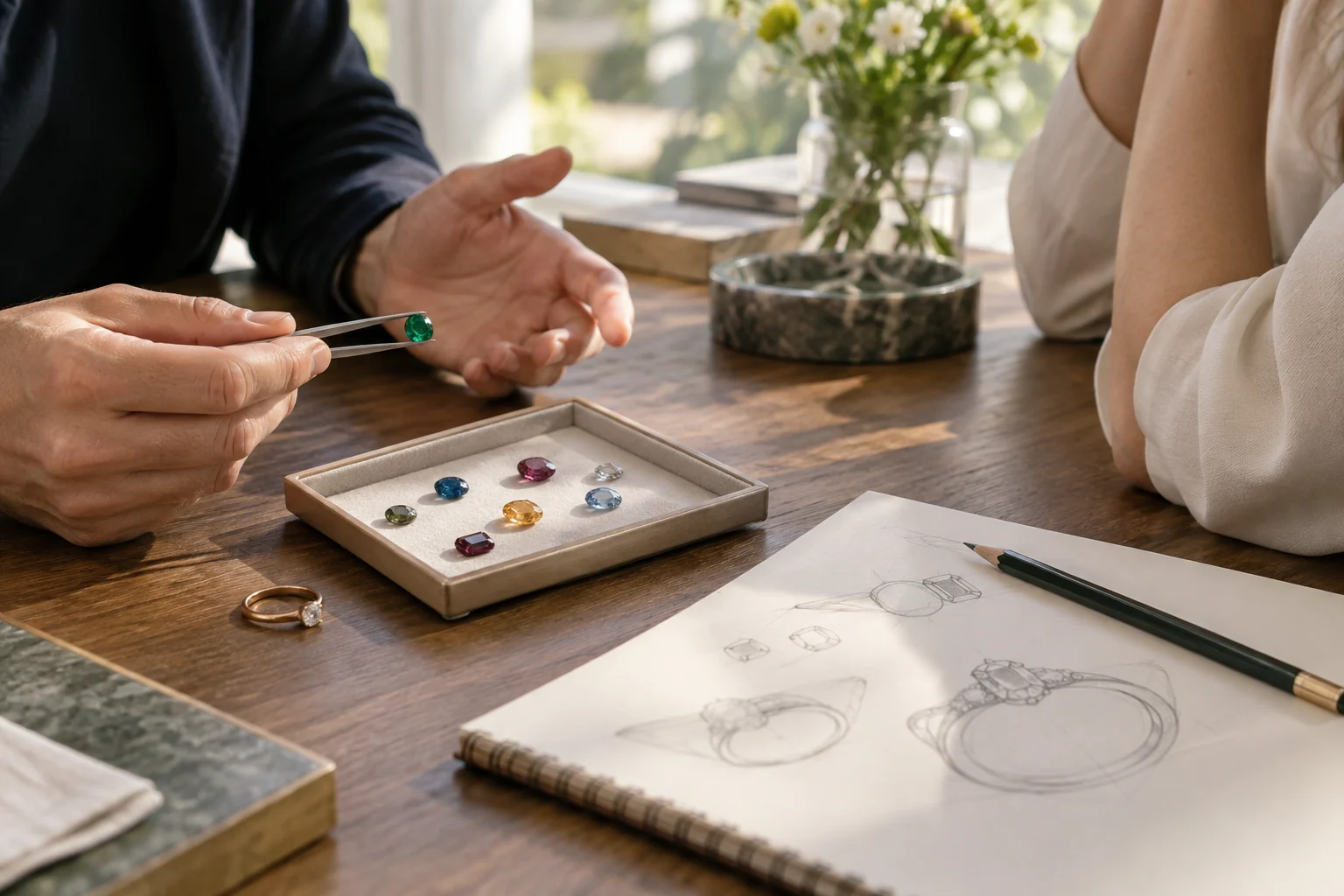
Before a considered purchase, ask for the metal description, the exact sourcing claim, what it covers and the evidence you will keep. If the piece includes stones, ask about them separately rather than assuming the gold's documentation applies to the entire design.
For commissioned work, put your priorities in writing before the design is finalised. If a particular certified sourcing route is essential, agree what happens if that material is unavailable. Substitution should be discussed rather than hidden inside a general promise to use responsible materials.
Ask whether future repairs will use the same sourcing route where possible, and whether any change would be recorded. The answer may depend on the repair, available materials and cost, but the conversation makes your expectations clear.
Keep a modest, useful record
Save the invoice, product description and scheme information together. A photograph and any identifying reference can help connect the paperwork with the item later. If the piece is a gift, pass the practical care information to its owner without losing the purchasing record.
There is no need to award a jeweller an invented ethical score. You can decide that a claim is clear, partly explained or still uncertain. That is already a better basis for a meaningful purchase than assuming that similar names, familiar logos or an old report all mean the same thing.

Questions about this article or a correction to suggest? Get in touch. Read more about our editorial approach.