
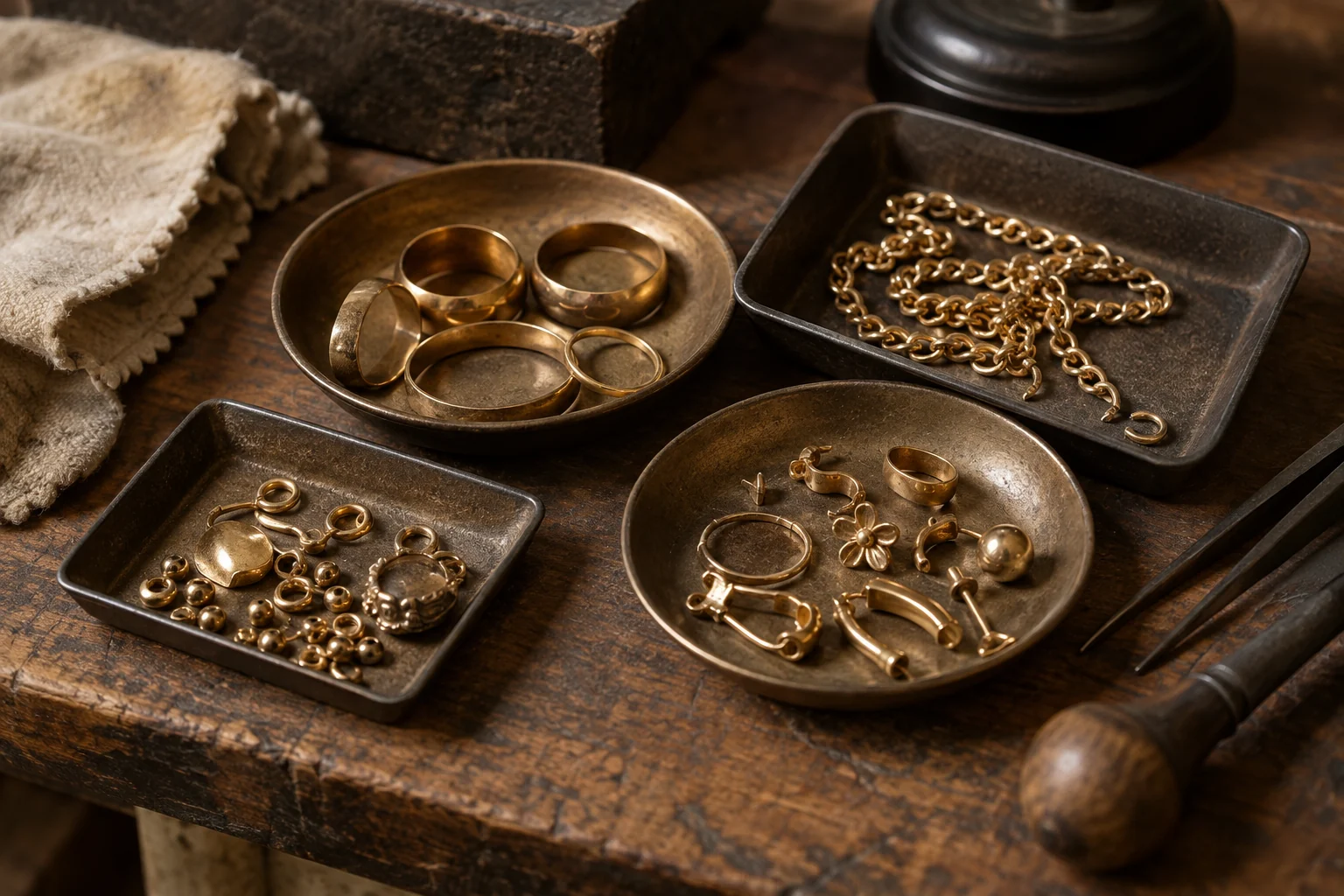
Recycled gold can sound like a complete answer to a difficult sourcing question. In practice, it describes a material route that still needs explanation. What was recovered, who handled it, what documentation followed it and which parts of the finished piece does the claim cover?
These questions do not make recycling unimportant. They make the statement more useful. A buyer should be able to distinguish a specific, supported claim from a broad impression that the whole purchase has no environmental or social implications.
Ask what the seller means by recycled
Recovered precious metal can come from different sources. The Responsible Jewellery Council's 2024 chain-of-custody guidance distinguishes categories including pre-consumer and post-consumer material within its system. Do not assume every recycled-gold statement means an old consumer ring has become a new one.
Ask the seller which definition it uses and what evidence supports the material's eligibility under that definition. If the answer is simply “all gold is recycled eventually”, it has not explained this product's claim.
You do not need the identity of the person who previously owned a piece of jewellery. You do need enough information to understand the route being asserted and the limits of what can be known about it.
Check the scope of the percentage
A ring can contain an alloy rather than pure gold, and jewellery may combine several components. Ask whether a recycled-content percentage refers to the gold content, all precious metal or the entire product. Stones, settings, solder and plating may require separate explanations.
For example, “the gold used in the main band is recycled” is a different statement from “this entire piece is made from recycled materials”. Neither should be silently expanded into the other. If a product page switches between those descriptions, seek clarification before relying on the stronger version.
For commissioned work, record the agreed composition and sourcing description on the quotation. This reduces the chance of discovering at collection that your understanding differs from the maker's.
Distinguish membership, certification and a product claim
The Responsible Jewellery Council's standards overview describes more than one standard. A company's relationship with an organisation should not be interpreted as automatic proof of every sourcing claim on every product.
Ask what is certified, under which standard and whether the scope includes the material or process relevant to your purchase. A jeweller may have a sensible explanation involving its supplier, but that connection needs to be stated rather than assumed.
Look for an answer that names the document or process involved. A certificate can be authentic while still failing to explain the specific piece in your basket. Clear limits are more useful than a very confident but uncheckable answer.
Do not turn a material claim into a universal impact claim
Recycled-content information does not, by itself, quantify the total footprint of a finished piece. Refining, transport, manufacture and other components are separate parts of the picture. A precise comparative footprint requires a defined method and scope.
Avoid treating recycled gold and newly mined certified gold as identical responses to every concern. They address different material routes and can have different social aims. Our Fairtrade and Fairmined explainer helps distinguish those schemes without pretending there is one answer for every buyer.
It is reasonable to prioritise recovered material. It is also reasonable to care specifically about support for mining communities. State your priority openly, then ask for evidence relevant to it.
Consider an existing piece before commissioning a new one
If you already own jewellery you no longer wear, ask a qualified jeweller what is practical: repair, resizing, adaptation or using material in another design. Do not assume remodelling will be inexpensive or technically possible before the piece is assessed.
Get the proposed work, likely costs and treatment of unused material in writing. If the piece has sentimental value, discuss what will remain recognisable and what will change. A plan that preserves the meaning of an item can matter more to its owner than a new marketing description.
For second-hand jewellery, focus on accurate identification and condition as well as material claims. The UK hallmarking guidance explains purity marks; those marks do not establish a recycled origin.
A five-question enquiry
Ask what recovered material is involved, which definition is used, how the supply chain is documented, which components the claim covers and what written information will accompany the purchase. These questions work for a simple band as well as a bespoke piece.
If the seller cannot answer immediately, a considered follow-up is more useful than a pressured sale. You can then decide whether the available evidence meets your needs. The goal is a piece you understand, can care for and want to keep, supported by a claim that says no more than the information can justify.

Questions about this article or a correction to suggest? Get in touch. Read more about our editorial approach.