Most fashion campaigns do not need to be completely false to mislead. They only need to make a broad impression that outruns the evidence underneath. A garment can contain a certified fibre, be photographed in a natural setting, and carry a reassuring phrase such as “responsibly made”, while the actual proof covers only one input, one mill, or one part of the supply chain.
That is why reading sustainable fashion campaigns well is less about spotting one forbidden word and more about matching the message to the scope of the evidence. We look at the wording, the imagery, the product page, the swing tag, and the small print together. When those elements point in the same direction and the proof is specific, the claim is usually easier to trust. When they do not, greenwash often enters through ambiguity rather than outright lies.
What counts as a fashion campaign claim
A fashion campaign claim is not limited to a headline saying “sustainable” or “eco”. It includes almost any statement or presentation that gives a consumer an environmental or ethical impression about a product, collection, brand, or material.
In practice, that means claims can appear in:
- paid adverts
- campaign films and lookbooks
- product titles and bullet points
- product descriptions and care pages
- social captions and short-form video text
- email subject lines
- swing tags, labels, and packaging
- homepage banners and collection names
The claim is not only the sentence itself. The CMA and ASA both look at the overall impression. So do we. A page headed “Conscious Edit” with green leaves, earthy colour grading, and copy about “better choices” is making a claim even if the product description avoids a single absolute promise.
Context matters because consumers do not read marketing materials like lawyers. They absorb the full scene. If a pair of earrings is presented in a campaign about responsible sourcing, many readers will assume the metal, stones, plating, and manufacturing have all been considered. If the evidence only covers recycled silver content in one component, the campaign impression is wider than the proof.
Wording matters for the same reason. “Made with recycled polyester” is narrower than “a more sustainable dress”. “Contains 60% organic cotton” is narrower than “crafted from organic cotton”. Those differences are not pedantic. They change what a reader is likely to understand.
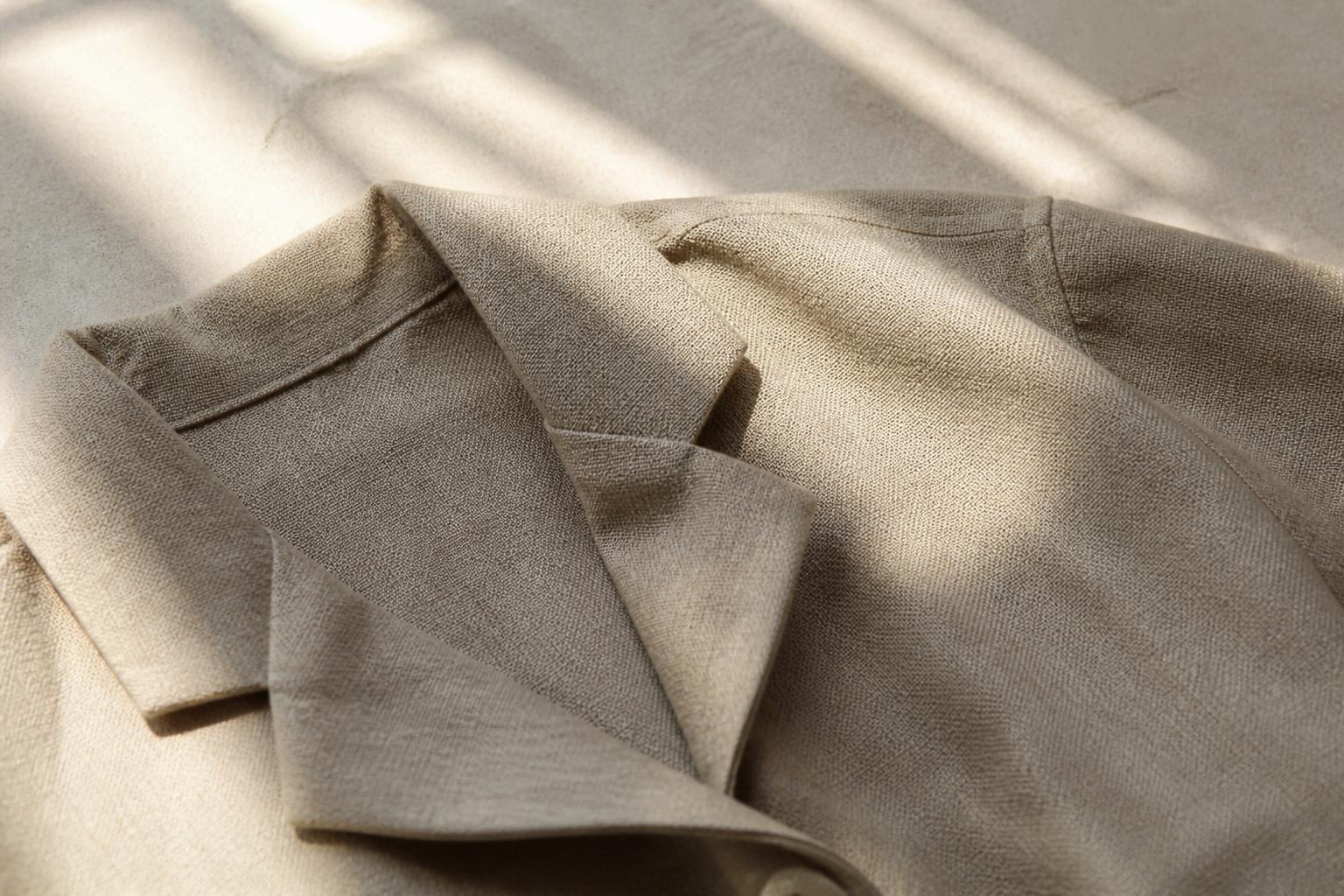
Imagery matters too. A product shot on mossy rocks beside a stream can support an environmental message even without explicit words. The ASA has repeatedly focused on the net impression of ads, not just isolated phrases. In fashion, where visual storytelling does so much of the work, that matters a great deal.
For readers and small brands alike, the useful question is simple. What would an ordinary shopper take from this campaign at a glance, and does the evidence really support that takeaway?
How to test whether the evidence matches the message
The quickest way to test a claim is to place the headline message beside the underlying proof and look for gaps in scope, time, and quantity.
Start with the exact claim. Is it about a whole brand, a collection, a product, a material, a factory, or a single improvement? These are not interchangeable. “Our denim uses less water” raises different questions from “this jean used less water in finishing than our previous style”.
Then look for the evidence behind it.
Percentages are often the first weak point. If a knit is described as “made with recycled wool”, what percentage is recycled, and what is the rest? In blends, the unrecycled share may still be substantial. A claim can be technically true while giving a much greener impression than the fibre breakdown justifies.
Baselines matter too. “Using 30% less water” is incomplete without knowing less than what. Less than the brand’s previous version? Less than its chosen supplier’s standard process? Less than a generic industry estimate? A reduction claim without a baseline is hard to interpret properly.
Timeframes are another common omission. “We have reduced emissions” needs a start year and a boundary. Was the reduction achieved over one year or five? Does it cover owned operations only, or purchased goods and transport as well? For a fashion business, those boundaries change the meaning dramatically.
Scope is where many campaign claims become slippery. A page may suggest a product is better overall, while the evidence only relates to one feature. For example:
- a coat promoted as “responsible” because the wool is certified, while the lining, trims, dyeing, and manufacturing are not addressed
- a ring described as “ethically sourced” when only the recycled precious metal has been evidenced, not the gemstone
- a “lower impact” trainer where the claim rests on one recycled component by weight
We advise reading for missing nouns. Better than what? Responsible in which respect? Recycled which part? Traceable to where? If the sentence works only because those details are absent, caution is sensible.
It also helps to separate comparative claims from absolute ones. “Lower impact than our previous fabric” is a comparative claim and still needs evidence. “Sustainable” sounds broader and often reads as an absolute or near-absolute claim, which is much harder to substantiate honestly for a single fashion item.
For a more detailed framework on checking whether product wording is backed up, our guide to how small fashion brands can evidence product claims is useful from both sides of the transaction.
What certification can and cannot prove
Certification can be valuable, but only if we are clear about what exactly is certified.
Some schemes certify a fibre input. Some certify a process. Some certify a site such as a farm, spinner, mill, tannery, or factory. Some are chain-of-custody systems that track material through stages of production. Very few prove that an entire finished item is environmentally sound in every relevant respect.
That distinction is where confusion often begins.
If a cotton fibre input is certified, that does not automatically tell us about dye chemistry, wastewater treatment, garment assembly, transport, or durability. If a factory holds a social audit, that does not prove the fibres were responsibly sourced. If a recycled content standard verifies feedstock and chain of custody, that still does not make the whole product circular, low impact, or free from problematic blends.
This is especially important with transaction certificates and scope certificates. A scope certificate usually shows that a site is approved under a standard. A transaction certificate is typically used to verify that a specific batch or order moved through the chain in line with that standard. One without the other may not answer the question a campaign is asking readers to assume has been answered.
Chain-of-custody claims also need careful reading. “Certified by” can imply more than “made with material from a certified source”. In some systems, mass balance models may allow certified and non-certified inputs to be mixed within controlled accounting rules. That is not the same as saying the exact fibres in a garment are physically segregated from start to finish. Whether that matters depends on the claim being made, but the difference should not be glossed over.
The same caution applies in jewellery. A claim about recycled precious metal may be well evidenced, while the gemstones remain outside the certification scope. Responsible Jewellery Council membership or certification can indicate certain management systems and audit requirements, but it does not by itself prove that every material in every item is fully traceable to mine or recycler level.
Certification is most useful when a campaign tells us plainly:
- which standard is involved
- what stage it covers
- whether the claim refers to a fibre, process, site, or finished product
- whether the item itself is covered by chain-of-custody documentation
- what is not covered
That last point matters. Good evidence is often specific about limits.
Where sourcing claims usually become unclear
Some parts of fashion sourcing are consistently harder to explain well, and therefore easier to overstate.
Blended fibres are one of the biggest problem areas. A jumper that combines certified wool, recycled nylon, and virgin elastane may involve several different sourcing stories in one item. Marketing tends to foreground the strongest one. The weaker or unknown parts often disappear from view, even though they affect recyclability, traceability, and overall impact.
Subcontracting is another weak point. A brand may know its final garment manufacturer but have limited visibility of subcontracted processes such as embroidery, washing, printing, plating, stone setting, or finishing. If a campaign speaks broadly about “our makers” or “our responsible production”, we want to know how far down the chain that knowledge actually goes.
Country-of-origin shorthand can also mislead. “Made in Italy” may refer to final substantial transformation, not every earlier stage. Fabric could be woven elsewhere. Components could come from multiple countries. In jewellery, “crafted in the UK” may mean assembly or finishing here, not that the metal or stones originated here. Country wording is not useless, but it is often narrower than readers assume.
Recycled content claims are another frequent source of confusion. We look for whether the percentage refers to the whole product or only one component. A bag might contain recycled lining but virgin outer material. A necklace might use recycled silver but a newly mined stone. “Contains recycled materials” can mean very little without a breakdown.
Responsible jewellery sourcing language deserves particular care because it often mixes ethics, environment, and provenance into one soft phrase. “Conflict-free”, “ethically sourced”, “responsible gemstones”, and “traceable gold” all sound reassuring, but they answer different questions and often only partially. Conflict risk is not the same as labour standards. Recycled metal is not the same as transparent gemstone origin. A supplier declaration is not the same as independent chain-of-custody evidence.
Animal fibre claims can become unclear in similar ways. A fibre may be natural, but that says nothing by itself about welfare, land use, chemical processing, or blending. Readers comparing wool, alpaca, or mohair claims often need more than a comforting image of a farm. Our pieces on how to compare fashion materials without greenwash and the greenwashing traps fashion shoppers should spot go deeper into those pattern-recognition questions.
How UK rules shape environmental fashion advertising
In the UK, two of the most important reference points are the CMA’s Green Claims Code and the ASA’s approach to advertising under the CAP Code. They do related but different jobs.
The Green Claims Code sets out principles for businesses making environmental claims. In broad terms, claims should be truthful and accurate, clear and unambiguous, not omit or hide important information, make fair and meaningful comparisons, consider the full life cycle where relevant, and be substantiated.
For fashion, that means broad statements such as “eco”, “sustainable”, or “planet friendly” are risky if the evidence is partial or qualified. It also means a business should not highlight one greener feature in a way that disguises a larger environmental burden elsewhere if that would mislead the consumer overall.
The ASA, which regulates advertising, looks at whether ads are likely to mislead and whether objective claims can be substantiated. It assesses the overall impression created by wording, imagery, layout, and context. That is particularly relevant to campaign pages and social content, where the visual message often carries as much weight as the copy.
For readers, it helps to understand what these rules do not guarantee. They do not mean every claim you see has been pre-approved. They do not certify brands as trustworthy. They do not settle every technical debate about fibres, farming systems, or life cycle assessment. They are standards and enforcement tools, not a universal seal of truth applied before publication.
There is also a UK specific point worth noting. Since the UK is outside the EU, UK advertisers are not governed in exactly the same way as businesses advertising under EU consumer law, although there is overlap in the direction of travel. If a brand sells in both markets, it may need to consider both UK and EU expectations. For a UK reader, though, the CMA and ASA remain the most practical benchmarks for judging how environmental fashion advertising should be presented here.
Small brands should take this seriously even if they are not running large billboard campaigns. Product pages, Instagram captions, email banners, and packaging inserts can all amount to marketing claims. A calm internal review against the Green Claims Code is often more useful than adding another vague phrase about conscious design.
A practical checklist for reading campaigns calmly
When we assess sustainable fashion campaigns, we use a simple discipline. Slow the campaign down until each claim can be matched to a piece of evidence, a boundary, and a document.
Here is the checklist.
First, identify the claim type. Is it about environment, labour, animal welfare, recycled content, origin, or traceability? If one phrase appears to cover all of those at once, it is probably too broad.
Second, locate the subject of the claim. Is it the whole brand, one collection, or one item? If the campaign mood suggests a brand-wide virtue but the proof sits only on selected products, note the mismatch.
Third, ask what evidence would actually support the wording used. For example:
- fibre composition breakdown
- certification name and scope
- transaction certificate or equivalent chain-of-custody record
- supplier declaration
- audit report summary
- manufacturing stage details
- dated baseline for a reduction claim
Fourth, check the percentages and boundaries. If a dress is “made with recycled materials”, what percentage of the total product is recycled, and which components are excluded? If emissions are “reduced”, which emissions and across what timeframe?
Fifth, look for absent scope. The strongest campaigns often say what they are not claiming. If a brand says “contains recycled cotton in the outer fabric” and leaves it there, that may actually be more reliable than a page full of atmospheric language.
Sixth, separate evidence from aspiration. “We are working towards full traceability” is not the same as “this product is fully traceable”. Future goals are not present proof.
Seventh, be alert to visual overreach. Natural imagery, craft language, and muted palettes can imply environmental care without adding evidence. Ask whether the same product page would still persuade you if the design were stripped back to plain text.
For small businesses, this checklist works in reverse. Before publishing, ask whether an ordinary UK customer could misunderstand the claim in a wider sense than you can evidence. If yes, tighten the wording. Our guide on how to spot greenwashing before you buy fashion is written for shoppers, but it doubles as a useful editing tool for brands.
The aim is not to make fashion communication joyless. Campaigns can still be beautiful, material-led, and emotionally intelligent. The point is that beauty should not do the work of proof. When a campaign’s wording, imagery, and documentation all point to the same limited but real claim, readers can judge it properly. When they do not, greenwash usually enters through the gap.
Good campaigns do not need to promise purity. They need to describe trade-offs honestly, define their scope, and show their workings. That is what allows readers to choose clothes and jewellery with clearer eyes, and it is what helps better marketing stand apart from comforting noise.

Questions about this article or a correction to suggest? Get in touch. Read more about our editorial approach.