If a bag is marketed as sustainable, the useful question is not whether the label sounds good. It is whether the claim is specific, evidenced and proportionate to the product being sold. “Made with recycled materials”, “vegan”, “responsibly sourced” and “eco leather” can all mean something, but on their own they do not tell us enough to compare one bag with another.
For readers and small brands alike, the best approach is to break the bag down into parts and ask for proof at each level. What is the outer material, exactly? What is the lining? What coating, tanning or finish has been used? Is there a chain of custody certificate, a chemical compliance document, or only a marketing sentence? Judging sustainable bags and fashion claims well usually comes down to this kind of patient, material-by-material reading.
What makes a bag claim credible
A credible claim is narrow enough to test. “Outer made from 70% recycled nylon” is testable. “Consciously crafted for the planet” is not. When we assess product copy, we look for three things.
First, specificity. A publication or customer should be able to identify the exact part of the bag the claim refers to. If the brand says “recycled bag”, does that mean the shell only, or also the straps, lining, zip tape and padding? If it says “leather from audited tanneries”, which tanneries and audited to what standard?
Second, evidence. The proof should match the claim. For a recycled fibre claim, that often means a scope certificate and transaction evidence linked to a recognised chain of custody standard. For a leather chemistry claim, it may mean restricted substance testing, wastewater controls, or tannery certification. For a “made in the UK” claim, the brand should be able to show where cutting, sewing and finishing happened, not just where labels were attached.
Third, proportion. If only one minor component has the claimed attribute, the wording should not suggest that the whole bag qualifies. This is where many weak claims fall apart. A bag with a recycled lining and conventional coated outer should not be presented as broadly sustainable because one internal panel contains recycled fibre.
In the UK, this matters not only editorially but legally. Environmental claims fall under consumer protection rules and CMA guidance on green claims. The practical implication is simple. Brands should avoid vague overall impressions that cannot be backed up. A bag page should not imply a whole-product environmental benefit if the evidence covers only one material input.
The documents worth expecting depend on the claim, but common examples include material specifications, chain of custody certificates, supplier declarations, test reports, tannery certifications, and product bills of materials that show percentages by component. If we cannot see what the claim attaches to, or the evidence ends at a generic supplier promise, we treat the wording cautiously. For small brands building better product pages, our guide to evidence for product claims sets out what readers should reasonably expect to see.
How to compare leather, synthetics and plant-based options
There is no single best bag material in all cases. Bags are high-wear products. They face abrasion, repeated flexing, rain, UV exposure, weight-bearing stress and hardware strain. The right comparison is not “natural versus synthetic” in the abstract. It is how a specific material performs, what inputs it depends on, how it is finished, and whether it can stay in use.
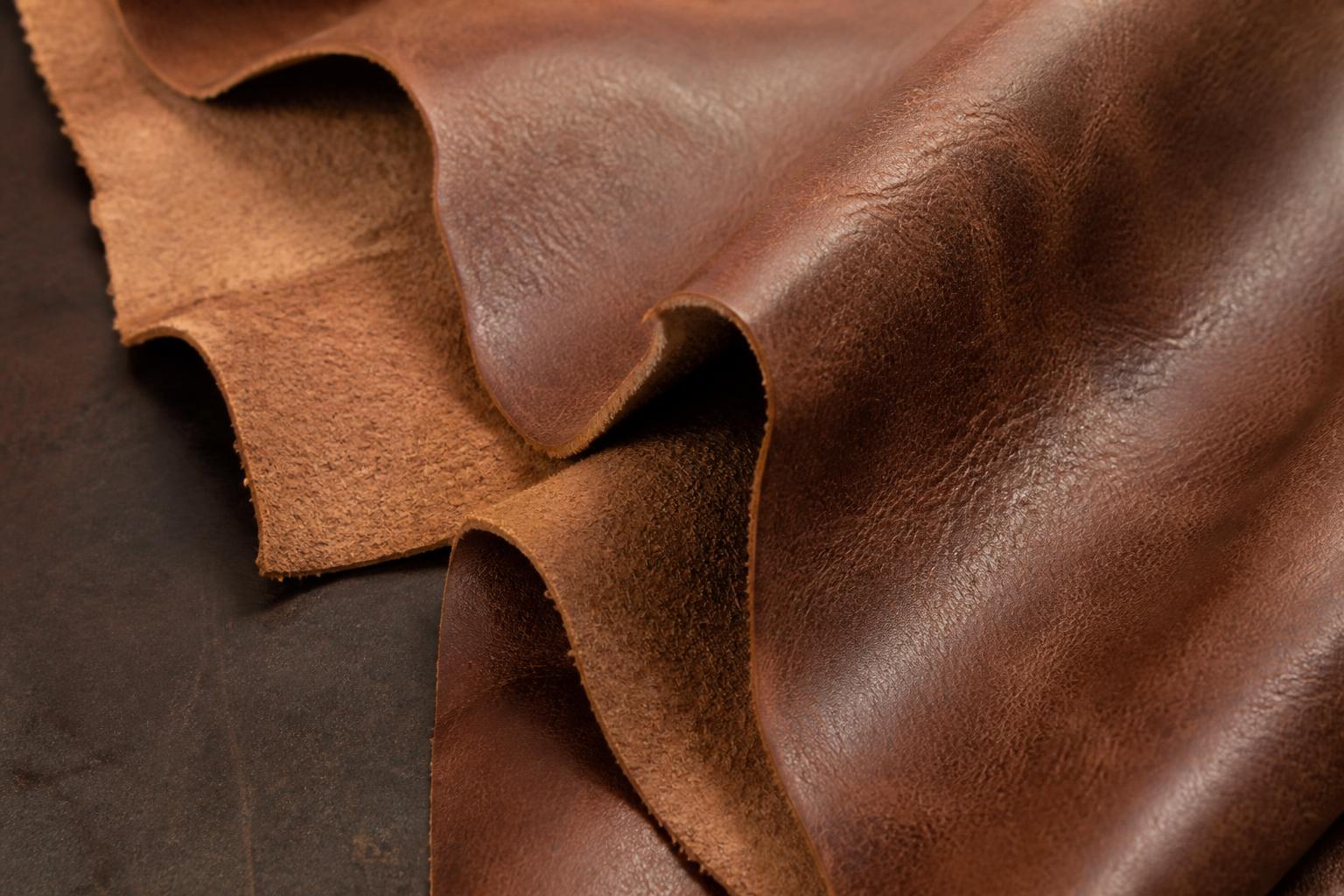
Leather remains popular because it can be durable, repairable and visually age well. But leather is not one thing. Full grain leather, corrected grain leather, split leather finished with heavy coatings, suede and bonded leather all behave differently. The environmental questions include cattle farming impacts, land use, methane, tanning chemistry, wastewater treatment, finishing coatings and traceability. Chrome tanning is common and can be well managed in a controlled tannery, but the claim worth checking is not simply “chrome-free”. Alternative tanning systems also have impacts, and a chrome-free label does not by itself prove a low-impact leather.
Synthetics, especially polyurethane and PVC based materials, avoid animal inputs but typically rely on fossil-derived feedstocks. Their performance can be excellent for certain uses, especially where light weight and water resistance matter. The trade-off is that durability varies sharply with quality, and lower-grade synthetics can crack, peel or delaminate. PVC brings additional concern because of chlorine chemistry and additive issues. PU is often presented as the cleaner option, but “PU” covers a wide range of constructions, including solvent-based and water-based systems, and can still involve mixed layers that are hard to recycle.
Plant-based options are often the most misunderstood category. A bag described as cactus, apple, grape or mushroom leather is rarely made entirely from plant matter. In many commercial materials, plant content is blended with polyurethane, polyester backings, coatings or binders to achieve strength and stability. That does not make the material meaningless, but it does mean the useful question is composition, not branding. How much of the material is bio-based? What is the backing made from? Is the finish plastic-heavy? How does it perform over time?
Cotton canvas, waxed cotton, linen and hemp can work well for casual bags, especially where lower structure is acceptable. Here the trade-offs are different. Fibre cultivation, dyeing, coatings and water repellency treatments matter, as does fabric weight. A lightweight organic cotton tote may sound preferable on paper, but if it fails quickly under load while a heavier, repairable bag lasts for years, the comparison shifts.
Disposal is another area where headlines mislead. A leather bag with synthetic lining, foam interlayers, glued edge paint and metal hardware is not straightforward to recycle. Nor is a “plant-based” bag with PU coating and polyester scrim. End-of-life claims deserve scepticism unless the brand explains what collection or disassembly route actually exists. For a broader framework, our piece on how to compare fashion materials without greenwash is useful well beyond clothing.
What recycled content does and does not prove
Recycled content can be meaningful. It can reduce demand for virgin fossil feedstocks in polyester and nylon, and it can create a market for recovered material. But it proves one thing more reliably than many others, that some proportion of the input came from recycled feedstock under a defined accounting method. It does not automatically prove lower total impact, better durability, recyclability at end of life, or responsible manufacturing conditions.
With recycled polyester, the most common feedstock is PET, often associated with bottles. In bags, recycled polyester may appear in linings, webbing, shells or padding. The main questions are percentage, source, and chain of custody. Is the claim for the whole product or a component? Is it mechanically recycled or chemically recycled? Is the percentage by weight, and does it refer to the finished item or just the fabric? Readers who want to dig into these distinctions can see our guide to recycled polyester labels.
Recycled nylon can be valuable in technical bags because nylon is strong and abrasion resistant. Feedstocks vary, including pre-consumer waste and post-consumer sources such as fishing nets or carpet. Again, the strong claim is the verified recycled content, not a general environmental halo. A bag made from recycled nylon may still use virgin PU coatings, virgin foam, metal hardware with unknown origin and adhesives that complicate repair or disposal.
Recycled leather is particularly easy to overread. In many cases it refers to leather fibres or scraps bonded together with polyurethane or latex binders into a composite sheet. That can make use of cutting waste, but it is not equivalent to a bag made from intact hide leather. Performance, repairability and ageing can be quite different. If a product says “recycled leather”, we want to know whether it is reconstituted fibre material, a percentage of leather offcuts in a bonded sheet, or simply leather offcuts used decoratively in patchwork construction.
There is also a chain of custody point that often gets missed. A recycled content certificate normally follows the claimed material through the supply chain, but it does not certify every environmental aspect of the factory making the finished bag. Nor does it guarantee the social conditions under which sewing was done. It answers a narrower question.
That is why recycled content should be read as one piece of a larger picture. It can be a strong attribute, especially where virgin synthetic use is displaced in a durable product. It is weaker when used as a stand-in for the whole story.
Which certifications matter for bags?
For bags, the relevant certifications usually sit in three groups, recycled content and chain of custody, leather and tannery standards, and chemical or product safety controls.
For recycled fibres, Global Recycled Standard, GRS, and Recycled Claim Standard, RCS, are the names readers will see most often. Both are used to verify recycled input through the supply chain, but they are not identical. GRS includes additional processing and social and environmental requirements beyond simple content accounting. RCS is narrower and focused on tracing recycled material. In practice, if a brand cites either one, we want to know whether it can show a current scope certificate and whether the claim on the product page matches what the certification covers.
For leather, Leather Working Group, LWG, is the most common reference point. LWG assesses tannery performance across areas such as traceability, chemical management, energy, water and wastewater. It is useful, but its limits matter. LWG is a tannery certification, not a whole-bag certification. A bag made with leather from an LWG audited tannery may still contain synthetic trims, problematic coatings or opaque manufacturing elsewhere. It is a meaningful data point, not a blanket endorsement.
For chemical management in textiles and components, OEKO-TEX standards and bluesign may appear, though more often in fabrics than in finished fashion bags. OEKO-TEX STANDARD 100 is a product testing standard for harmful substances in specified components. That can be relevant for linings, webbings or fabrics. bluesign is a system focused on chemical inputs and process management in textile production. Again, both have value, but neither should be stretched beyond what they actually certify.
Forest-based packaging or paper trims may carry FSC certification. That is relevant to packaging, swing tags or paperboard, but it does not tell us much about the bag body itself. For cotton canvas bags, organic claims may be backed by GOTS, which covers both fibre and processing criteria. If only the cotton shell is certified and the rest of the bag is conventional, that should be stated clearly.
In the UK, CE marking is generally not the issue for ordinary fashion bags. General product safety, chemical compliance and truthful consumer information are more relevant. If a brand sells into the EU as well, there may be additional documentation expectations around chemicals and market surveillance, but readers should not confuse broad compliance obligations with sustainability certification.
The practical rule is simple. Ask what exactly is certified, at what stage, and by whom. A strong certification helps when it is current, traceable and correctly described. It becomes marketing filler when the wording is vague, expired, or attached to the wrong part of the product.
How sourcing and construction change the picture
The headline material is often only half the story. Two bags with the same outer fabric can differ sharply in impact and lifespan because of construction choices.
Linings matter. Brands commonly highlight an outer made from recycled canvas or leather while the lining is virgin polyester, or the reverse. A durable, replaceable lining can extend the life of a bag significantly. A flimsy lining that tears at internal seams can make a bag frustrating to use long before the shell wears out.
Adhesives and interlinings matter too. Structured bags often rely on glues, foams, stiffeners and fusings that the customer never sees. These affect shape retention, repairability and end-of-life options. Heavy adhesive use can make component separation difficult. It can also influence whether edges crack, whether handles delaminate, and whether local repair is realistic.
Metal hardware deserves more attention than it gets. Zips, sliders, rivets, D-rings, feet, magnetic closures and buckles are common failure points. Good hardware can keep a bag in use for years. Poor plating can chip, corrode or stain surrounding material. If a bag is sold as durable, we expect to see construction details that support that, such as replaceable straps, reinforced stress points, accessible stitching and standard hardware sizes that a repair service can source.
Mixed materials complicate claims. A cotton body with leather trim, a PU coated plant-based upper on polyester backing, or a leather bag with acrylic edge paint and synthetic lining can each be perfectly functional design choices. But they affect repair, recycling and how we interpret broad claims like “natural” or “plastic-free”. In many cases, the mixed construction is the real product. The headline fabric is only the visible face.
Manufacturing transparency matters as much as material choice. We look for whether a brand names the country of manufacture accurately, whether it distinguishes between design location and production location, and whether it says anything useful about the factory stage. “Designed in London” tells us nothing about where the bag was cut and sewn. For UK readers, this distinction matters because “made in the UK” carries a clear factual implication. If substantial transformation happened elsewhere, the wording should not imply otherwise.
Repair and aftercare also change the sustainability picture. A bag made from conventional leather or nylon can still be a more responsible purchase if the brand offers spare parts, zip replacement, handle repair or clear care guidance that extends use. By contrast, a bag made from an appealing new material but impossible to repair may have a weaker real-world case.
When we judge sustainable bags and fashion claims, we try to resist the seduction of one winning word on a label. Better bags are usually built from a series of good decisions, credible sourcing, sound chemistry management, durable construction, and honest communication about limits. That is less dramatic than a miracle material story, but it is much more useful.

Questions about this article or a correction to suggest? Get in touch. Read more about our editorial approach.