If you have ever looked at a clothing label and wondered what BCI cotton is, the short answer is this: it refers to cotton sourced through the Better Cotton system, formerly known as the Better Cotton Initiative, or BCI. It is not the same thing as organic cotton, and it does not usually mean the exact fibres in that garment can be traced back to one named farm.
What the claim does mean is that a brand has bought Better Cotton through a recognised sourcing model intended to support improved farming practices at field level. That matters, but it is narrower than many shoppers assume when they see a sustainability claim on a swing tag. For anyone comparing materials, it helps to read BCI cotton as a sourcing scheme claim, not a guarantee about every property of the finished item.
What BCI cotton actually is
BCI stands for Better Cotton Initiative, the name under which the programme became widely known. The organisation now uses the name Better Cotton, and that is the current term. Even so, BCI cotton still appears on labels, product pages and supplier documents because brands, factories and consumers used the older name for years, and those references do not disappear overnight.
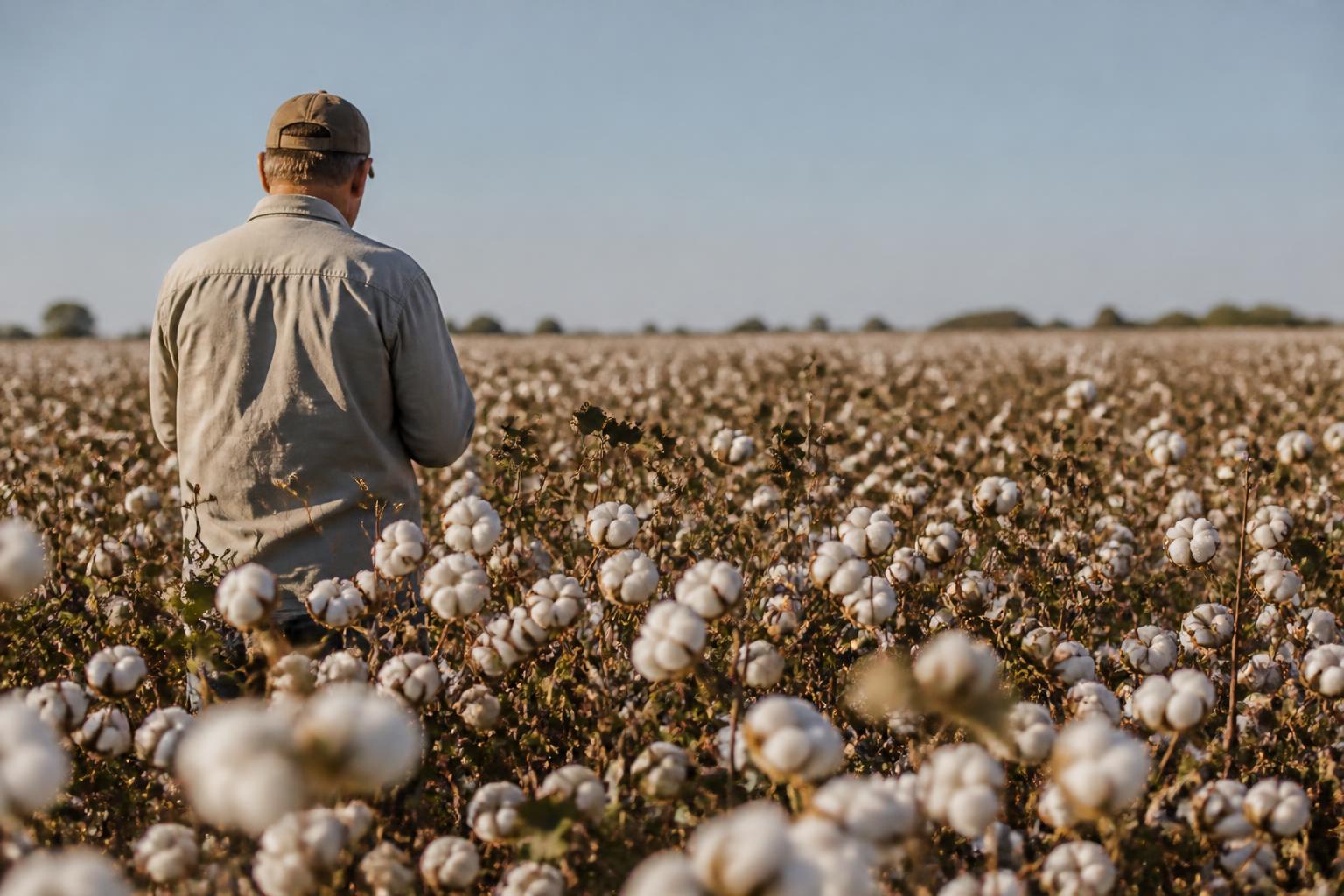
The initiative was set up to improve cotton production at farm level. Its focus has been on making mainstream cotton farming better across large volumes, rather than creating a niche premium fibre with strict physical segregation all the way to the shop floor. In practice, Better Cotton works with farmers on principles and criteria covering issues such as crop protection, water stewardship, soil health, biodiversity, fibre quality, decent work and management systems.
That broad aim is important to understand. Better Cotton was not designed to mean pesticide-free cotton, nor to function like an organic standard, nor to certify that a finished T-shirt has a lower impact than every alternative. It was designed to move a very large global commodity market in a better direction by changing how cotton is grown and traded.
That is why the older BCI wording can be confusing. It sounds like a fibre type, almost like Egyptian cotton or organic cotton, when it is really a programme and sourcing claim. If you see “made with BCI cotton” or “contains Better Cotton”, the useful question is not simply what is BCI cotton, but what exactly the brand is claiming, and through which chain of custody model.
How Better Cotton sourcing works in practice
The key point is that Better Cotton commonly uses a mass balance chain of custody model. This is the part most labels leave out, even though it is the part that tells you what the claim really means.
Under mass balance, Better Cotton can be mixed with conventional cotton in the supply chain after the farm stage, while the volumes are administratively tracked. A spinner, mill or manufacturer may buy and process cotton from multiple sources. As long as the correct volume of Better Cotton has been purchased and recorded in the system, an equivalent volume can be sold on as Better Cotton. The physical cotton in one finished garment may therefore not be traceable back to a specific Better Cotton farm.
That does not make the claim false. It means the claim is about supporting demand for more responsibly produced cotton at system level, rather than preserving identity from farm to final product. This is similar to how some other commodity schemes work when physical segregation would be difficult or expensive at scale.
For shoppers, the practical reading is straightforward. A Better Cotton claim usually means the brand has sourced cotton through Better Cotton’s chain of custody rules, but not that the exact fibres in your shirt came from one certified farm and stayed separate throughout spinning, knitting, dyeing and sewing.
For small fashion businesses, this distinction matters even more. If we use Better Cotton in product copy, we need to make sure our wording matches the chain of custody model available to us. A sentence like “the cotton in this garment was grown on Better Cotton farms” can overstate what mass balance proves. Wording such as “by choosing this product, you are supporting investment in Better Cotton’s mission” is closer to how the system is designed to operate.
Better Cotton has also developed traceability systems beyond classic mass balance, and some supply chains may now offer higher levels of visibility than they once did. But that does not mean every Better Cotton claim on the market is fully traceable to farm level. Unless a brand gives a specific, verifiable traceability statement, with clear chain of custody details, it is safer not to assume physical segregation.
This is the same habit we recommend when reading other material claims. The label rarely tells the whole story, which is why learning how to spot greenwashing in fashion company claims is often more useful than memorising one approved buzzword.
What the scheme covers and what it does not
At farm level, Better Cotton addresses a real set of environmental and social topics. Its framework covers crop protection, including reducing harmful impacts from pesticides and encouraging integrated pest management. It covers water stewardship, with an emphasis on using water carefully and understanding local conditions. It addresses soil health, biodiversity and habitat protection. It also includes fibre quality and management practices, because farm outcomes depend partly on training, record keeping and planning.
On the social side, Better Cotton includes principles on decent work. These have covered issues such as child labour, forced labour, discrimination, health and safety, and workers’ rights. The exact wording and assurance approach have evolved over time, but the broad point remains that Better Cotton is not only about environmental performance.
That said, the scheme has clear limits.
It does not mean pesticide-free. Better Cotton promotes better crop protection practices and reduced reliance on the most harmful approaches, but it is not a blanket ban on synthetic pesticides in the way shoppers often associate with organic standards.
It does not mean low water use in every case. Cotton is grown in very different climates and irrigation systems. Better Cotton addresses water stewardship, but a Better Cotton claim on a garment does not tell us how much water that specific item used, whether the farm was rain-fed or irrigated, or what the local water stress conditions were.
It does not mean organic. This is one of the most common misunderstandings. Organic cotton is governed by separate standards and certification systems, with their own rules on inputs and production methods. Better Cotton and organic cotton can overlap in some supply chains, but one term does not substitute for the other. If a product is organic, the label should say so explicitly and usually reference the relevant certification.
It does not guarantee every labour issue has been solved. Better Cotton includes social criteria, but no farm-level scheme should be read as a perfect shield against labour abuses, especially in complex, high-risk sourcing regions. Responsible brands still need due diligence, grievance processes and credible supplier oversight. In the UK, that sits alongside legal obligations and expectations under frameworks such as the Modern Slavery Act 2015, even though that Act is a reporting regime rather than a product certification tool.
It does not certify the finished product’s total footprint. A T-shirt’s impacts also depend on spinning, weaving or knitting, dyeing, finishing, transport, packaging, durability and laundering. A Better Cotton claim speaks to cotton sourcing, not the whole life cycle of the garment. If we want a fuller material comparison, it helps to read that claim alongside information on processing and use. That is also why readers often compare cotton with alternatives such as lyocell, and ask what TENCEL is made from and why it matters.
Is BCI cotton better than conventional cotton?
In broad terms, Better Cotton is intended to be better than conventional cotton production as commonly practised, particularly where farmer training leads to improved input use, stronger management and better social safeguards. That is the scheme’s purpose, and there is evidence from Better Cotton’s own reporting that it can support improvements in farming practices and outcomes in participating regions.
But this is exactly where careful wording matters.
The fairest claim is not that every garment labelled BCI cotton is definitely lower impact than every garment made with conventional cotton. The fairest claim is that Better Cotton is a large-scale improvement programme for cotton farming, and that participating farmers are expected to work to a defined standard aimed at environmental and social progress.
Independent assessments and critical commentary have tended to focus on three points.
First, Better Cotton’s scale is a strength. It reaches mainstream supply chains rather than only specialist ethical niches. If a programme can shift ordinary cotton production practices across major producing countries, that matters.
Second, mass balance limits what can be claimed at product level. Even if farm-level outcomes improve, a label on one pair of jeans does not prove the fibres in that pair were physically segregated Better Cotton from field to shelf.
Third, outcome claims need caution. Cotton farming conditions vary hugely by country, region, season and farm type. Water use, pesticide use and labour risks are not uniform. So a simple “better than conventional” statement can be directionally true at programme level while still being too blunt for one specific product page.
There is also a baseline problem. “Conventional cotton” is not one single thing. Some conventional farms may already perform relatively well on certain indicators, while others perform poorly. Likewise, Better Cotton farms may improve on some measures more than others. That means comparisons work best when they are specific. Better Cotton may support better pest management practices, for example, without proving that every Better Cotton garment has a lower total environmental footprint than every non-Better-Cotton garment.
For readers trying to shop well, the practical conclusion is balanced. Better Cotton is usually a more meaningful claim than a vague phrase like “eco cotton” with no standard behind it. But it is not the top line of the whole story, and it should not be treated as equivalent to full farm-to-product traceability or to organic certification.
For small brands, the same principle applies in marketing. We can say what the scheme is designed to do. We should not inflate that into claims about zero pesticides, guaranteed water savings, or fully traceable fibres unless we have separate evidence for those points. If you want a useful check on claim language, our guide on how to spot ESG greenwashing in fashion claims sets out the warning signs.
How to read BCI cotton claims on clothing labels
When a clothing label mentions BCI cotton or Better Cotton, start by looking at the exact wording.
“Made with Better Cotton” usually signals participation in the Better Cotton sourcing system. It does not, by itself, mean the garment is made entirely from physically traceable Better Cotton fibres.
“Supports more sustainable cotton farming” is often closer to the mass balance reality. It tells you the claim is about sourcing support and system-level demand, not guaranteed fibre identity.
If the label gives a percentage, read it carefully. “Contains 80% cotton, sourced via Better Cotton” is not the same as “contains 80% Better Cotton”. Sometimes the percentage refers to total cotton content in the product. Sometimes it refers to the proportion of cotton that a brand has sourced under a scheme across a product line or order volume. If the wording is unclear, the claim is incomplete.
Look for certification references, but interpret them correctly. Better Cotton is not usually shown to consumers in the same way as a finished-product seal proving physical segregation of fibres. If a brand uses logos, licensing text or sourcing statements, those should align with Better Cotton’s claims framework. A clear explanation on the product page or in the brand’s sustainability section is a good sign. A bare acronym with no context is less helpful.
Be cautious with extra adjectives attached to the claim. “Pure”, “clean”, “ethical” and “sustainable” often go beyond what Better Cotton alone proves. The more sweeping the language, the more we want specifics. What exactly has been verified, at which stage, and under which chain of custody model?
For small fashion businesses writing labels or online copy, this is where precision matters most. If we are using Better Cotton through a mass balance system, we should say so in plain English where possible. We should avoid wording that implies farm-to-garment traceability unless that is genuinely in place. We should also separate the fibre sourcing claim from the rest of the product story. A Better Cotton T-shirt may still be heavily dyed, poorly made, short-lived or wrapped in unnecessary packaging.
Missing details are often as informative as the details that are present. If a product page says “BCI cotton” and nothing else, we do not know the percentage, the chain of custody model, whether other fibres are blended in, or what standards apply to dyeing and manufacture. That does not make the claim worthless, but it does limit how much we can infer from it.
This matters beyond cotton. Labels often compress a complicated supply chain into two or three reassuring words. We see the same issue when readers ask about leather alternatives, regenerated cellulosics, vermeil plating or wool provenance. Material terms are useful, but only when we understand the system behind them. If you are comparing other labels too, our pieces on what bonded leather means before you buy and how long gold vermeil lasts and what wears out first follow the same principle.
So, what does BCI cotton mean on a clothing label? Usually, it means the brand is sourcing cotton through the Better Cotton system, formerly called the Better Cotton Initiative, with the aim of supporting improved cotton farming practices. It does not usually mean the exact fibres in that garment were traced back to a specific farm, and it does not by itself prove organic status or a low-impact finished product.
Read it as a useful but limited claim. Better than meaningless eco language, narrower than many shoppers are led to believe, and most valuable when the brand explains the sourcing model clearly.

Questions about this article or a correction to suggest? Get in touch. Read more about our editorial approach.