Usually, yes. In most fashion contexts, vegan leather is made with plastic, most often polyurethane, sometimes PVC, applied as a coating or surface layer to a textile backing. That means the short answer to “is vegan leather plastic?” is often yes, but not always entirely, and not always in the same way.
The useful distinction is not simply vegan versus animal. It is what the material is actually made from, how it is built, and what evidence sits behind the claim on the swing tag. Some vegan leathers are almost wholly fossil-based synthetics. Some combine a plastic binder or coating with plant matter or a woven base cloth. A smaller group uses non-animal inputs with less plastic overall, but even there, a completely plastic-free leather substitute is still unusual in mainstream fashion.
What people usually mean by vegan leather
“Vegan leather” is a marketing and retail term, not a tightly regulated material name. It tells you that no animal hide or skin was used. It does not, by itself, tell you whether the material is polyurethane, PVC, cactus-based, apple-based, mushroom-based, recycled plastic, cotton with a coating, or something else entirely.
That is why the label can be so slippery. Two bags sold as vegan leather may have very little in common beyond the fact that neither is animal leather. One may be a conventional PU synthetic. Another may be a composite made from plant waste and a polymer binder. Another may have a recycled polyester backing with a polyurethane topcoat. All three can sit under the same umbrella term.
In fashion product descriptions, readers usually encounter four broad categories.
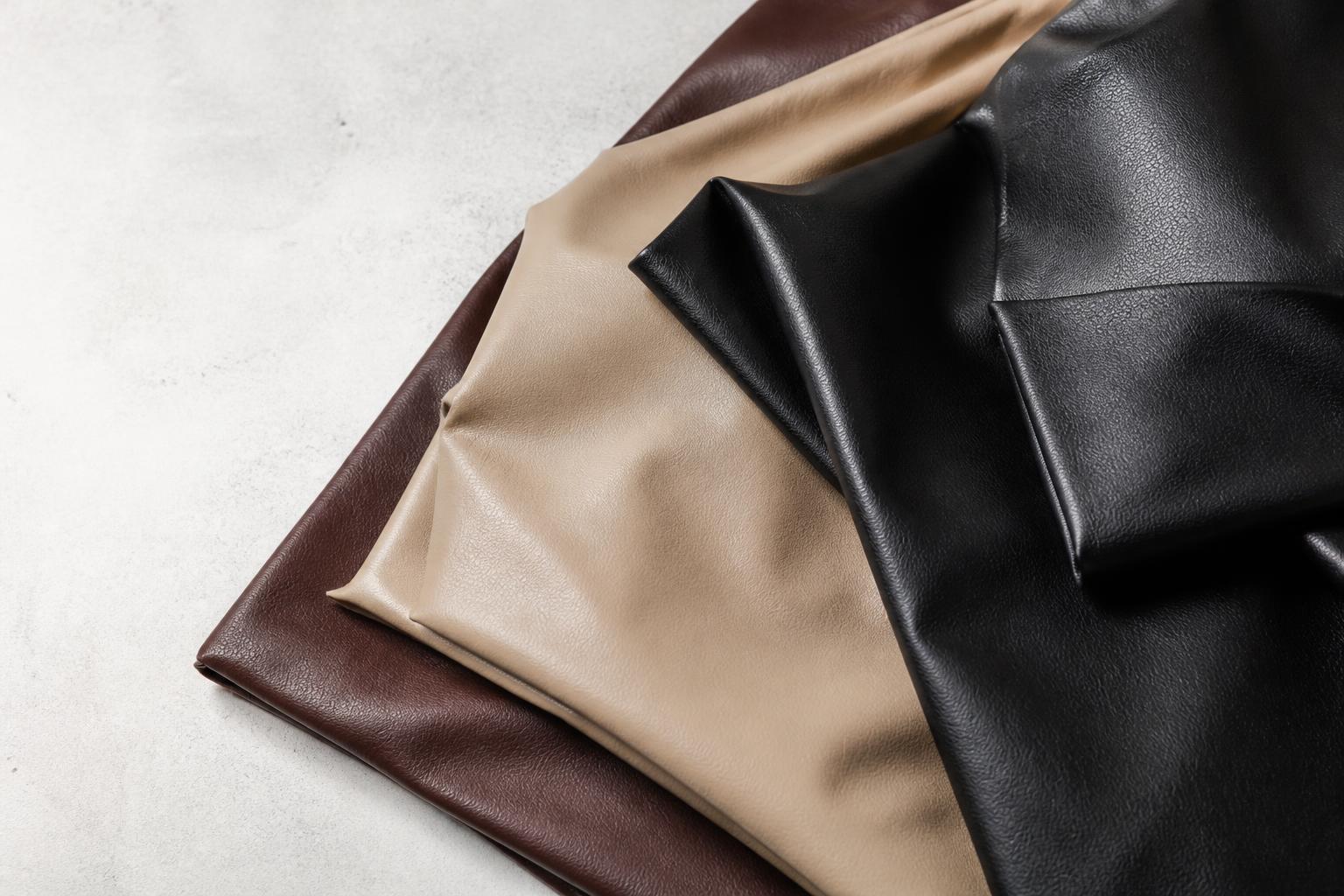
First, there are fully synthetic leather-look materials. These are typically plastic coatings or films, often PU or PVC, attached to a textile backing. This is the most common category for handbags, shoes, belts and small accessories.
Second, there are partly synthetic composites marketed with a plant story, such as apple, grape, cactus or corn content. These generally combine plant-derived feedstock or agricultural residue with polyurethane or another polymer system so the material can perform like a coated fashion fabric. If you want a clearer picture of one of the better-known examples, we break it down in our guide to how apple leather is actually made.
Third, there are textile materials that are not trying to mimic leather particularly closely, but are still sold as vegan leather in accessories. Think coated canvas, waxed cotton blends, cork composites, or densely finished nonwovens. These may contain less plastic, or simply use it differently.
Fourth, there are emerging alternatives grown or processed from non-animal sources, including mycelium-based sheets and other bio-fabricated surfaces. In practice, many of these still need coatings, backers or finishing layers to survive wear in a fashion product.
So when people ask whether vegan leather is plastic, they are really asking a more precise question. What exactly is this specific material, and how much of it is polymer?
Is it plastic?
Often yes, sometimes partly, and occasionally not mainly, but you need the material specification to know which.
A fully plastic vegan leather usually means a synthetic leather made from a polymer surface on a textile support. For fashion accessories, that typically means polyurethane or PVC as the visible leather-like layer, with polyester or another synthetic fabric underneath. In everyday terms, that is a plastic material, even if it looks soft and grainy like leather.
A partly plastic vegan leather is now common in products marketed as plant-based. These materials may include apple pomace, cactus fibre, corn-derived content or other biomass, but they are usually not made purely from those ingredients. The plant portion often sits within a matrix that still relies on polyurethane, synthetic resin, synthetic backing fabrics, or all three. The result may reduce fossil input or make use of waste streams, but it does not stop being plastic-containing.
A vegan leather that is not mainly plastic does exist, but it is less common in mass-market fashion and often less straightforward in performance. Some coated textiles use a high proportion of natural fibres with lighter surface treatments. Some cork materials have a thin cork layer over fabric. Some mycelium materials aim to reduce petrochemical content. But once a product needs abrasion resistance, water resistance, colour fastness and a consistent finish, plastics often re-enter the construction.
The practical point is this. “Vegan” answers the animal question. It does not answer the fossil, plastic, recyclability, or durability question.
This matters because people often assume a simple swap. Animal leather is one thing, vegan leather is another, and one of them must be cleaner by default. Real material assessment is more complicated than that. Animal leather raises its own questions around livestock systems, tanning chemistry and end-of-life claims. Synthetic and partly synthetic alternatives raise questions around fossil feedstocks, coatings, shedding, repairability and disposal. We unpack one common simplification in our piece on whether leather is really just a by-product.
Which plastics and non-animal materials are most common?
PU, short for polyurethane, is the most common plastic used in vegan leather for fashion. It can be made into soft, flexible coatings and can imitate a wide range of finishes, from matte grain to glossy patent. In a typical construction, a woven or nonwoven backing fabric is coated with polyurethane, embossed for texture, then coloured and finished. Sometimes there are several layers, including primers, foam layers, topcoats and protective finishes.
PVC, polyvinyl chloride, is another long-standing option. It can produce a sturdy, often cheaper coated material, but it has attracted more scrutiny because of chlorine chemistry and the additives sometimes used to make it flexible. In fashion, PVC often appears in lower-cost accessories, shiny finishes and some rainwear or novelty styles. Many brands now prefer PU, at least in their public-facing material language, but PVC has not disappeared.
Polyester is also part of the picture more often than readers realise. Even if the visible surface is PU, the backing may be polyester scrim, knitted polyester or a polyester-cotton blend. So a product marketed around a plant-based top layer may still depend heavily on synthetic textiles underneath.
Recycled synthetics are increasingly common. You may see recycled polyester backing fabrics or recycled content claims for the polyurethane system. That can be useful, but recycled content does not mean plastic-free, and it does not automatically solve end-of-life issues.
Among non-animal alternatives, “apple leather” is usually not a sheet made from apples in any simple sense. It is typically a composite in which apple industry waste is dried, processed and combined with synthetic binders and mounted onto a backing. Similar principles apply to grape waste and some cactus-based materials. These can make good use of residues and may reduce virgin fossil input, but they are usually hybrid materials rather than pure plant sheets.
Mycelium-based materials are often presented as the most radical alternative. The underlying structure is grown from fungal mycelium, then processed into a sheet material. For luxury prototypes and selected commercial uses, this has real interest. But in finished fashion goods, coatings, finishing treatments and backing layers still matter enormously. A mycelium surface that cannot withstand rubbing, moisture or repeated flexing will not perform in a shoe or bag.
Cork is another non-animal option, usually supplied as a thin cork veneer on a textile support. It can work well for certain wallets, sandals and accessories, especially where a flatter, lighter aesthetic suits the design. Again, the support cloth and adhesive system are part of the real material story.
For most readers, the key thing is how these materials are typically constructed. In fashion use, “vegan leather” is rarely a single substance. It is usually a laminated system. Surface, colour coat, protective finish, adhesive and backing all contribute to what the item feels like and how long it lasts.
What labels and certifications can actually tell you
Labels can help, but only if you know their scope.
A “vegan” claim usually means no animal-derived material was used. It does not tell you whether the item is mostly polyurethane, whether the backing is recycled polyester, or whether solvents, plasticisers or fluorinated finishes were involved.
A “bio-based” claim can be useful, but it needs context. Bio-based content refers to the share of the material derived from recent biological sources rather than fossil feedstocks. It does not automatically mean biodegradable, compostable or plastic-free. A polymer can be partly bio-based and still function as a conventional plastic in use and disposal.
Likewise, a product sold as “plant-based” may contain a meaningful plant fraction, but the percentage matters, and so does where in the construction that content sits. If the plant content is in a filler or lower layer while the wear surface remains polyurethane, the environmental significance may be modest. We look at the wider problem of broad, untestable marketing language in our guide to how UK rules are closing in on fashion green claims.
Recycled content claims also need careful reading. Recycled polyester backing or recycled polyurethane input can reduce demand for virgin material. But recycled content does not tell you whether the final product can be recycled again, whether mixed layers can be separated, or whether the item will be durable enough to justify the claim.
Chemical standards and restricted substances certifications are often more concrete. They can indicate that a material has been tested against limits for certain harmful substances in finished goods. That is useful, especially for skin-contact items, but it is not a whole-life environmental verdict. A material can pass chemical restrictions and still be fossil-based, mixed-material, and difficult to recycle.
Similarly, a certification on the textile backing tells you about the backing, not necessarily the coating. A claim on one component should not be read as a claim on the whole material system unless the wording clearly says so.
In the UK, green claims are governed through consumer protection law and guidance from bodies including the Competition and Markets Authority. That differs slightly in framing from the EU’s broader policy environment, where separate proposals and directives have been tightening rules around environmental marketing and product information. For UK shoppers and small brands, the practical lesson is the same. Claims should be specific, attributable and proportionate to the actual evidence.
How to assess environmental claims without guesswork
Start with the material breakdown, not the headline. If a brand says “vegan leather”, look for the composition line. You want to know the surface material, the backing fabric and, if available, whether there is a notable plant-based content or recycled content share.
Then ask what kind of plastic is involved. PU is common and often preferred over PVC in fashion, but that does not make it impact-free. PVC raises its own concerns, especially depending on formulation and additives. If the brand will not say which polymer it uses, that is already a sign the claim is doing more work than the specification.
Look closely at the backing fabric. A polyurethane coating on organic cotton is a different construction from polyurethane on virgin polyester, and both are different again from a recycled polyester nonwoven. The backing affects strength, flexibility and repairability, not just the sustainability story.
Durability matters more than many marketing pages admit. A bag used for years can compare differently from one that cracks, peels or delaminates quickly. Ask whether the material is likely to fail at fold points, strap anchors and corners. In shoes, repeated flexing is the stress point. In belts and handles, edge finishing often goes first. A material with lower fossil content but poor lifespan is not automatically the better environmental choice.
Be wary of coatings and finishes that are invisible in the headline claim. A material may be sold on its apple or cactus content while relying on conventional topcoats for scratch resistance and colour fastness. Those finishing layers can be a small percentage by weight but a large part of how the product performs and what it becomes at end of life.
End-of-life claims deserve particular caution. Mixed materials are hard to recycle. A composite of plant matter, polyurethane, adhesive and polyester backing is not straightforward to separate in normal waste systems. “Biodegradable” claims should be treated carefully unless the brand explains the exact conditions required and whether the finished product, not just one ingredient, has been tested as sold.
Evidence quality matters. The strongest claims usually come with a technical data sheet, a named standard, or a clear explanation of what has been measured. The weakest rely on mood-board language such as eco-conscious, earth-friendly or made from nature, without percentages, test methods or scope.
For small fashion businesses, this means asking suppliers better questions. What is the full construction? What is the polymer? Is the backing woven, knitted or nonwoven? Is any bio-based content independently verified? Does the certification apply to the coating, the backing, or both? Is there abrasion or flex testing data? Those answers are more useful than a persuasive sample card.
For shoppers, the same principle applies in simpler form. If the only information available is “vegan leather”, assume there is probably plastic involved. If the product is marketed as plant-based, look for the proportion and the rest of the construction. If the claim is broad but the details are absent, treat it as incomplete rather than proven.
So, is vegan leather usually plastic? In most cases, yes. Sometimes entirely, sometimes as part of a hybrid construction, and only occasionally not mainly so. The better question is not whether a material sounds ethical at first glance, but what it is made from, how it is built, and whether the brand has given enough evidence for the claim to mean something real.

Questions about this article or a correction to suggest? Get in touch. Read more about our editorial approach.